





 Sign up for our Technology Newsletter

nVidia Outs CUDA 6
Nvidia has made the latest GPU programming language CUDA 6 Release Candidate available for developers to download for free.
The release arrives with several new features and improvements to make parallel programming “better, faster and easier” for developers creating next generation scientific, engineering, enterprise and other applications.
Nvidia has aggressively promoted its CUDA programming language as a way for developers to exploit the floating point performance of its GPUs. Available now, the CUDA 6 Release Candidate brings a major new update in unified memory access, which lets CUDA applications access CPU and GPU memory without the need to manually copy data from one to the other.
“This is a major time saver that simplifies the programming process, and makes it easier for programmers to add GPU acceleration in a wider range of applications,” Nvidia said in a blog post on Thursday.
There’s also the addition of “drop-in libraries”, which Nvidia said will accelerate applications by up to eight times.
“The new drop-in libraries can automatically accelerate your BLAS and FFTW calculations by simply replacing the existing CPU-only BLAS or FFTW library with the new, GPU-accelerated equivalent,” the chip designer added.
Multi-GPU Scaling has also been added to the CUDA 6 programming language, introducing re-designed BLAS and FFT GPU libraries that automatically scale performance across up to eight GPUs in a single node. Nvidia said this provides over nine teraflops of double-precision performance per node, supporting larger workloads of up to 512GB in size, more than it’s supported before.
“In addition to the new features, the CUDA 6 platform offers a full suite of programming tools, GPU-accelerated math libraries, documentation and programming guides,” Nvidia said.
The previous CUDA 5.5 Release Candidate was issued last June, and added support for ARM based processors.
Aside from ARM support, Nvidia also improved Hyper-Q support in CUDA 5.5, which allowed developers to use MPI workload prioritisation. The firm also touted improved performance analysis and improved performance for cross-compilation on x86 processors.
Target Makes Information Security Changes
Comments Off on Target Makes Information Security Changes
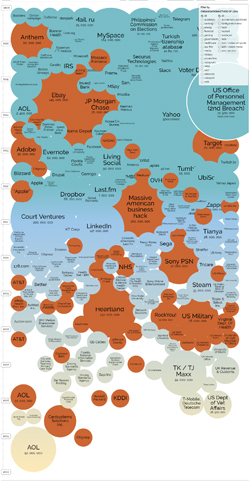
Target Corp announced an overhaul of its information security processes and the departure of its chief information officer as the retailer tries to re-gain customers and investors after a massive data breach late last year.

CIO Beth Jacob is the first high-level executive to leave the company following the breach, which led to the theft of about 40 million credit and debit card records and 70 million other records of customer details.
Jacob, who comes from a sales background and has been CIO since 2008, will be replaced by an external hire, according to sources at Target.
“It’s a decision that should have been made by the CEO on January 1, not through the resignation of an employee that overlooked critical weakness in the operating model,” Belus Capital Advisors CEO Brian Sozzi said.
The breach at Target was the second largest at a U.S. retailer, after the theft of more than 90 million credit cards over about 18 months was uncovered in 2007 at TJX Cos Inc, operator of the T.J. Maxx and Marshalls chains.
Hacking has become a major concern for retailers in the United States. In the latest reported breach, beauty products retailer and distributor Sally Beauty Holdings Inc said on Wednesday its network had been hacked but no card or customer data appeared to have been stolen.
Target Chief Executive Gregg Steinhafel said the company would elevate the role of chief information security officer as part of its plan to tighten its security.
The company will also look externally to fill that position as well as the new position of chief compliance officer.
Steinhafel said Target would be advised by security consultant Promontory Financial Group as it evaluates its technology, structure, processes and talent.
“I believe this is definitely a measure in restoring faith and really showing that they are taking the breach seriously,” Heather Bearfield, who runs the cybersecurity practice for accounting firm Marcum LLP, told Reuters.
Target, the third-largest U.S. retailer, said last week customer traffic had started to improve this year after falling significantly toward the end of the holiday shopping season when news of the cyber attack spooked shoppers.
Is AMD Worried?
AMD’s Mantle has been a hot topic for quite some time and despite its delayed birth, it has finally came delivered performance in Battlefield 4. Microsoft is not sleeping it has its own answer to Mantle that we mentioned here.
Oddly enough we heard some industry people calling it DirectX 12 or DirectX Next but it looks like Microsoft is getting ready to finally update the next generation DirectX. From what we heard the next generation DirectX will fix some of the driver overhead problems that were addressed by Mantle, which is a good thing for the whole industry and of course gamers.
AMD got back to us officially stating that “AMD would like you to know that it supports and celebrates a direction for game development that is aligned with AMD’s vision of lower-level, ‘closer to the metal’ graphics APIs for PC gaming. While industry experts expect this to take some time, developers can immediately leverage efficient API design using Mantle. “
AMD also told us that we can expect some information about this at the Game Developers Conference that starts on March 17th, or in less than two weeks from now.
We have a feeling that Microsoft is finally ready to talk about DirectX Next, DirectX 11.X, DirectX 12 or whatever they end up calling it, and we would not be surprised to see Nvidia 20nm Maxwell chips to support this API, as well as future GPUs from AMD, possibly again 20nm parts.
Cisco Launches I-O-T Security Contest
Cisco has leant its support to the Internet of Things (IoT) with a security competition.
The “Internet of Things Grand Security Challenge” will be offering prizes of up to $300,000 for innovations designed to close security loopholes surrounding internet-connected objects.
Because the IoT is a loose concept rather than a standard or protocol, the criteria for the solutions are quite far reaching, with a Cisco blog post citing that it will evaluate entries based on:
Feasibility, scalability, performance, and ease-of-use
Applicability to address multiple IoT verticals (manufacturing, mass transportation, healthcare, oil and gas, smart grid, etc.)
Technical maturity/viability of proposed approach
Proposers’ expertise and ability to feasibly create a successful outcome
We now live in a world where even the most benign objects are hackable and the numbers of devices involved will only increase, so it therefore will become imperative that the interconnectivity involved does not overstep boundaries of safety or privacy.
Sierra Wireless recently launched Legato, a Linux distro specifically engineered for the IoT, which actually plays up its capacity for gathering Big Data. Meanwhile the IT industry continues to be excited about the IoT with Intel claiming it will be the next major disrupter in tech.
Winners of Cisco’s security challenge will be announced this Autumn at the Internet of Things World Forum, with six prizes of between $50,000-$75,000 up for grabs, as well as the overall winner’s $300,000 bounty.
Is Samsung Ditching Android?
March 13, 2014 by admin
Filed under Around The Net
Comments Off on Is Samsung Ditching Android?
Samsung appears to have delivered a huge snuff to Android OS maker Google. Samsung’s new smartwatch Gear 2 and Gear 2 Neo, the sequels to the poorly reviewed original Galaxy Gear are going to ship without Android.
Instead, the new Gears run Tizen, another open source operating system that Samsung, Intel, and others are working on. It is starting to look like Samsung wants to distance itself from its reliance on Google for software and services.
Samsung’s official reason is that Tizen has better battery life and performance. The new Gears can get up to an extra two days of battery life by running Tizen, even though they have the same size battery. The Galaxy Gear barely made it through a day on one charge.
To be fair Android isn’t optimized to run on wearable devices like smart watches, but Samsung didn’t want to wait around for Google to catch up. It was clearly concerned about beating Apple to market. So far Apple has not shown up.
Is Ethernet For Autos?
March 11, 2014 by admin
Filed under Around The Net
Comments Off on Is Ethernet For Autos?
The most ubiquitous local area networking technology used by large companies may be packing its bags for a road trip.

As in-vehicle electronics become more sophisticated to support autonomous driving, cameras, and infotainment systems, Ethernet has become a top contender for connecting them.
For example, the BMW X5 automobile, released last year, used single-pair twisted wire, 100Mbps Ethernet to connect its driver-assistance cameras.
Paris-based Parrot, which supplies mobile accessories to automakers BMW, Hyundai and others, has developed in-car Ethernet. Its first Ethernet-connected systems could hit the market as soon as 2015, says Eric Riyahi, executive vice president of global operations.
Parrot’s new Ethernet-based Audio Video Bridging (AVB) technology uses Broadcom’s BroadR-Reach automotive Ethernet controller chips.
The AVB technology’s network management capabilities allows automakers to control the timing of data streams between specific network nodes in a vehicle and controls the bandwidth in order to manage competing data traffic.
Ethernet’s greater bandwidth could provide drivers with turn-by-turn navigation while a front-seat passenger streams music from the Internet, and each back-seat passenger watches streaming videos on separate displays.
“In-car Ethernet is seen as a very promising way to provide the needed bandwidth for coming new applications within the fields of connectivity, infotainment and safety,” said Hans Alminger, senior manager for Diagnostics & ECU Platform at Volvo, in a statement.
Ethernet was initially used by automakers only for on-board diagnostics. But as automotive electronics advanced, the technology has found a place in advanced driver assistance systems and infotainment platforms.
Many manufacturers also use Ethernet to connect rear vision cameras to a car’s infotainment or safety system, said Patrick Popp, chief technology officer of Automotive at TE Connectivity, a maker of car antennas and other automobile communications parts.
Currently, however, there are as many as nine proprietary auto networking specifications, including LIN, CAN/CAN-FD, MOST and FlexRay. FlexRay, for example, has a 10Mbps transmission rate. Ethernet could increase that 10 fold or more.
The effort to create a single vehicle Ethernet standard is being lead by Open Alliance and the IEEE 802.3 working group. The groups are working to establish 100Mbps and 1Gbps Ethernet as de facto standards.
The first automotive Ethernet standard draft is expected this year.
The Open Alliance claims more than 200 members, including General Motors, Ford, Daimler, Honda, Hyundai, BMW, Toyota, Volkswagen. Jaguar Land Rover, Renault, Volvo, Bosch, Freescale and Harman.
Broadcom, which makes electronic control unit chips for automobiles, is a member of the Open Alliance and is working on the effort to standardize automotive Ethernet.
What Do Smaller Controllers Mean?
If you want a wearable Internet of Things, the electronics have to be as tiny and as energy efficient as possible. That’s why a new microcontroller by Freescale Semiconductor is noteworthy.

The company has produced the Kinetis KLO3 MCU, a 32-bit ARM system that is 15% smaller than its previous iteration but with a 10% power improvement.
Internet of Things is a buzzword for the trend toward network-connected sensors incorporated into devices that in the past were standalone appliances. These devices use sensors to capture things like temperatures in thermostats, pressure, accelerometers, gyroscopes and other types of MEMS sensors. A microcontroller unit gives intelligence and limited computational capability to these devices, but is not a general purpose processor. One of the roles of the microcontroller is to connect the data with more sophisticated computational power.
The Kinetis KLO3 runs a lightweight embedded operating system to connect the data to other devices, such as an app that uses a more general purpose processor.
Kathleen Jachimiak, product launch manager at Freescale, said the new microcontroller will “enable further miniaturization” in connected devices. This MCU is capable of having up to 32 KB of flash memory and 2 KB of RAM.
Consumers want devices that are light, small and smart. They also want to be able to store their information and send it to an application that’s either on a phone or a PC, Jachimiak said.
This microcontroller, at 1.6 x 2.0 mm, is smaller than the dimple on a golf ball, and uses a relatively new process in its manufacturing, called wafer level chip scale packaging. The process involves building the integrated package while the die is still part of a wafer. It’s a more efficient process and produces the smallest possible package, for a given die size.
Marvell’s Future Brightens
Marvell reported a more-than-expected 112 percent rise in profit, helped by strong demand from storage and networking companies, and said it expected its mobile business to pick up in the current quarter.
Marvell forecast first-quarter revenue between $870 and $910 million, which is above what the cocaine nose jobs of Wall Street predicted. Chief Executive Sehat Sutardja said that in his company’s first quarter, he was expecting some revenue and unit growth for our 4G LTE mobile platform from multiple customers. Marvell said results were not so hot in the mobile business in the fourth quarter as some customers delayed product launches.
The company, which also makes communications and processor products used in mobile phones, said net income doubled to $106.6 million, or 21 cents per share, in the quarter ended February 1 from $50.2 million, or 9 cents per share, a year earlier.
Revenue rose to $931.7 million, beating analysts’ estimate of $901.1 million.
Marvell’s biggest customer is Western Digital which reported better-than-expected quarterly results in January, citing strength in its gaming and notebook business.
Intel Outs New Xeon Chipset
Intel has released details about its new Xeon E7 v2 chipset. The Xeon processor E7 8800/4800/2800 v2 product family is designed to support up to 32-socket servers with configurations of up to 15 processing cores and up to 1.5 terabytes of memory per socket.
The chip is designed for the big data end of the Internet of Things movement, which the processor maker projected will grow to consist of at least 30 billion devices by 2020. Beyond two times better performance power, Intel is promising a few other upgrades with the next generation of this data-focused chipset, including triple the memory capacity, four times the I/O bandwidth and the potential to reduce total cost of ownership by up to 80 percent.
The 15-core variants with the largest thermal envelope (155W) run at 2.8GHz with 37.5MB of cache and 8 GT/s QuickPath connectivity. The lowest-power models in the list have 105W TDPs and run at 2.3GHz with 24MB of cache and 7.2 GT/s of QuickPath bandwidth. There was also talk of 40W, 1.4GHz models at ISSCC but they have not been announced yet.
Intel has signed on nearly two dozen hardware partners to support the platform, including Asus, Cisco, Dell, EMC, and Lenovo. On the software end, Microsoft, SAP, Teradata, Splunk, and Pivotal also already support the new Xeon family. IBM and Oracle are among the few that support Xeon E7 v2 on both sides of the spectrum.
IBM Breaks Big Data Record
IBM Labs claims to have broken a speed record for Big Data, which the company says could help boost internet speeds to 200 to 400Gbps using “extremely low power”.
The scientists achieved the speed record using a prototype device presented at the International Solid-State Circuits Conference (ISSCC) this week in San Francisco.
Apparently the device, which employs analogue-to-digital conversion (ADC) technology, could be used to improve the transfer speed of Big Data between clouds and data centres to four times faster than existing technology.
IBM said its device is fast enough that 160GB – the equivalent of a two-hour 4K ultra-high definition (UHD) movie or 40,000 music tracks – could be downloaded in a few seconds.
The IBM researchers have been developing the technology in collaboration with Swiss research institution Ecole Polytechnique Fédérale de Lausanne (EPFL) to tackle the growing demands of global data traffic.
“As Big Data and internet traffic continues to grow exponentially, future networking standards have to support higher data rates,” the IBM researchers explained, comparing data transfer per day in 1992 of 100GB to today’s two Exabytes per day, a 20 million-fold increase.
“To support the increase in traffic, ultra-fast and energy efficient analogue-to-digital converter (ADC) technology [will] enable complex digital equalisation across long-distance fibre channels.”
An ADC device converts analogue signals to digital, estimating the right combination of zeros and ones to digitally represent the data so it can be stored on computers and analysed for patterns and predictive outcomes.
“For example, scientists will use hundreds of thousands of ADCs to convert the analogue radio signals that originate from the Big Bang 13 billion years ago to digital,” IBM said.
The ADC technology has been developed as part of an international project called Dome, a collaboration between the Netherlands Institute for Radio Astronomy (ASTRON), DOME-South Africa and IBM to build the Square Kilometer Array (SKA), which will be the world’s largest and most sensitive radio telescope when it’s completed.
“The radio data that the SKA collects from deep space is expected to produce 10 times the global internet traffic and the prototype ADC would be an ideal candidate to transport the signals fast and at very low power – a critical requirement considering the thousands of antennas which will be spread over 1,900 miles,” IBM expalined.
IBM Research Systems department manager Dr Martin Schmatz said, “Our ADC supports Institute of Electrical and Electronics Engineers (IEEE) standards for data communication and brings together speed and energy efficiency at 32 nanometers, enabling us to start tackling the largest Big Data applications.”
He said that IBM is developing the technology for its own family of products, ranging from optical and wireline communications to advanced radar systems.
“We are bringing our previous generation of the ADC to market less than 12 months since it was first developed and tested,” Schmatz added, noting that the firm will develop the technology in communications systems such as 400Gbps opticals and advanced radars.