





 Sign up for our Technology Newsletter

TSMC 20nm Processors In High Demand
 TSMC believes demand for next-generation 20nm chips will be even higher than demand for current 28nm products.
Speaking in a conference call, TSMC CEO Morris Chang said the volume of 20nm SoCs built next year will be greater than 28nm volume in 2012 and by 2015 it should be greater than 28nm volume in 2013.
TSMC hopes to start 20nm production in the latter part of the year. The company is constructing two new facilities at Fab 15 and it hopes to start 20nm production in both simultaneously. We could be in for a quick ramp.
TSMC will offer only one version of the 20nm process, compared to four versions of the 28nm process. This should also allow it to ramp up volume production faster, reckons Xbit Labs.
Will Microsoft Buy A Slice of Dell?
 Microsoft Corp is in talks to invest between $1 billion and $3 billion of financing in a buyout of Dell Inc, CNBC cited unidentified sources as saying on Tuesday.

Private equity outfit Silver Lake Partners is working to finalize a bidding group to take the world’s No. 3 PC maker private, and has started discussions with potential equity partners, sources familiar with the matter have said.
Dell also has formed a special committee to take a close look at any potential deal on the table, multiple sources with knowledge of the matter told Reuters. If successful, it would be one of the largest corporate buyouts since before the global financial crisis.
Microsoft, which accelerated its foray into computer hardware in 2012 with the launch of the Surface tablet, will provide the capital in the form of mezzanine financing according to CNBC, which is a hybrid of debt and equity.
Windows Phone Is Making Gains
January 29, 2013 by admin
Filed under Smartphones
Comments Off on Windows Phone Is Making Gains
 Microsoft’s Windows Phone mobile operating system is slowly increasing its market share in the UK, while Apple edges closer to archival Samsung.
That’s according to the latest numbers from research firm Kantar Worldpanel Comtech, which show that Microsoft’s Windows Phone has increased its UK market share from 2.2 percent to 5.9 percent in the past 12 months. The mobile operating system is doing even better in countries such as Italy, where it boasts a 13.9 percent market share.
Dominic Sunnebo, global consumer insight director at Kantar Worldpanel Comtech said, “At the end of 2012 the global OS picture shows Android on top, but clearly the rate of growth it experienced over the past year is beginning to slow as easy wins from first time smartphone buyers begin to reduce.
“It has been far slower than Microsoft would have liked, but Windows Phone is now starting to gain respectable shares in a number of key European countries.”
“However, its performance in the Chinese and US markets remains underwhelming. As the two largest smartphone markets in the world these remain key challenges for Microsoft to overcome during 2013.”
Kantar Worldpanel Comtech has also revealed that Apple is edging closer to rival Samsung, with each firm clinging to 32 percent and 35 percent of the smartphone market, respectively. Given that Samsung had a much healthier lead this time last year, these numbers seem to suggest that Apple’s iPhone 5 has sold better than rumors had indicated. However, all will be revealed during Apple’s quarterly earnings call tomorrow.
Apple and Samsung could soon have a third challenger on their hands, though, as research also shows that Nokia’s sales are improving in the UK smartphone market. Sales of the firm’s smartphones have increased 50 percent year-on-year, putting the firm’s market share at 5.2 percent.
Energy Star Goes To Tablets
January 24, 2013 by admin
Filed under Around The Net
Comments Off on Energy Star Goes To Tablets
Coming to a tablet near you soon, Energy Star ratings.

The specification will be part of the Energy Star version 6.1, according to documents posted on the U.S. Energy Star website. But a date for ratings on tablets has not yet been established, said Robert Meyers, product manager at Energy Star computers. Energy Star is a joint effort between the U.S. Environmental Protection Agency and the U.S. Department of Energy.
The Energy Star specification helps shoppers identify the most power-efficient products when making purchases. The Energy Star program already covers laptops, desktops, monitors, light bulbs, servers, household appliances and other products that are identified with a label. The use of Energy Star-labeled products helped cut close to US$18 billion from U.S. utility bills in 2010, according to the organization.
The EPA and DOE originally floated the idea of including tablets as part of Energy Star version 6.0 for products like laptops, desktops, displays, thin clients and networking equipment, which goes into effect on June 1. Some IT vendors that participate in the Energy Star program argued against the immediate inclusion of tablets, saying that those devices are more like smartphones than PCs and have different assembly and equipment. They argued that tablets and laptops differ on components such as batteries and networking equipment, and thus cannot be grouped together with PCs. The EPA and those stakeholders are now trying to gather a consensus on the definition of tablets and how to rate the devices.
Anonymous Attacks MIT
January 23, 2013 by admin
Filed under Around The Net
Comments Off on Anonymous Attacks MIT
Anonymous goes after the Massachusetts Institute of Technology (MIT) website after its president called for an internal investigation into what role it played in the prosecution of web activist Aaron Swartz.
MIT president Rafael Reif revealed the investigation in an email to staff that he sent out after hearing the news about Swartz’s death.
“I want to express very clearly that I and all of us at MIT are extremely saddened by the death of this promising young man who touched the lives of so many. It pains me to think that MIT played any role in a series of events that have ended in tragedy,” he wrote.
“I have asked Professor Hal Abelson to lead a thorough analysis of MIT’s involvement from the time that we first perceived unusual activity on our network in fall 2010 up to the present. I have asked that this analysis describe the options MIT had and the decisions MIT made, in order to understand and to learn from the actions MIT took. I will share the report with the MIT community when I receive it.”
Hacktivists from Anonymous defaced two MIT webpages in the wake of the announcement and turned them into memorials for Swartz.
Ericcson Transfers Patents
January 21, 2013 by admin
Filed under Around The Net
Comments Off on Ericcson Transfers Patents
Ericsson has agreed to transfer 1,922 patents and 263 patent applications to Unwired Planet in exchange for a share in ongoing revenue that they will generate.

The transfer includes 753 U.S. patents related to 2G, 3G and LTE technologies, Unwired Planet said Thursday. Four months ago, the company owned just 200 U.S. and foreign patents, and around 75 pending patent applications.
“Our patent portfolio now extends to all layers of the telecom handset and infrastructure stack,” said Unwired Planet’s CEO Mike Mulica during a conference call. The patents cover application stores, location-based services, mobile search and mobile advertising as well as network protocols, antennas and many more topics, Mulica said.
The portfolio will continue to grow, as Ericsson has also committed to transfer a further 100 patents each year from 2014 through 2018.
Mulica said the company wants everyone who uses the patented technologies to pay a license fee. “We will use litigation when necessary,” he said.
Bonets Attack U.S. Banks
January 18, 2013 by admin
Filed under Around The Net
Comments Off on Bonets Attack U.S. Banks
Evidence collected from a website that was recently used to flood U.S. banks with junk traffic suggests that the responsible parties behind the ongoing DDoS attack campaign against U.S. financial institutions — thought by some to be the work of Iran — are using botnets for hire.

The compromised website contained a PHP-based backdoor script that was regularly instructed to send numerous HTTP and UDP (User Datagram Protocol) requests to the websites of several U.S. banks, including PNC Bank, HSBC and Fifth Third Bank, Ronen Atias, a security analyst at Web security services provider Incapsula, said Tuesday in a blog post.
Atias described the compromised site as a “small and seemingly harmless general interest UK website” that recently signed up for Incapsula’s services.
An analysis of the site and the server logs revealed that attackers were instructing the rogue script to send junk traffic to U.S. banking sites for limited periods of time varying between seven minutes and one hour. The commands were being renewed as soon as the banking sites showed signs of recovery, Atias said.
During breaks from attacking financial websites the backdoor script was being instructed to attack unrelated commercial and e-commerce sites. “This all led us to believe that we were monitoring the activities of a Botnet for hire,” Atias said.
“The use of a Web Site as a Botnet zombie for hire did not surprise us,” the security analyst wrote. “After all, this is just a part of a growing trend we’re seeing in our DDoS prevention work.”
Broadcom Goes UltraHD
January 16, 2013 by admin
Filed under Consumer Electronics
Comments Off on Broadcom Goes UltraHD
As TV manufacturers show off UltraHD TVs at CES, communications chip maker Broadcom is introducing the guts of future gateways that will be able to deliver video for those sets into viewers’ homes.

Broadcom’s BCM7445 silicon platform, announced just hours before the show opened on Tuesday morning, will be able to process incoming video from cable, carrier and satellite services that has four times the resolution of typical 1080p video offered today, according to the company.
Like the eye-catching but expensive TVs on the show floor in Las Vegas, the BCM7445 is just one of the first of many steps to consumers watching UltraHD shows at home. New content, displays and delivery technologies will all be required for the new resolution, which is also known as 4K.
Broadcom expects its chip to be in volume production by the middle of next year, in time for mainstream UltraHD TVs that will probably hit the market for the late 2014 holiday season, said Joe Del Rio, associate product line manager at Broadcom. However, service providers, which will probably be the distributors of most of the gateways built with the BCM7445, may take longer to start sending UltraHD video to their subscribers, Del Rio said.
Sharp Says No To Intel
January 15, 2013 by admin
Filed under Consumer Electronics
Comments Off on Sharp Says No To Intel
While Sharp is desperately looking for more cash, it appears that it will try busking outside CES with a dog on a string before it takes money from Intel.
A senior senior executive from the Japanese company told the Mercury News denied that the company was looking for money from Intel. Industry analysts had speculated that Intel and Sharp, which supplies screens to Apple (AAPL) for its latest iPhonem, were in investment discussions.
Sharp is fighting for survival after years of losses. In November, it said it may not be able to survive on its own after full-year net losses to doubled to $5.6 billion. Sharp Vice President Kozo Takahashi told reporters at a roundtable briefing on the sidelines of the Consumer Electronics Show in Las Vegas that the company’s finances have been weakened considerably and we are considering ways to deal with that.
Passwords Continue As The Weakest Link
Comments Off on Passwords Continue As The Weakest Link
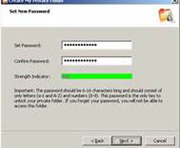 Passwords aren’t the only failure point in many recent widely publicized intrusions by hackers.

But passwords played a part in the perfect storm of users, service providers and technology failures that can result in epic network disasters. Password-based security mechanisms — which can be cracked, reset and socially engineered — no longer suffice in the era of cloud computing.
The problem is this: The more complex a password is, the harder it is to guess and the more secure it is. But the more complex a password is, the more likely it is to be written down or otherwise stored in an easily accessible location, and therefore the less secure it is. And the killer corollary: If a password is stolen, its relative simplicity or complexity becomes irrelevant.
Password security is the common cold of our technological age, a persistent problem that we can’t seem to solve. The technologies that promised to reduce our dependence on passwords — biometrics, smart cards, key fobs, tokens — have all thus far fallen short in terms of cost, reliability or other attributes. And yet, as ongoing news reports about password breaches show, password management is now more important than ever.
All of which makes password management a nightmare for IT shops. “IT faces competing interests,” says Forrester analyst Eve Maler. “They want to be compliant and secure, but they also want to be fast and expedient when it comes to synchronizing user accounts.”