





 Sign up for our Technology Newsletter

Virtru Goes Office 365
April 8, 2014 by admin
Filed under Around The Net
Comments Off on Virtru Goes Office 365
Virtru has added Microsoft’s Office 365 and Outlook Desktop services to its growing list of compatible email platforms available on its encryption product.

The company, headquartered in Washington, D.C. and launched in January, is targeting people using major email providers who want stronger privacy controls for more secure communication.
The service is designed to be easy to use for end users who may not have the technical gumption to set up PGP (Pretty Good Privacy), a standard for signing and encrypting content.
Virtru is compatible with most major webmail providers, including Google’s Gmail, Yahoo’s Mail and Microsoft’s Outlook webmail, which replaced Hotmail.
Emails sent using Virtru through those services would look like gibberish, providing a greater degree of privacy. Law enforcement or other entities would not be able to read the content unless they could obtain the key.
Virtru uses a browser extension to encrypt email on a person’s computer or mobile device. The content is decrypted after recipients receive a key, which is distributed by Virtru’s centralized key management server.
Although Virtru handles key management, the company is working on a product that would allow that task to be managed on-site for users, as some administrators would be uncomfortable with another entity managing their keys.
Virtru has said it put aside funds to contest government orders such as a National Security Letter or law enforcement request that are not based on a standard of probable cause.
AMD, Intel & nVidia Go OpenGL
AMD, Intel and Nvidia teamed up to tout the advantages of the OpenGL multi-platform application programming interface (API) at this year’s Game Developers Conference (GDC).

Sharing a stage at the event in San Francisco, the three major chip designers explained how, with a little tuning, OpenGL can offer developers between seven and 15 times better performance as opposed to the more widely recognised increases of 1.3 times.
AMD manager of software development Graham Sellers, Intel graphics software engineer Tim Foley and Nvidia OpenGL engineer Cass Everitt and senior software engineer John McDonald presented their OpenGL techniques on real-world devices to demonstrate how these techniques are suitable for use across multiple platforms.
During the presentation, Intel’s Foley talked up three techniques that can help OpenGL increase performance and reduce driver overhead: persistent-mapped buffers for faster streaming of dynamic geometry, integrating Multidrawindirect (MDI) for faster submission of many draw calls, and packing 2D textures into arrays, so texture changes no longer break batches.
They also mentioned during their presentation that with proper implementations of these high-level OpenGL techniques, driver overhead could be reduced to almost zero. This is something that Nvidia’s software engineers have already claimed is impossible with Direct3D and only possible with OpenGL (see video below).
Nvidia’s VP of game content and technology, Ashu Rege, blogged his account of the GDC joint session on the Nvidia blog.
“The techniques presented apply to all major vendors and are suitable for use across multiple platforms,” Rege wrote.
“OpenGL can cut through the driver overhead that has been a frustrating reality for game developers since the beginning of the PC game industry. On desktop systems, driver overhead can decrease frame rate. On mobile devices, however, driver overhead is even more insidious, robbing both battery life and frame rate.”
The slides from the talk, entitled Approaching Zero Driver Overhead, are embedded below.
At the Game Developers Conference (GDC), Microsoft also unveiled the latest version of its graphics API, Directx 12, with Direct3D 12 for more efficient gaming.
Showing off the new Directx 12 API during a demo of Xbox One racing game Forza 5 running on a PC with an Nvidia Geforce Titan Black graphics card, Microsoft said Directx 12 gives applications the ability to directly manage resources to perform synchronisation. As a result, developers of advanced applications can control the GPU to develop games that run more efficiently.
Cisco Goes To The Cloud
April 4, 2014 by admin
Filed under Around The Net
Comments Off on Cisco Goes To The Cloud
Cisco Systems Inc will offer cloud computing services, pledging to spend $1 billion over the next two years to make a foray into a market currently dominated by the world’s biggest online retailer Amazon.com Inc, the Wall Street Journal reported.

Cisco said it will spend the amount to build data centers to help run the new service called Cisco Cloud Services, the Journal reported.
Cisco, which mainly deals in networking hardware, wants to take advantage of companies’ desire to rent computing services rather than buying and maintaining their own machines.
Enterprise hardware spending is dwindling across the globe as companies cope with shrinking budgets, slowing or uncertain economies and a fundamental migration to cloud computing, which reduces demand for equipment by outsourcing data management and computing needs.
“Everybody is realizing the cloud can be a vehicle for achieving better economics (and) lower cost,” the Journal quoted Rob Lloyd, Cisco’s president of development and sales as saying.
“It does not mean that we’re embarking on a strategy to go head-to-head with Amazon.”
Microsoft Corp last year said it was cutting prices for hosting and processing customers’ online data in an aggressive challenge to Amazon’s lead in the growing business of cloud computing.
Cisco could not be immediately reached for comment by Reuters outside regular U.S.business hours.
HP Unveils 3D Plan
March 31, 2014 by admin
Filed under Consumer Electronics
Comments Off on HP Unveils 3D Plan
Hewlett-Packard Co will unveil plans to enter the commercial 3D-printing arena in June, saying it has resolved a number of technical issues that have hindered broader adoption of the high-tech manufacturing process.

Chief Executive Meg Whitman told shareholders the company will make a “big technology announcement” that month around how it will approach a market that has excited the imagination of investors and consumers.
Critics have accused the sci-fi-like technology of being over-hyped and still too immature for widespread consumer adoption.
Industry observers have long expected HP, the largest of several printer-making companies from Canon to Xerox, to eventually get into the business. Whitman said HP’s inhouse researchers have resolved limitations involved with the quality of substrates used in the process, which affects the durability of finished products.
“We actually think we’ve solved these problems,” Whitman told an annual shareholders meeting. “The bigger market is going to be in the enterprise space,” manufacturing parts and prototypes in ways that were not possible before.
“We’re on the case,” she said without elaborating.
HP executives have estimated that worldwide sales of 3D printers and related software and services will grow to almost $11 billion by 2021 from a mere $2.2 billion in 2012.
The nascent 3D-printing market is now dominated by a number of smaller players like MakerBot, a unit of Stratasys that is concentrating on selling more affordable devices to consumers.
Contract manufacturers like Flextronics however already use the technology to help craft prototype parts or devices for corporate clients.
“HP is currently exploring the many possibilities of 3D printing and the company will play an important role in its development,” CTO and HP Labs director Martin Fink said in a February blogpost on HP’s website.
“The fact is that 3D printing is really still an immature technology, but it has a magical aura. The sci-fi movie idea that you can magically create things on command makes the idea of 3D printing really compelling for people.”
Do Chip Makers Have Cold Feet?
It is starting to look like chip makers are having cold feet about moving to the next technology for chipmaking. Fabricating chips on larger silicon wafers is the latest cycle in a transition, but according to the Wall Street Journal chipmakers are mothballing their plans.

Companies have to make massive upfront outlays for plants and equipment and they are refusing, because the latest change could boost the cost of a single high-volume factory to as much as $10 billion from around $4 billion. Some companies have been reining in their investments, raising fears the equipment needed to produce the new chips might be delayed for a year or more.
ASML, a maker of key machines used to define features on chips, recently said it had “paused” development of gear designed to work with the larger wafers. Intel said it has slowed some payments to the Netherlands-based company under a deal to help develop the technology.
Gary Dickerson, chief executive of Applied Materials said that the move to larger wafers “has definitely been pushed out from a timing standpoint”
Web Pioneer Calls For Bill of Rights
The inventor of the world wide web, Tim Berners-Lee, voiced his support for bill of rights to protect freedom of speech on the Internet and users’ rights after leaks about government surveillance of online activity.

25 years since the London-born computer scientist invented the web, Berners-Lee said there was a need for a charter like England’s historic Magna Carta to help guarantee fundamental principles online.
Web privacy and freedom have come under scrutiny since former U.S. National Security Agency contractor Edward Snowden last year leaked a raft of secret documents revealing a vast U.S. government system for monitoring phone and Internet data.
Accusations that NSA was mining personal data of users of Google, Facebook, Skype and other U.S. companies prompted President Barack Obama to announce reforms in January to scale back the NSA program and ban eavesdropping on the leaders of close friends and allies of the United States.
Berners-Lee said it was time for a communal decision as he warned that growing surveillance and censorship, in countries such as China, threatened the future of democracy.
“Are we going to continue on the road and just allow the governments to do more and more and more control – more and more surveillance?” he told BBC Radio on Wednesday.
“Or are we going to set up something like a Magna Carta for the world wide web and say, actually, now it’s so important, so much part of our lives, that it becomes on a level with human rights?” he said, referring to the 1215 English charter.
While acknowledging the state needed the power to tackle criminals using the Internet, he has called for greater oversight over spy agencies such Britain’s GCHQ and the NSA, and over any organizations collecting data on private individuals.
He has previously spoken in support of Snowden, saying his actions were “in the public interest”.
Berners-Lee and the World Wide Web Consortium, a global community with a mission to lead the web to its full potential, have launched a year of action for a campaign called the Web We Want, urging people to push for an Internet “bill of rights” for every country.
Can MediaTek Challenge Qualcomm?
A top analyst has said that Qualcomm has nothing to fear from Media Tek’s announcement that it is gunning for the smartphone market.

Qualcomm rules North America and Europe while right now MediaTek is best known for being the leading player in the Chinese market. Now there are signs that MediaTek seems to have reached the maximum market share that they can achieve in China and will be looking to go after Qualcomm in other markets.
But Jefferies analyst Peter Misek views MediaTek’s cunning plan as more of a medium to long-term threat to Qualcomm versus a near-term threat.
He commented, “The high-end smartphone market is saturated and while we believe that pricing and subsidy pressure will become more severe globally, Qualcomm has significant opportunities through integration, iPhone 6, and royalty collections in China.”
Of course it is optimistic to think that the iPhone 6 will do well in China. Many analysts have lost their lunch money betting on Jobs’ Mob doing anything in China.
nVidia Outs CUDA 6
Nvidia has made the latest GPU programming language CUDA 6 Release Candidate available for developers to download for free.
The release arrives with several new features and improvements to make parallel programming “better, faster and easier” for developers creating next generation scientific, engineering, enterprise and other applications.
Nvidia has aggressively promoted its CUDA programming language as a way for developers to exploit the floating point performance of its GPUs. Available now, the CUDA 6 Release Candidate brings a major new update in unified memory access, which lets CUDA applications access CPU and GPU memory without the need to manually copy data from one to the other.
“This is a major time saver that simplifies the programming process, and makes it easier for programmers to add GPU acceleration in a wider range of applications,” Nvidia said in a blog post on Thursday.
There’s also the addition of “drop-in libraries”, which Nvidia said will accelerate applications by up to eight times.
“The new drop-in libraries can automatically accelerate your BLAS and FFTW calculations by simply replacing the existing CPU-only BLAS or FFTW library with the new, GPU-accelerated equivalent,” the chip designer added.
Multi-GPU Scaling has also been added to the CUDA 6 programming language, introducing re-designed BLAS and FFT GPU libraries that automatically scale performance across up to eight GPUs in a single node. Nvidia said this provides over nine teraflops of double-precision performance per node, supporting larger workloads of up to 512GB in size, more than it’s supported before.
“In addition to the new features, the CUDA 6 platform offers a full suite of programming tools, GPU-accelerated math libraries, documentation and programming guides,” Nvidia said.
The previous CUDA 5.5 Release Candidate was issued last June, and added support for ARM based processors.
Aside from ARM support, Nvidia also improved Hyper-Q support in CUDA 5.5, which allowed developers to use MPI workload prioritisation. The firm also touted improved performance analysis and improved performance for cross-compilation on x86 processors.
Target Makes Information Security Changes
Comments Off on Target Makes Information Security Changes
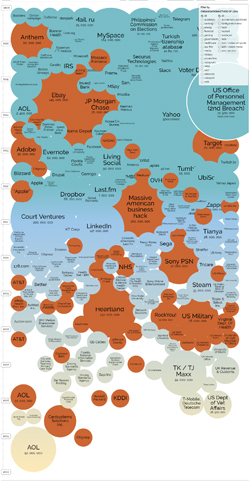
Target Corp announced an overhaul of its information security processes and the departure of its chief information officer as the retailer tries to re-gain customers and investors after a massive data breach late last year.

CIO Beth Jacob is the first high-level executive to leave the company following the breach, which led to the theft of about 40 million credit and debit card records and 70 million other records of customer details.
Jacob, who comes from a sales background and has been CIO since 2008, will be replaced by an external hire, according to sources at Target.
“It’s a decision that should have been made by the CEO on January 1, not through the resignation of an employee that overlooked critical weakness in the operating model,” Belus Capital Advisors CEO Brian Sozzi said.
The breach at Target was the second largest at a U.S. retailer, after the theft of more than 90 million credit cards over about 18 months was uncovered in 2007 at TJX Cos Inc, operator of the T.J. Maxx and Marshalls chains.
Hacking has become a major concern for retailers in the United States. In the latest reported breach, beauty products retailer and distributor Sally Beauty Holdings Inc said on Wednesday its network had been hacked but no card or customer data appeared to have been stolen.
Target Chief Executive Gregg Steinhafel said the company would elevate the role of chief information security officer as part of its plan to tighten its security.
The company will also look externally to fill that position as well as the new position of chief compliance officer.
Steinhafel said Target would be advised by security consultant Promontory Financial Group as it evaluates its technology, structure, processes and talent.
“I believe this is definitely a measure in restoring faith and really showing that they are taking the breach seriously,” Heather Bearfield, who runs the cybersecurity practice for accounting firm Marcum LLP, told Reuters.
Target, the third-largest U.S. retailer, said last week customer traffic had started to improve this year after falling significantly toward the end of the holiday shopping season when news of the cyber attack spooked shoppers.
Is AMD Worried?
AMD’s Mantle has been a hot topic for quite some time and despite its delayed birth, it has finally came delivered performance in Battlefield 4. Microsoft is not sleeping it has its own answer to Mantle that we mentioned here.
Oddly enough we heard some industry people calling it DirectX 12 or DirectX Next but it looks like Microsoft is getting ready to finally update the next generation DirectX. From what we heard the next generation DirectX will fix some of the driver overhead problems that were addressed by Mantle, which is a good thing for the whole industry and of course gamers.
AMD got back to us officially stating that “AMD would like you to know that it supports and celebrates a direction for game development that is aligned with AMD’s vision of lower-level, ‘closer to the metal’ graphics APIs for PC gaming. While industry experts expect this to take some time, developers can immediately leverage efficient API design using Mantle. “
AMD also told us that we can expect some information about this at the Game Developers Conference that starts on March 17th, or in less than two weeks from now.
We have a feeling that Microsoft is finally ready to talk about DirectX Next, DirectX 11.X, DirectX 12 or whatever they end up calling it, and we would not be surprised to see Nvidia 20nm Maxwell chips to support this API, as well as future GPUs from AMD, possibly again 20nm parts.