





 Sign up for our Technology Newsletter

Cisco Launches I-O-T Security Contest
Cisco has leant its support to the Internet of Things (IoT) with a security competition.
The “Internet of Things Grand Security Challenge” will be offering prizes of up to $300,000 for innovations designed to close security loopholes surrounding internet-connected objects.
Because the IoT is a loose concept rather than a standard or protocol, the criteria for the solutions are quite far reaching, with a Cisco blog post citing that it will evaluate entries based on:
Feasibility, scalability, performance, and ease-of-use
Applicability to address multiple IoT verticals (manufacturing, mass transportation, healthcare, oil and gas, smart grid, etc.)
Technical maturity/viability of proposed approach
Proposers’ expertise and ability to feasibly create a successful outcome
We now live in a world where even the most benign objects are hackable and the numbers of devices involved will only increase, so it therefore will become imperative that the interconnectivity involved does not overstep boundaries of safety or privacy.
Sierra Wireless recently launched Legato, a Linux distro specifically engineered for the IoT, which actually plays up its capacity for gathering Big Data. Meanwhile the IT industry continues to be excited about the IoT with Intel claiming it will be the next major disrupter in tech.
Winners of Cisco’s security challenge will be announced this Autumn at the Internet of Things World Forum, with six prizes of between $50,000-$75,000 up for grabs, as well as the overall winner’s $300,000 bounty.
Is Samsung Ditching Android?
March 13, 2014 by admin
Filed under Around The Net
Comments Off on Is Samsung Ditching Android?
Samsung appears to have delivered a huge snuff to Android OS maker Google. Samsung’s new smartwatch Gear 2 and Gear 2 Neo, the sequels to the poorly reviewed original Galaxy Gear are going to ship without Android.
Instead, the new Gears run Tizen, another open source operating system that Samsung, Intel, and others are working on. It is starting to look like Samsung wants to distance itself from its reliance on Google for software and services.
Samsung’s official reason is that Tizen has better battery life and performance. The new Gears can get up to an extra two days of battery life by running Tizen, even though they have the same size battery. The Galaxy Gear barely made it through a day on one charge.
To be fair Android isn’t optimized to run on wearable devices like smart watches, but Samsung didn’t want to wait around for Google to catch up. It was clearly concerned about beating Apple to market. So far Apple has not shown up.
Did Sears Suffer A Data Breach?
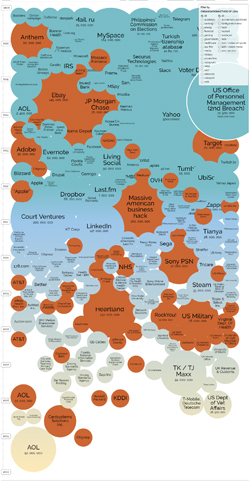
Sears Holdings Corp acknowledged it has launched an investigation to determine whether it was the victim of a security breach, following Target Corp’s revelation at the end of last year that it had suffered an unprecedented cyber attack.

“There have been rumors and reports throughout the retail industry of security incidents at various retailers and we are actively reviewing our systems to determine if we have been a victim of a breach,” Sears spokesman Howard Riefs said in a statement on Friday.
“We have found no information based on our review of our systems to date indicating a breach,” he added.
He did not say when the operator of Sears department stores and Kmart discount stores had begun the investigation or provide other information about the probe.
Sears Holdings Corp operates nearly 2,500 retail stores in the United States and Canada.
Bloomberg News reported on Friday that the U.S. Secret Service was investigating a possible secret breach at Sears, citing a person familiar with the investigation. The report did not identify that source by name.
The Bloomberg report said that its source did not disclose details about the scope or timing of the suspected breach.
A spokesman for the U.S. Secret Service declined comment when Reuters asked if the agency was investigating a possible breach at Sears.
The Secret Service is leading the U.S. government’s investigation into last year’s attack on Target, which the company has said led to the theft of some 40 million payment card numbers as well as another 70 million pieces of personal data.
Is Ethernet For Autos?
March 11, 2014 by admin
Filed under Around The Net
Comments Off on Is Ethernet For Autos?
The most ubiquitous local area networking technology used by large companies may be packing its bags for a road trip.

As in-vehicle electronics become more sophisticated to support autonomous driving, cameras, and infotainment systems, Ethernet has become a top contender for connecting them.
For example, the BMW X5 automobile, released last year, used single-pair twisted wire, 100Mbps Ethernet to connect its driver-assistance cameras.
Paris-based Parrot, which supplies mobile accessories to automakers BMW, Hyundai and others, has developed in-car Ethernet. Its first Ethernet-connected systems could hit the market as soon as 2015, says Eric Riyahi, executive vice president of global operations.
Parrot’s new Ethernet-based Audio Video Bridging (AVB) technology uses Broadcom’s BroadR-Reach automotive Ethernet controller chips.
The AVB technology’s network management capabilities allows automakers to control the timing of data streams between specific network nodes in a vehicle and controls the bandwidth in order to manage competing data traffic.
Ethernet’s greater bandwidth could provide drivers with turn-by-turn navigation while a front-seat passenger streams music from the Internet, and each back-seat passenger watches streaming videos on separate displays.
“In-car Ethernet is seen as a very promising way to provide the needed bandwidth for coming new applications within the fields of connectivity, infotainment and safety,” said Hans Alminger, senior manager for Diagnostics & ECU Platform at Volvo, in a statement.
Ethernet was initially used by automakers only for on-board diagnostics. But as automotive electronics advanced, the technology has found a place in advanced driver assistance systems and infotainment platforms.
Many manufacturers also use Ethernet to connect rear vision cameras to a car’s infotainment or safety system, said Patrick Popp, chief technology officer of Automotive at TE Connectivity, a maker of car antennas and other automobile communications parts.
Currently, however, there are as many as nine proprietary auto networking specifications, including LIN, CAN/CAN-FD, MOST and FlexRay. FlexRay, for example, has a 10Mbps transmission rate. Ethernet could increase that 10 fold or more.
The effort to create a single vehicle Ethernet standard is being lead by Open Alliance and the IEEE 802.3 working group. The groups are working to establish 100Mbps and 1Gbps Ethernet as de facto standards.
The first automotive Ethernet standard draft is expected this year.
The Open Alliance claims more than 200 members, including General Motors, Ford, Daimler, Honda, Hyundai, BMW, Toyota, Volkswagen. Jaguar Land Rover, Renault, Volvo, Bosch, Freescale and Harman.
Broadcom, which makes electronic control unit chips for automobiles, is a member of the Open Alliance and is working on the effort to standardize automotive Ethernet.
What Do Smaller Controllers Mean?
If you want a wearable Internet of Things, the electronics have to be as tiny and as energy efficient as possible. That’s why a new microcontroller by Freescale Semiconductor is noteworthy.

The company has produced the Kinetis KLO3 MCU, a 32-bit ARM system that is 15% smaller than its previous iteration but with a 10% power improvement.
Internet of Things is a buzzword for the trend toward network-connected sensors incorporated into devices that in the past were standalone appliances. These devices use sensors to capture things like temperatures in thermostats, pressure, accelerometers, gyroscopes and other types of MEMS sensors. A microcontroller unit gives intelligence and limited computational capability to these devices, but is not a general purpose processor. One of the roles of the microcontroller is to connect the data with more sophisticated computational power.
The Kinetis KLO3 runs a lightweight embedded operating system to connect the data to other devices, such as an app that uses a more general purpose processor.
Kathleen Jachimiak, product launch manager at Freescale, said the new microcontroller will “enable further miniaturization” in connected devices. This MCU is capable of having up to 32 KB of flash memory and 2 KB of RAM.
Consumers want devices that are light, small and smart. They also want to be able to store their information and send it to an application that’s either on a phone or a PC, Jachimiak said.
This microcontroller, at 1.6 x 2.0 mm, is smaller than the dimple on a golf ball, and uses a relatively new process in its manufacturing, called wafer level chip scale packaging. The process involves building the integrated package while the die is still part of a wafer. It’s a more efficient process and produces the smallest possible package, for a given die size.
Dell Goes A4WP
Dell has become the first major PC OEM to join the Alliance for Wireless Power (A4WP) group, joining over 80 existing members Broadcom, Gill Electronics, IDT, Intel, Qualcomm and Samsung.
Dell’s membership means it could soon be developing mobile devices that do not require a wired power adapter to charge.
The A4WP aims to standardise wireless power transfer using near-field magnetic resonance technology called “rezence”, which seeks to liberate mobile devices from wired chargers, charging multiple devices simultaneously without the need to dock the devices.
“Power levels and charging speed will meet the expectations of today’s ‘always on, always connected’ user,” the A4WP said. “Users can simply ‘drop and go’ their devices onto a charging surface without the hassle of accurate positioning or alignment.”
Along with the news that Dell will jump on board to unshackle users from the curse of wired chargers, A4WP is also introducing a secondary, higher-powered project focusing on wirelessly charging electronic products from 20 to 50 watts, like ultrabooks, laptops, and mid-powered appliances.
“Dell’s addition to the Alliance signifies the importance of defining a wireless power standard that spans these higher power levels thus expanding the range of electronics beyond smartphones,” the group added.
A4WP said it believes the development of magnetic resonance technology will improve the customer experience when it comes to charging and will bring the capability into more homes and businesses over the next few years.
It also said that its development of wireless charging technology will help benefit both industry and consumers as the specification powers broadly adopted wireless technologies such as Bluetooth Smart, “which simplifies development and manufacturing”.
Can BB Benefit From The WhatsApp Deal?
March 3, 2014 by admin
Filed under Around The Net
Comments Off on Can BB Benefit From The WhatsApp Deal?
Facebook Inc’s awe-inspiring $19 billion bid for fast-growing mobile-messaging startup WhatsApp sent shares of BlackBerry Ltd surging after the closing bell as early as Wednesday, as investors were cheered by the lofty valuation for the messaging platform.

The deal sent shares in BlackBerry up as much as 9 percent in trading after the bell because it put a rough valuation metric around the smartphone maker’s own BlackBerry Messaging service.
BlackBerry Messaging, or BBM as it is more commonly known, was a pioneering mobile-messaging service, but its user base has failed to keep pace with that of WhatsApp, in part because BlackBerry had long refused to open the service to users on other platforms.
WhatsApp, with a user base of some 450 million, has grown rapidly. Its service works on Apple Inc’s iOS platform, Google Inc’s market-dominating Android operating system, along with devices powered by both the Windows and BlackBerry operating systems.
BBM remains popular, even though BlackBerry devices have waned in popularity. Late last year, the Waterloo, Ontario-based smartphone maker finally opened the messaging platform to users of iPhones and Android devices, and the service currently has over 80 million active users.
However, investors have attributed little value to the asset within the company. On Tuesday, Raymond James analyst Steven Li, in a note to clients, broke out a sum-of-parts valuation of the company and pegged the value of BBM at merely $240 million, or $3 per user.
Facebook’s valuation of WhatsApp translates into roughly $42 per user, and that could lead investors and analysts to rethink their valuation of the asset within BlackBerry.
BlackBerry has given no indication it is keen to sell the asset. While there has been some speculation that BlackBerry may seek to carve out the unit, or even sell it, the company’s new Chief Executive John Chen has so far said that BBM remains a core asset for the company.
Ubuntu Cross-Platform Delayed
Ubuntu will not offer cross-platform apps as soon as it had hoped.
Canonical had raised hopes that its plan for Ubuntu to span PCs and mobile devices would be realised with the upcoming Ubuntu 14.04 release, providing a write-once, run-on-many template similar to that planned by Google for its Chrome OS and Android app convergence.
This is already possible on paper and the infrastructure is in place on smartphone and tablet versions of Ubuntu through its new Unity 8 user interface.
However, Canonical has decided to postpone the rollout of Unity 8 for desktop machines, citing security concerns, and it will now not appear along with the Mir display server this coming autumn.
This will apply only to apps in the Ubuntu store, and in the true spirit of open source, anyone choosing to step outside that ecosystem will be able to test the converged Ubuntu before then.
Ubuntu community manager Jono Bacon told Ars Technica, “We don’t plan on shipping apps in the new converged store on the desktop until Unity 8 and Mir lands.
“The reason is that we use app insulation to (a) run apps securely and (b) not require manual reviews (so we can speed up the time to get apps in the store). With our plan to move to Mir, our app insulation doesn’t currently insulate against X apps sniffing events in other X apps. As such, while Ubuntu SDK apps in click packages will run on today’s Unity 7 desktop, we don’t want to make them readily available to users until we ship Mir and have this final security consideration in place.
“Now, if a core-dev or motu wants to manually review an Ubuntu SDK app and ship it in the normal main/universe archives, the security concern is then taken care of with a manual review, but we are not recommending this workflow due to the strain of manual reviews.”
As well as the aforementioned security issues, there are still concerns that cross-platform apps don’t look quite as good on the desktop as native desktop versions and the intervening six months will be used to polish the user experience.
Getting the holistic experience right is essential for Ubuntu in order to attract OEMs to the converged operating system. Attempts to crowdfund its own Ubuntu handset fell short of its ambitious $20m target, despite raising $10.2 million, the single largest crowdfunding total to date.
Samsung Joins OpenPower
Samsung has joined Google, Mellanox, Nvidia and other tech companies as part of IBM’s OpenPower Consortium. The OpenPower Consortium is working toward giving developers access to an expanded and open set of server technologies to improve data centre hardware using chip designs based on the IBM Power architecture.
Last summer, IBM announced the formation of the consortium, following its decision to license the Power architecture. The OpenPower Foundation, the actual entity behind the consortium, opened up the Power architecture technology, including specs, firmware and software under a license. Firmware is offered as open source. Originally, OpenPower was the brand of a range of System p servers from IBM that utilized the Power5 CPU. Samsung’s products currently utilize both x86 and ARM-based processors.
The intention of the consortium is to develop advanced servers, networking, storage and GPU-acceleration technology for new products. The four priority technical areas for development are system software, application software, open server development platform and hardware architecture. Along with its announcement of Samsung’s membership, the organization said that Gordon MacKean, Google’s engineering director of the platforms group, will now become chairman of the group. Nvidia has said it will use its graphics processors on Power-based hardware, and Tyan will be releasing a Power-based server, the first one outside IBM.
Did Intel Kill Bay Trail?
Intel has decided that some of its budget Bay Trail parts have been out evolved and flung them into a tar pit. According to CPU World the parts first appeared in September. Intel released budget Bay Trail systems on a chip for mobile and desktop markets, under Celeron and Pentium brands.
They were manufactured on 22nm technology, and featured such enhancements as greater number of CPU cores, higher clock speeds, beefed up graphics unit, not to mention an out-of-order microarchitecture, that improved per-clock CPU performance by up to 30 per cent faster compared to their predecessors. With this performance goodness it is a little surprising the Intel has decided that all the all Bay Trail SoCs will be discontinued in a matter of a few months. Details of the planned discontinuation were published this week by Intel in several Product Change Notification documents.
The Desktop Pentium J2850, along with mobile Celeron N2810 and Pentium N3510 are already End of Lifed and its last orders will be in two weeks, on February 11. The chips will ship until April 25, 2014. Also retired are mobile Celeron N2806, N2815, N2820, N2920, and Pentium N3520. Their EOL date is April 11, 2014, and they will ship until May 30, 2014. On August 22, 2014, Intel is going to discontinue Celeron J1750, J1850, N2805 and N2910. The “J” models are desktop processors, and the “N” are mobile ones. There is no word on Z-series Bay Trail-T parts, none appear to be EOL’d at this time.
Furthermore, on the same date Intel will retire Core i7-3940XM Extreme Edition, and boxed and tray versions of Core i7-3840QM and i7-3740QM CPUs. The last shipment date for the Celerons and Core i7s is February 6, 2015.