





 Sign up for our Technology Newsletter

MS Surface Pro Sells Out
Microsoft started selling its Surface Pro tablet last Saturday, and quickly ran out of its supply of the 128GB configuration.

While the less expensive 64GB device was also listed as out of stock Saturday on Microsoft’s online store, by Sunday it was again available.
The company acknowledged the outages.
“We’re working with our retail partners who are currently out of stock of the 128GB Surface Pro to replenish supplies as quickly as possible,” said Panos Panay, general manager for Microsoft’s Surface line, in a Saturday blog post. “Our priority is to ensure that every customer gets their new Surface Pro as soon as possible.”
Numerous online reports noted the shortages, saying that some Microsoft retail stores sported Apple-esque lines on Saturday and that many Best Buy and Staples locations — Microsoft’s retail partners for the Surface in the U.S. — had single-digit supplies that in some cases were claimed earlier in the week.
Microsoft is selling the Surface Pro in the U.S. through its online e-mart, its approximately 70 retail outlets, and the Best Buy and Staples chains.
The device, which runs Windows 8 and is powered by an Intel processor, sells for $899 in a 64GB storage configuration, and for $999 with 128GB. Keyboard-cover accessories — the Touch Cover and Type Cover — sell separately for $120 and $130, respectively.
Will SSDs Make HD’s Obsolete?
 HD makers can expect to see revenues decline as demand for traditional disk drives falls, according to IHS Isuppli.
Hard drive manufacturers Seagate, Western Digital and Toshiba have carved up most of the market, lowering warranties and keeping prices high after the Thai floods in 2011 that shuttered several factories. Now IHS Isuppli claims that the good times have come to an end, with industry revenues expected to drop by 11.8 percent in 2013 and 2014 not expected to show signs of improvement.
While Seagate and Western Digital gouged consumers by keeping prices artificially high even after production recovered to pre-flood levels, solid-state disk (SSD) drive makers aggressively brought prices down. Intel has also been pushing SSDs as part of its ultrabook specification and with Windows 8 tablets using SSDs, the long term prospects for hard drive makers are not looking good.
Fang Zhang, analyst for storage systems at IHS Isuppli said, “The HDD industry will face myriad challenges in 2013. Shipments for desktop PCs will slip this year, while notebook sales are under pressure as consumers continue to favour smartphones and tablets. The declining price of SSDs also will allow them to take away some share from conventional HDDs. However, HDDs will continue to be the dominant form of storage this year, especially as demand for ultrabooks picks up and hard drives remain essential in business computing.”
IHS Isuppli said Western Digital could overtake Seagate to become the market share leader by the end of 2013, and said that hard drives will see greater use in the enterprise market in cloud and big data use cases.
IBM Moves Into Oracle And HP Turf
 Big Blue wants to take on competitors such as Oracle and Hewlett Packard by offering a cheap and cheerful Power Systems server and storage product range.
Rod Adkins, a Senior Vice President in IBM’s Systems & Technology Group said the company was was rolling out new servers based on its Power architecture with the Power Express 710 starting at $5,947. He said that the 710 is competitively priced to commodity hardware from Oracle and HP.
Adkins added that IBM is expanding its Power and Storage Systems business into SMB and growth markets. The product launches on Tuesday. IBM said it will start delivering by February 20.
HP Looks Beyond Windows
 Hewlett-Packard has announced the availability of its latest Pavilion laptop with Google’s Chrome OS as the PC maker attempts to improve laptop sales by offering an alternative to the Windows OS.

The Pavilion 14 Chromebook has a 14-inch screen and runs on a dual-core Intel processor. The laptop is roughly 21 millimeters thick, and weighs 1.8 kilograms. It offers just over four hours of battery life, said David Conrad, director for product management at HP’s consumer products group.
The laptop is expected to ship on Monday in the U.S. starting at $329.99. The company did not immediately provide worldwide availability information.
HP wanted to widen its product offerings and the new Chromebook is targeted at those who do most of their computing on the Web, Conrad said.
“It’s really about choice. We have a very wide offering,” Conrad said. “We think the time is right for an additional choice for people to have a gateway to their Google digital lifestyle.”
The laptop has only 16GB of solid-state drive storage, but will offer 100GB of free Google Drive storage for two years.
The Chromebook has the same design as HP’s other PC offerings, which mostly run on Windows and have standard-capacity hard drives. But, with a lot of data moving to the cloud, the Chromebook provides a different usage model.
“We see this as another device to be used around the house. It’s easily managed,” Conrad said.
Blackberry Makes A Comeback
February 5, 2013 by admin
Filed under Smartphones
Comments Off on Blackberry Makes A Comeback
Research In Motion has hinted that it will unveil two new handsets early next month to accompany the release of its BlackBerry 10 operating system.

RIM is expected to unveil the phones at an event in New York City on Wednesday and will begin promoting BlackBerry 10 to consumers the following Sunday, Feb. 3, when it will air a TV commercial during the Super Bowl.
The sporting event attracts one of the largest TV audiences of the year in America, and companies pay millions of dollars for a 30-second advertising spot, underscoring how important it is for RIM that its new BlackBerry platform will be a hit. The same commercial will also air in Canada, RIM’s home country.
In announcing its publicity plans Friday, RIM also hinted at when the phones will be available to consumers. It said the TV spot “kicks off a week of worldwide launch activity for RIM’s BlackBerry 10 platform, along with the first two devices to run on the new platform.”
If the commercial marks the start of a weeklong buildup to the launch, that would put the North American release of the phones at roughly the start of the second week in February.
Is Apple Hiding Billions?
February 4, 2013 by admin
Filed under Around The Net
Comments Off on Is Apple Hiding Billions?
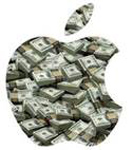 According to Apple’s Q4 corporate filings, the company channeled $11 billion into tax havens in a single quarter. The Sunday Times claims the company is sheltering a total of $94 billion in tax havens. However, Apple’s activities are completely legal and the IRS can’t do anything about it.

But Apple’s tax avoidance strategy is not limited to the US. The company is avoided an estimated £550 million in tax in Britain back in 2011. A different analysis suggests a £550 million tax bill. Let’s not forget Kate Middleton is about to have a baby, and babies tend to cost money, so shame on you Apple.
American politicians, from both sides of the political spectrum, like to have their photos taken next to anything Apple. The company is often viewed as an American success story, as it managed to reinvent itself and come back from the brink to become the world’s second most valuable company.
FTC Defends Google Decision
January 25, 2013 by admin
Filed under Around The Net
Comments Off on FTC Defends Google Decision
The FTC defended its decision to let Google carry on with its anti-trust-like antics, while other regulations in civilized nations are planning to put the boot in.
The US Federal Trade Commission reached a settlement with Google which really did little to stop the company using its dominance to push down search results from its competitors. The move attracted considerable criticism because it followed a letter from US senators to go easy on the search engine because it was good for US jobs. We guess they mean the jobs of US senators who Google paid campaign contributions.
Google promised to change the ways it presents some search results and runs search advertising, but was exonerated of the results bias claims. Rivals including Yelp and Microsoft claimed that Google had favored its own product results over those of its competitors and called for the anti-trust case. What makes the case look more suspect is that the EU is less frightened of actually fining Google or forcing it to behave. Indeed indications from Brussels are that it has not only agreed with the rival’s complaints but will do something about it if Google does not pull finger.
But FTC chairman Jon Leibowitz told Talking Points Memo that the agency’s decision was legally sound and would be beneficial to competition and consumers. Under facts we found, all five of us, from liberal Democrat to conservative Republican, agreed that the evidence militated against an anti-trust case,” Leibowitz told TPM.
The fact that we managed to have both Google and Google’s rivals unhappy, in an odd way that’s maybe unique to Washington, that puts us in the right place substantively, he claimed. When asked if Google’s $25 million lobbying budget for the duration FTC’s investigation helped, he said that lobbying makes the companies feel good and lobbyists feel good.
“At the end of the day, whether you want to say lobbying had any influence, or cancelled itself out because there was lobbying on both sides, if you’re going to do what lobbyists want you to do in a regulatory agency, you’re not doing your job.”
Energy Star Goes To Tablets
January 24, 2013 by admin
Filed under Around The Net
Comments Off on Energy Star Goes To Tablets
Coming to a tablet near you soon, Energy Star ratings.

The specification will be part of the Energy Star version 6.1, according to documents posted on the U.S. Energy Star website. But a date for ratings on tablets has not yet been established, said Robert Meyers, product manager at Energy Star computers. Energy Star is a joint effort between the U.S. Environmental Protection Agency and the U.S. Department of Energy.
The Energy Star specification helps shoppers identify the most power-efficient products when making purchases. The Energy Star program already covers laptops, desktops, monitors, light bulbs, servers, household appliances and other products that are identified with a label. The use of Energy Star-labeled products helped cut close to US$18 billion from U.S. utility bills in 2010, according to the organization.
The EPA and DOE originally floated the idea of including tablets as part of Energy Star version 6.0 for products like laptops, desktops, displays, thin clients and networking equipment, which goes into effect on June 1. Some IT vendors that participate in the Energy Star program argued against the immediate inclusion of tablets, saying that those devices are more like smartphones than PCs and have different assembly and equipment. They argued that tablets and laptops differ on components such as batteries and networking equipment, and thus cannot be grouped together with PCs. The EPA and those stakeholders are now trying to gather a consensus on the definition of tablets and how to rate the devices.
Anonymous Attacks MIT
January 23, 2013 by admin
Filed under Around The Net
Comments Off on Anonymous Attacks MIT
Anonymous goes after the Massachusetts Institute of Technology (MIT) website after its president called for an internal investigation into what role it played in the prosecution of web activist Aaron Swartz.
MIT president Rafael Reif revealed the investigation in an email to staff that he sent out after hearing the news about Swartz’s death.
“I want to express very clearly that I and all of us at MIT are extremely saddened by the death of this promising young man who touched the lives of so many. It pains me to think that MIT played any role in a series of events that have ended in tragedy,” he wrote.
“I have asked Professor Hal Abelson to lead a thorough analysis of MIT’s involvement from the time that we first perceived unusual activity on our network in fall 2010 up to the present. I have asked that this analysis describe the options MIT had and the decisions MIT made, in order to understand and to learn from the actions MIT took. I will share the report with the MIT community when I receive it.”
Hacktivists from Anonymous defaced two MIT webpages in the wake of the announcement and turned them into memorials for Swartz.
Bonets Attack U.S. Banks
January 18, 2013 by admin
Filed under Around The Net
Comments Off on Bonets Attack U.S. Banks
Evidence collected from a website that was recently used to flood U.S. banks with junk traffic suggests that the responsible parties behind the ongoing DDoS attack campaign against U.S. financial institutions — thought by some to be the work of Iran — are using botnets for hire.

The compromised website contained a PHP-based backdoor script that was regularly instructed to send numerous HTTP and UDP (User Datagram Protocol) requests to the websites of several U.S. banks, including PNC Bank, HSBC and Fifth Third Bank, Ronen Atias, a security analyst at Web security services provider Incapsula, said Tuesday in a blog post.
Atias described the compromised site as a “small and seemingly harmless general interest UK website” that recently signed up for Incapsula’s services.
An analysis of the site and the server logs revealed that attackers were instructing the rogue script to send junk traffic to U.S. banking sites for limited periods of time varying between seven minutes and one hour. The commands were being renewed as soon as the banking sites showed signs of recovery, Atias said.
During breaks from attacking financial websites the backdoor script was being instructed to attack unrelated commercial and e-commerce sites. “This all led us to believe that we were monitoring the activities of a Botnet for hire,” Atias said.
“The use of a Web Site as a Botnet zombie for hire did not surprise us,” the security analyst wrote. “After all, this is just a part of a growing trend we’re seeing in our DDoS prevention work.”