





 Sign up for our Technology Newsletter

Zeus Attached To Cancer Email Scam
March 28, 2014 by admin
Filed under Around The Net
Comments Off on Zeus Attached To Cancer Email Scam
Thousands of email users have been hit by a sick cancer email hoax that aims to infect the recipients’ computers with Zeus malware.
The email has already hit thousands of inboxes across the UK, and looks like it was sent by the National Institute for Health and Care Excellence (NICE). It features the subject line “Important blood analysis result”.
However, NICE has warned that it did not send the malicious emails, and is urging users not to open them.
NICE chief executive Sir Andrew Dillon said, “A spam email purporting to come from NICE is being sent to members of the public regarding cancer test results.
“This email is likely to cause distress to recipients since it advises that ‘test results’ indicate they may have cancer. This malicious email is not from NICE and we are currently investigating its origin. We take this matter very seriously and have reported it to the police.”
The hoax message requests that users download an attachment that purportedly contains the results of the faux blood analysis.
Security analysis firm Appriver has since claimed that the scam email is carrying Zeus malware that if installed will attempt to steal users’ credentials and take over their PCs.
Appriver senior security specialist Fred Touchette warned, “If the attachment is unzipped and executed the user may see a quick error window pop up and then disappear on their screen.
“What they won’t see is the downloader then taking control of their PC. It immediately begins checking to see if it is being analysed, by making long sleep calls, and checking to see if it is running virtually or in a debugger.
“Next it begins to steal browser cookies and MS Outlook passwords from the system registry. The malware in turn posts this data to a server at 69.76.179.74 with the command /ppp/ta.php, and punches a hole in the firewall to listen for further commands on UDP ports 7263 and 4400.”
Will GoDaddy Do An IPO?
March 26, 2014 by admin
Filed under Around The Net
Comments Off on Will GoDaddy Do An IPO?
Web hosting company The GoDaddy Group Inc is gearing up for a second attempt at an initial public offering, according to two people familiar with the matter, as the 2014 tech IPO pipeline continues to grow.

GoDaddy, the Internet domain registrar and web host known for its racy ads, would join a number of high-profile tech names expected to go public this year in the wake of Twitter Inc’s successful debut. They include “Candy Crush” developer King Digital and cloud services providers Box and Dropbox.
The company is in the process of selecting underwriters for its IPO, one of the two sources said on condition of anonymity.
GoDaddy was not immediately available for comment.
GoDaddy had filed to go public in 2006 but was told at the time that it would be required to take a 50 percent haircut — a percentage that is subtracted from the par value of assets that are being used as collateral — on its initial public offering.
The company instead decided to pull its filing, citing unfavorable market conditions.
The company, founded in 1997, was eventually acquired by a private equity consortium led by KKR & Co and Silver Lake in 2011 for $2.25 billion. Silver Lake declined to comment while KKR did not immediately respond to a request for comment.
Other private equity buyers included Technology Crossover Ventures.
GoDaddy, which provides website domain names, is famous for airing bawdy commercials with scantily clad women for the past decade during the Super Bowl.
The Wall Street Journal first reported on the plans.
Will Chrome’s API Work?
March 25, 2014 by admin
Filed under Around The Net
Comments Off on Will Chrome’s API Work?
Google has targeted web browser settings hijacking in its latest update to Chrome for Windows.
On the Chromium blog, Google engineering director Erik Kay announced an extension settings API designed to ensure that users have notice and control over any settings changes made to their web browsers.
As a result, the only way extensions will be able to make changes to browser settings such as the default search engine and start page will be through this API.
Bargain hungry consumers are often unaware that freeware programs often bundle add-on programs for which developers receive payment but can create irritating, rather than malicious, changes to user settings.
Although there is usually consent sought at installation, quite often it is ignored or not understood, and the people who miss the warnings are generally the same ones who find it hard to change the settings back.
Kay said that the API is available in the Chromium developer channel, with a rollout to the stable channel set for May.
The Chromium stable channel has been updated to version 33.0.1750.149. The main change is an update to the embedded Flash Player for Windows, which is now version 12.0.0.77.
There are seven new security fixes, most of which were user submitted via the open source Fast Memory Detector Address Sanitizer.
Although the user community and Chrome team continue to proactively protect the Chromium project, third party extensions can still cause problems, with several already having been removed from the Chrome Store this year.
Web Pioneer Calls For Bill of Rights
The inventor of the world wide web, Tim Berners-Lee, voiced his support for bill of rights to protect freedom of speech on the Internet and users’ rights after leaks about government surveillance of online activity.

25 years since the London-born computer scientist invented the web, Berners-Lee said there was a need for a charter like England’s historic Magna Carta to help guarantee fundamental principles online.
Web privacy and freedom have come under scrutiny since former U.S. National Security Agency contractor Edward Snowden last year leaked a raft of secret documents revealing a vast U.S. government system for monitoring phone and Internet data.
Accusations that NSA was mining personal data of users of Google, Facebook, Skype and other U.S. companies prompted President Barack Obama to announce reforms in January to scale back the NSA program and ban eavesdropping on the leaders of close friends and allies of the United States.
Berners-Lee said it was time for a communal decision as he warned that growing surveillance and censorship, in countries such as China, threatened the future of democracy.
“Are we going to continue on the road and just allow the governments to do more and more and more control – more and more surveillance?” he told BBC Radio on Wednesday.
“Or are we going to set up something like a Magna Carta for the world wide web and say, actually, now it’s so important, so much part of our lives, that it becomes on a level with human rights?” he said, referring to the 1215 English charter.
While acknowledging the state needed the power to tackle criminals using the Internet, he has called for greater oversight over spy agencies such Britain’s GCHQ and the NSA, and over any organizations collecting data on private individuals.
He has previously spoken in support of Snowden, saying his actions were “in the public interest”.
Berners-Lee and the World Wide Web Consortium, a global community with a mission to lead the web to its full potential, have launched a year of action for a campaign called the Web We Want, urging people to push for an Internet “bill of rights” for every country.
Can MediaTek Challenge Qualcomm?
A top analyst has said that Qualcomm has nothing to fear from Media Tek’s announcement that it is gunning for the smartphone market.

Qualcomm rules North America and Europe while right now MediaTek is best known for being the leading player in the Chinese market. Now there are signs that MediaTek seems to have reached the maximum market share that they can achieve in China and will be looking to go after Qualcomm in other markets.
But Jefferies analyst Peter Misek views MediaTek’s cunning plan as more of a medium to long-term threat to Qualcomm versus a near-term threat.
He commented, “The high-end smartphone market is saturated and while we believe that pricing and subsidy pressure will become more severe globally, Qualcomm has significant opportunities through integration, iPhone 6, and royalty collections in China.”
Of course it is optimistic to think that the iPhone 6 will do well in China. Many analysts have lost their lunch money betting on Jobs’ Mob doing anything in China.
Target Makes Information Security Changes
Comments Off on Target Makes Information Security Changes
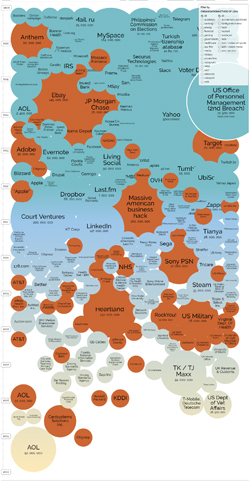
Target Corp announced an overhaul of its information security processes and the departure of its chief information officer as the retailer tries to re-gain customers and investors after a massive data breach late last year.

CIO Beth Jacob is the first high-level executive to leave the company following the breach, which led to the theft of about 40 million credit and debit card records and 70 million other records of customer details.
Jacob, who comes from a sales background and has been CIO since 2008, will be replaced by an external hire, according to sources at Target.
“It’s a decision that should have been made by the CEO on January 1, not through the resignation of an employee that overlooked critical weakness in the operating model,” Belus Capital Advisors CEO Brian Sozzi said.
The breach at Target was the second largest at a U.S. retailer, after the theft of more than 90 million credit cards over about 18 months was uncovered in 2007 at TJX Cos Inc, operator of the T.J. Maxx and Marshalls chains.
Hacking has become a major concern for retailers in the United States. In the latest reported breach, beauty products retailer and distributor Sally Beauty Holdings Inc said on Wednesday its network had been hacked but no card or customer data appeared to have been stolen.
Target Chief Executive Gregg Steinhafel said the company would elevate the role of chief information security officer as part of its plan to tighten its security.
The company will also look externally to fill that position as well as the new position of chief compliance officer.
Steinhafel said Target would be advised by security consultant Promontory Financial Group as it evaluates its technology, structure, processes and talent.
“I believe this is definitely a measure in restoring faith and really showing that they are taking the breach seriously,” Heather Bearfield, who runs the cybersecurity practice for accounting firm Marcum LLP, told Reuters.
Target, the third-largest U.S. retailer, said last week customer traffic had started to improve this year after falling significantly toward the end of the holiday shopping season when news of the cyber attack spooked shoppers.
Is AMD Worried?
AMD’s Mantle has been a hot topic for quite some time and despite its delayed birth, it has finally came delivered performance in Battlefield 4. Microsoft is not sleeping it has its own answer to Mantle that we mentioned here.
Oddly enough we heard some industry people calling it DirectX 12 or DirectX Next but it looks like Microsoft is getting ready to finally update the next generation DirectX. From what we heard the next generation DirectX will fix some of the driver overhead problems that were addressed by Mantle, which is a good thing for the whole industry and of course gamers.
AMD got back to us officially stating that “AMD would like you to know that it supports and celebrates a direction for game development that is aligned with AMD’s vision of lower-level, ‘closer to the metal’ graphics APIs for PC gaming. While industry experts expect this to take some time, developers can immediately leverage efficient API design using Mantle. “
AMD also told us that we can expect some information about this at the Game Developers Conference that starts on March 17th, or in less than two weeks from now.
We have a feeling that Microsoft is finally ready to talk about DirectX Next, DirectX 11.X, DirectX 12 or whatever they end up calling it, and we would not be surprised to see Nvidia 20nm Maxwell chips to support this API, as well as future GPUs from AMD, possibly again 20nm parts.
Is Samsung Ditching Android?
March 13, 2014 by admin
Filed under Around The Net
Comments Off on Is Samsung Ditching Android?
Samsung appears to have delivered a huge snuff to Android OS maker Google. Samsung’s new smartwatch Gear 2 and Gear 2 Neo, the sequels to the poorly reviewed original Galaxy Gear are going to ship without Android.
Instead, the new Gears run Tizen, another open source operating system that Samsung, Intel, and others are working on. It is starting to look like Samsung wants to distance itself from its reliance on Google for software and services.
Samsung’s official reason is that Tizen has better battery life and performance. The new Gears can get up to an extra two days of battery life by running Tizen, even though they have the same size battery. The Galaxy Gear barely made it through a day on one charge.
To be fair Android isn’t optimized to run on wearable devices like smart watches, but Samsung didn’t want to wait around for Google to catch up. It was clearly concerned about beating Apple to market. So far Apple has not shown up.
Did Sears Suffer A Data Breach?
Sears Holdings Corp acknowledged it has launched an investigation to determine whether it was the victim of a security breach, following Target Corp’s revelation at the end of last year that it had suffered an unprecedented cyber attack.

“There have been rumors and reports throughout the retail industry of security incidents at various retailers and we are actively reviewing our systems to determine if we have been a victim of a breach,” Sears spokesman Howard Riefs said in a statement on Friday.
“We have found no information based on our review of our systems to date indicating a breach,” he added.
He did not say when the operator of Sears department stores and Kmart discount stores had begun the investigation or provide other information about the probe.
Sears Holdings Corp operates nearly 2,500 retail stores in the United States and Canada.
Bloomberg News reported on Friday that the U.S. Secret Service was investigating a possible secret breach at Sears, citing a person familiar with the investigation. The report did not identify that source by name.
The Bloomberg report said that its source did not disclose details about the scope or timing of the suspected breach.
A spokesman for the U.S. Secret Service declined comment when Reuters asked if the agency was investigating a possible breach at Sears.
The Secret Service is leading the U.S. government’s investigation into last year’s attack on Target, which the company has said led to the theft of some 40 million payment card numbers as well as another 70 million pieces of personal data.
What Do Smaller Controllers Mean?
If you want a wearable Internet of Things, the electronics have to be as tiny and as energy efficient as possible. That’s why a new microcontroller by Freescale Semiconductor is noteworthy.

The company has produced the Kinetis KLO3 MCU, a 32-bit ARM system that is 15% smaller than its previous iteration but with a 10% power improvement.
Internet of Things is a buzzword for the trend toward network-connected sensors incorporated into devices that in the past were standalone appliances. These devices use sensors to capture things like temperatures in thermostats, pressure, accelerometers, gyroscopes and other types of MEMS sensors. A microcontroller unit gives intelligence and limited computational capability to these devices, but is not a general purpose processor. One of the roles of the microcontroller is to connect the data with more sophisticated computational power.
The Kinetis KLO3 runs a lightweight embedded operating system to connect the data to other devices, such as an app that uses a more general purpose processor.
Kathleen Jachimiak, product launch manager at Freescale, said the new microcontroller will “enable further miniaturization” in connected devices. This MCU is capable of having up to 32 KB of flash memory and 2 KB of RAM.
Consumers want devices that are light, small and smart. They also want to be able to store their information and send it to an application that’s either on a phone or a PC, Jachimiak said.
This microcontroller, at 1.6 x 2.0 mm, is smaller than the dimple on a golf ball, and uses a relatively new process in its manufacturing, called wafer level chip scale packaging. The process involves building the integrated package while the die is still part of a wafer. It’s a more efficient process and produces the smallest possible package, for a given die size.