





 Sign up for our Technology Newsletter

ARM Buys Offspark For IoT
ARM has snaffled up Dutch Internet of Things (IoT) company Offspark.
The move is designed to improve ARM’s security credentials for IoT offerings.
Offspark is the creator of PolarSSL, a widely used protocol for IoT security products, and ARM hopes that the combined companies can offer a one-stop shop for IoT developers.
Krisztian Flautner, ARM’s IoT manager, said: “PolarSSL technology is already deployed by the leading IoT players.
“The fact that those same companies also use ARM Cortex processor and software technologies means we are now able to provide a complete bedrock solution for the industry to innovate from.”
The product will be renamed ARM Mbed TLS, but will remain open source, reports Tech Week Europe.
Paul Bakker, CEO of Offspark, added: “Security is the most fundamental aspect in ensuring people trust IoT technology and that is only possible with a truly tailored solution.
“Together, ARM and Offspark can provide security to the edge of any system and we look forward to working with our partners to help them deliver some exciting new projects.”
Developers will be able to license the technology for commercial use as well as embedding it into future ARM products.
Last week the company released the ARM Cortex-A72 processor, a 64-bit effort offering support for Android 5.x Lollipop and incorporating the big.LITTLE architecture that prioritises jobs to different processor cores based on their computational requirements.
A message on the Offspark website indicates that it has been taken down and redirects to ARM.
Qualcomm Finally Fixed The Snapdragon 810
Comments Off on Qualcomm Finally Fixed The Snapdragon 810
Qualcomm and TSMC have reportedly worked out overheating issues on the Snapdragon 810.
Qualcomm never publicly admitted that the chip experienced the problems to begin with, but the rumour mill has been in overdrive for a while. Leaked LG Flex 2 benchmarks also suggested that something could be wrong, since the chip failed to impress.
The problem apparently caused the Snapdragon 810 to overheat at peak clocks and throttle, compromising performance. Such problems surfaced in some mobile devices in the past, namely the Nexus 4, but were the result of poor design decisions, not chip faults.
The latest rumors from China suggest that Qualcomm and TSMC managed to resolve the throttling issue. The info was apparently leaked to a Chinese analyst by a TSMC insider, but the reports are rather vague. The source said the revised Snapdragon 810 is expected to go into volume production by mid-March.
If true, this means the “fixed” chip is still not available for integration and may have an effect on product launches over the next few weeks, namely on devices which are expected to launch at the Mobile World Congress next month.
Anthem Gets Hacked
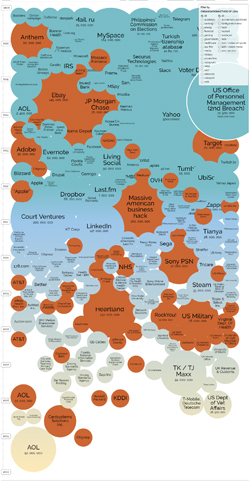
Health insurer Anthem Inc, which has nearly 40 million U.S. customers, has confirmed that hackers had breached one of its IT systems and stolen personal information relating to current and former consumers and employees.

The No. 2 health insurer in the United States said the breach did not appear to involve medical information or financial details such as credit card or bank account numbers.
The information accessed during the “very sophisticated attack” did include names, birthdays, social security numbers, street addresses, email addresses and employment information, including income data, the company said.
Anthem said that it immediately made every effort to close the security vulnerability and reported the attack to the FBI. Cybersecurity firm FireEye Inc FEYE. said it had been hired to help Anthem investigate the attack.
The company did not say how many customers and staff were affected, but the Wall Street Journal earlier reported it was suspected that records of tens of millions of people had been taken, which would likely make it the largest data breach involving a U.S. health insurer.
Anthem had 37.5 million medical members as of the end of December.
“This attack is another reminder of the persistent threats we face, and the need for Congress to take aggressive action to remove legal barriers for sharing cyber threat information,” U.S. Rep. Michael McCaul, a Republican from Texas and chairman of the Committee on Homeland Security, said in a statement late Wednesday.
MediaTek Shows Off New IoT Platform
Comments Off on MediaTek Shows Off New IoT Platform
MediaTek had announced a new development platform, as part of its MediaTek Labs initiative.
The LinkIt Connect MT7681 platform is based on the MT7681 SoC, designed for simple and affordable WiFi-enabled Internet of Things (IoT) devices. The company also released a software development kit (SDK) and hardware development kit (HDK) for the new platform.
The HDK includes the LinkIt Connect 7681 development board, which features the MT7681 chipset, micro-USB port and pins for various I/O interfaces. The chipset can be used in WiFi station or access point modes.
In station mode, the chip connects to a wireless access point and communicates with web services or cloud servers, which means it could be used to control smart thermostats. However, in access point mode, the chipset can communicate with devices directly, for example to control smart plugs or light bulbs using a smartphone.
“The world is rapidly moving towards connecting every imaginable device in the home, yet developers often have to spend too much effort on making their products Wi-Fi enabled,” said Marc Naddell, VP, MediaTek Labs. “The MediaTek LinkIt Connect 7681 platform simplifies and accelerates this process so that developers can focus on making innovative home IoT products, whatever their skill level.”
MediaTek Labs was launched in September 2014 and its goal is to promote a range of innovative MediaTek platforms, namely frugal devices such as wearables, IoT and home automation hardware.
Slack Acquires Screen Hero
February 11, 2015 by admin
Filed under Around The Net
Comments Off on Slack Acquires Screen Hero
Slack, the IRC-for-businesses company, has acquired screen-sharing collaboration startup Screenhero with an eye toward adding valuable new communications capabilities to its software.

The deal, which was for an undisclosed sum of cash and stocks, sees Screenhero’s six-person team joining Slack to add screensharing, video chat and voice conferencing to the company’s core enterprise chat room service.
Screenhero is designed to let big teams work together like small teams and has found a dedicated customer base with developers, help desk workers and anybody else who has to work together.
That’s a smart alignment with Slack’s own sales pitch. In fact, Screenhero CEO and co-founder Jahanzeb Sherwani said that 50% of Screenhero’s own customers are also Slack customers, even as both companies made use of each others’ products interally. He added that the company was “under no pressure to sell,” but decided that cozying up with Slack would allow Screenhero to do more with its core concept faster.
It sounds like a match made in “in a Reese’s factory,” quipped Slack CEO and co-founder Stewart Butterfield.
Under this deal, Screenhero will continue to operate as a separate entity, and people can use it as they always have been. But eventually, Sherwani said, all of its features will make it into Slack and the standalone product will be discontinued.
Butterfield said that it’s just a natural progression for Slackas it goes after “bigger and weirder” companies. You can still use whatever external services you’d like for video, voice and screen sharing, per Slack’s emphasis on supporting as many services as a customer might want to use with slick native integrations. But Butterfield wants to ensure that out of the box, Slack customers get something broadly useful for collaboration without having to go through the effort.
Is Qualcomm Losing Steam?
Qualcomm is one of the most successful companies to come out of the smartphone revolution that’s taking place. That’s because their mobile chips are powering many of the devices currently on the market.
The company’s successful strategy was once again confirmed by the latest financial statements with profit estimates between $26 and $28 billion for the full fiscal year. But not everything’s rosy inside Qualcomm as the company did mention they recently lost “a large customer”.
Who could that be? Why, none other than their frenemy, Samsung. Qualcomm’s statement seems to corroborate an earlier report that said Samsung would no longer be sourcing the high-end Snapdragon 810 chip from Qualcomm.
According to the original report, which seems to be all but confirmed now, Samsung experienced overheating issues with the high-end silicone and decided to drop it from its upcoming Galaxy S6 flagship.
Qualcomm’s execs on the other hand said their chip works exactly as intended and they offer proof of that the fact the Snapdragon 810 has already been confirmed to be in LG’s next flagship, and is expected to show up in a number of other devices including the unannounced HTC M9.
RHEL Finally Available On IBM’s Power8
Comments Off on RHEL Finally Available On IBM’s Power8
IBM has made the Power8 version of the latest Red Hat Enterprise Linux (RHEL) beta available through its Power Development Platform (PDP) as the firm continues to build support for its Power systems.
IBM and Red Hat announced in December that RHEL 7.1 was adding support for the Power8 processor in little endian instruction format, as the beta release was made available for testers to download.
This version is available for developers and testers to download from today through the IBM PDP and at IBM Innovation Centres and Client Centres worldwide, IBM announced on its Smarter Computing blog.
“IBM and Red Hat’s collaboration to produce open source innovation demonstrates our commitment to developing solutions that efficiently solve IT challenges while empowering our clients to make their data centres as simple as possible so they can focus on core business functions and future opportunities,” said Doug Balog, general manager for Power Systems at IBM’s Systems & Technology Group.
The little endian support is significant because IBM’s Power architecture processors are capable of supporting little endian and big endian instruction formats. These simply reflect the order in which bytes are stored in memory.
The Power platform has long had Linux distributions and applications that operate in big endian mode, but the much larger Linux ecosystem for x86 systems uses little endian mode, and supporting this in Red Hat makes it much easier to port applications from x86 to Power.
Suse Linux Enterprise Server 12 launched last year with little endian support for the Power8 processor, as did Canonical’s Ubuntu 14.04 LTS.
However, Red Hat and Suse are understood to be continuing to support their existing big endian releases on Power for their full product lifecycles.
IBM sold off its x86 server business to Lenovo last year, and has focused instead on the higher value Power Systems and z Systems mainframes.
In particular, the firm has touted the Power Systems as more suitable for mission critical workloads in scale-out environments like the cloud than x86 servers, and has been forging partnerships with firms such as Red Hat through its OpenPower Foundation.
AMD’s Carrizo Coming In The Second Quarter
Comments Off on AMD’s Carrizo Coming In The Second Quarter
AMD released its earnings today and one cool question came up about the upcoming Carrizo mobile APU.
Lisa SU, the new AMD President and CEO, told MKM Partners analyst Ian Ing that Carrizo is coming in Q2 2015.
This is a great news and AMD’s Senior VP and outgoing general manager of computing and graphics group John Byrne already shared a few details about his excitement about Carrizo.
There are two Carrizo parts, one for big notebooks and All in Ones called Carrizo and a scaled down version called Carrizo L. We expect that the slower Carrizo-L is first to come but, Lisa was not specific. Carrizo-L is based on Puma+ CPU cores with AMD Radeon R-Series GCN graphics is intended for mainstream configurations with Carrizo targeting the higher performance notebooks.
Usually when a company says that something is coming in Q2 2015 that points to a Computex launch and this Taipei based tradeshow starts on June 2 2015. We strongly believe that the first Carrizo products will showcased at or around this date.
Lisa also pointed out that AMD has “significantly improved performance in battery life in Carrizo.” This is definitely good news, as this was one of the main issues with AMD APUs in the notebook space.
Lisa also said that AMD expects Carrizo to be beneficial for embedded and other businesses as well. If only it could have come a bit earlier, so let’s hope AMD can get enough significant design wins with Carrizo. AMD has a lot of work to do in order to get its products faster to market, to catch up with Intel on power and performance or simply to come up with innovative devices that will define its future. This is what we think Lisa is there for but in chip design, it simply takes time.
Microsoft Unveils Hologram Visor
February 4, 2015 by admin
Filed under Around The Net
Comments Off on Microsoft Unveils Hologram Visor
Microsoft Corp surprised the tech world with the unveiling of a prototype hologram visor that can bring the Minecraft video game, Skype calls and even the landscape of Mars to three-dimensional life.

The veteran tech pioneer, which long ago lost the mantle of the world’s most inventive company, is making a bold play to regain that title in the face of stiff competition from Google Inc and Apple Inc.
Virtual or enhanced reality is the next frontier in computing interaction, with Facebook Inc focusing on its Oculus virtual reality headset and Google working on its Glass project.
Microsoft said its wire-free Microsoft HoloLens device will be available around the same time as Windows 10 this autumn. Industry analysts were broadly excited at the prospect, but skeptical that it could produce a working model at a mass-market price that soon.
“That was kind of a ‘Oh wow!’ moment,” said Mike Silver, an analyst at Gartner who tried out the prototype on Wednesday. “You would expect to see a relatively high-priced model this year or next year, then maybe it’ll take another couple of years to bring it down to a more affordable level.”
Microsoft does not have a stellar record of bringing ground-breaking technology to life. Its Kinect motion-sensing game device caused an initial stir but never gripped the popular imagination.
The company showed off a crude test version of the visor – essentially jerry-rigged wires and cameras pulled over the head – to reporters and industry analysts at a gathering at its headquarters near Seattle.
It did not allow any photographs or video of the experience, but put some images on its website.
ARM Develops IoT For Students
ARM has created a course to teach IoT skills to students at University College London (UCL)
The course is designed to encourage graduates in science, technology, engineering and maths (Stem) to seek careers in IT.
The IoT Education Kit will teach students how to use the Mbed IoT operating system to create smartphone apps that control mini-robots or wearable devices.
Students are expected to be interested in building their own IoT business, or joining IoT-focused enterprises like ARM. The course will also try to limit the number of Stem graduates pursuing non-technology careers.
ARM reported statistics from a 2012 study by Oxford Policy and Research revealing how many engineering graduates (36 percent of males, 51 percent of females), technology graduates (44 percent, 53 percent) and computer scientists (64 percent, 66 percent) end up with non-Stem jobs.
The IoT Education Kit will be rolled out by UCL’s Department of Electronics from September 2015, with a week-long module for full-time and continuing professional development students.
The Kit comprises a complete set of teaching materials, Mbed-enabled hardware boards made by Nordic Semiconductor, and software licensed from ARM. A second teaching module for engineering graduates is being developed for 2016.
“Students with strong science and mathematical skills are in demand and we need to make sure they stay in engineering,” said ARM CTO Mike Muller.
“The growth of the IoT gives us a great opportunity to prove to students why our profession is more exciting and sustainable than others.”
UCL professor Izzat Darwazeh also highlighted the importance of Stem skills, saying that “many students are not following through to an engineering career and that is a real risk to our long-term success as a nation of innovators”.