




 Sign up for our Technology Newsletter

Can MediaTek Bring The Cortex-A72 To Market?
Comments Off on Can MediaTek Bring The Cortex-A72 To Market?
MediaTek became the first chipmaker to publicly demo a SoC based on ARM’s latest Cortex-A72 CPU core, but the company’s upcoming chip still relies on the old 28nm manufacturing process.
We had a chance to see the upcoming MT8173 in action at the Mobile World Congress a couple of weeks ago.
The next step is to bring the new Cortex-A72 core to a new node and into mobiles. This is what MediaTek is planning to do by the end of the year.
Cortex-A72 smartphone parts coming in Q4
It should be noted that MediaTek’s 8000-series parts are designed for tablets, and the MT8173 is no exception. However, the new core will make its way to smartphone SoCs later this year, as part of the MT679x series.
According to Digitimes Research, MediaTek’s upcoming MT679x chips will utilize a combination of Cortex-A53 and Cortex-A57 cores. It is unclear whether MediaTek will use the planar 20nm node or 16nm FinFET for the new part.
By the looks of it, this chip will replace 32-bit MT6595, which is MediaTek’s most successful high performance part yet, with a few relatively big design wins, including Alcatel, Meizu, Lenovo and Zopo. The new chip will also supplement, and possibly replace the recently introduced MT6795, a 64-bit Cortex-A53/Cortex-A72 part used in the HTC Desire 826.
More questions than answers
Digitimes also claims the MT679x Cortex-A72 parts may be the first MediaTek products to benefit from AMD technology, but details are scarce. We can’t say whether or not the part will use AMD GPU technology, or some HSA voodoo magic. Earlier this month we learned that MediaTek is working with AMD and the latest report appears to confirm our scoop.
The other big question is the node. The chip should launch toward the end of the year, so we probably won’t see any devices prior to Q1 2016. While 28nm is still alive and kicking, by 2016 it will be off the table, at least in this market segment. Previous MediaTek roadmap leaks suggested that the company would transition to 20nm on select parts by the end of the year.
However, we are not entirely sure 20nm will cut it for high-end parts in 2016. Huawei has already moved to 16nm with its latest Kirin 930 SoC, Samsung stunned the world with the 14nm Exynos 7420, and Qualcomm’s upcoming Snapdragon 820 will be a FinFET part as well.
It is obvious that TSMC’s and Samsung’s 20nm nodes will not be used on most, if not all, high-end SoCs next year. With that in mind, it would be logical to expect MediaTek to use a FinFET node as well. On the other hand, depending on the cost, 20nm could still make sense for MediaTek – provided it ends up significantly cheaper than FinFET. While a 20nm chip wouldn’t deliver the same level of power efficiency and performance, with the right price it could find its way to more affordable mid-range devices, or flagships designed by smaller, value-oriented brands (especially those focusing on Chinese and Indian markets).
Target Settles Security Breach
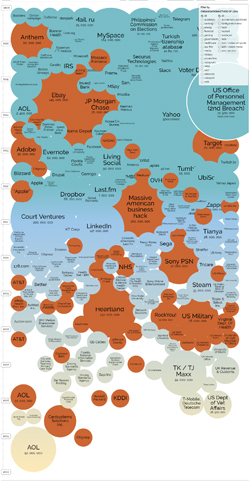
Target is reportedly close to paying out $10m to settle a class-action case that was filed after it was hacked and stripped of tens of millions of peoples’ details.
Target was smacked by hackers in 2013 in a massive cyber-thwack on its stores and servers that put some 70 million people’s personal information in harm’s way.
The hack has had massive repercussions. People are losing faith in industry and its ability to store their personal data, and the Target incident is a very good example of why people are right to worry.
As well as tarnishing Target’s reputation, the attack also led to a $162m gap in its financial spreadsheets.
The firm apologized to its punters when it revealed the hack, and chairman, CEO and president Gregg Steinhafel said he was sorry that they have had to “endure” such a thing
Now, according to reports, Target is willing to fork out another $10m to put things right, offering the money as a proposed settlement in one of several class-action lawsuits the company is facing. If accepted, the settlement could see affected parties awarded some $10,000 for their troubles.
We have asked Target to either confirm or comment on this, and are waiting for a response. For now we have an official statement at Reuters to turn to. There we see Target spokeswoman Molly Snyder confirming that something is happening but not mentioning the 10 and six zeroes.
“We are pleased to see the process moving forward and look forward to its resolution,” she said.
Not available to comment, not that we asked, will be the firm’s CIO at the time of the hack. Thirty-year Target veteran Beth Jacob left her role in the aftermath of the attack, and a replacement was immediately sought.
“To ensure that Target is well positioned following the data breach we suffered last year, we are undertaking an overhaul of our information security and compliance structure and practices at Target,” said Steinhafel then.
“As a first step in this effort, Target will be conducting an external search for an interim CIO who can help guide Target through this transformation.”
“Transformational change” pro Bob DeRodes took on the role in May last year and immediately began saying the right things.
“I look forward to helping shape information technology and data security at Target in the days and months ahead,” he said.
“It is clear to me that Target is an organization that is committed to doing whatever it takes to do right by their guests.”
We would ask Steinhafel for his verdict on DeRodes so far and the $10m settlement, but would you believe it, he’s not at Target anymore either having left in the summer last year with a reported $61m golden parachute.
IBM Debuts New Mainframe
IBM has started shipping its all-new first z13 mainframe computer.

IBM has high hopes the upgraded model will generate solid sales based not only on usual customer patterns but its design focus aimed at helping them cope with expanding mobile usage, analysis of data, upgrading security and doing more “cloud” remote computing.
Mainframes are still a major part of the Systems and Technology Group at IBM, which overall contributed 10.8 percent of IBM’s total 2014 revenues of $92.8 billion. But the z Systems and their predecessors also generate revenue from software, leasing and maintenance and thus have a greater financial impact on IBM’s overall picture.
The new mainframe’s claim to fame is to use simultaneous multi-threading (SMT) to execute two instruction streams (or threads) on a processor core which delivers more throughput for Linux on z Systems and IBM z Integrated Information Processor (zIIP) eligible workloads.
There is also a single Instruction Multiple Data (SIMD), a vector processing model providing instruction level parallelism, to speed workloads such as analytics and mathematical modeling. All this means COBOL 5.2 and PL/I 4.5 exploit SIMD and improved floating point enhancements to deliver improved performance over and above that provided by the faster processor.
Its on chip cryptographic and compression coprocessors receive a performance boost improving both general processors and Integrated Facility for Linux (IFL) cryptographic performance and allowing compression of more data, helping tosave disk space and reducing data transfer time.
There is also a redesigned cache architecture, using eDRAM technology to provide twice as much second level cache and substantially more third and fourth level caches compared to the zEC12. Bigger and faster caches help to avoid untimely swaps and memory waits while maximisng the throughput of concurrent workload Tom McPherson, vice president of z System development, said that the new model was not just about microprocessors, though this model has many eight-core chips in it. Since everything has to be cooled by a combination of water and air, semiconductor scaling is slowing down, so “you have to get the value by optimizing.
The first real numbers on how the z13 is selling won’t be public until comments are made in IBM’s first-quarter report, due out in mid-April, when a little more than three weeks’ worth of billings will flow into it.
The company’s fiscal fortunes have sagged, with mixed reviews from both analysts and the blogosphere. Much of that revolves around IBM’s lag in cloud services. IBM is positioning the mainframe as a prime cloud server, one of the systems that is actually what cloud computing goes to and runs on.
HGST To Debut 10TB HD
HGST has revealed the world’s first 10TB hard drive, but you probably won’t be installing one anytime soon.
The company has been working on the 10TB SMR HelioSeal hard drive for months and now it is almost ready to hit the market.
The drive uses Shingled Magnetic Recording (SMR) to boost density, thus enabling HGST to cram more data on every platter. ZDnet got a quick peek at the drive at a Linux event in Boston, which also featured a burning effigy of Nick Farrell.
Although we’ve covered some SMR drives in the past, the technology is still not very mature and so far it’s been limited to niche drives and enterprise designs, not consumer hard drives. HGST’s new drive is no exception – it is designed for data centers rather than PCs. While you won’t use it to store your music and video, you might end up streaming them from one of these babies.
Although data centres are slowly turning to SSDs for many hosts, even on cheap shared hosting packages, there is still a need for affordable mechanical storage. Even when hard drives are completely phased out from the frontline, they still have a role to play as backup drives.
SUSE Goes OpenStack Cloud 5
SUSE has released OpenStack Cloud 5, the latest version of the its infrastructure-as-a-service private cloud distro.
Version 5 adds the OpenStack brand front and centre, and its credentials are based on the latest Juno build of the OpenStack open source platform.
This version includes enhanced networking flexibility, with additional plug-ins available and the addition of distributed virtual routing. This enables individual computer nodes to handle routing tasks together, or if needs be, clustering together.
Increased operational efficiency comes in the form of a new seamless integration with existing servers running outside the cloud. In addition, log collection is centralized into a single view.
As you would expect, SUSE OpenStack 5 is designed to fit perfectly alongside the company’s other products, including the recently launched Suse Enterprise Storage and Suse Linux Enterprise Server 12 as well as nodes from earlier versions.
Deployment has also been simplified as part of a move to standardise “as-a-service” models.
Also included is the company’s new Sahara data processing project designed to run Hadoop and Spark on top of OpenStack without degradation. MapR has released support for its own service by way of a co-branded plug-in.
“Furthering the growth of OpenStack enterprise deployments, Suse OpenStack Cloud makes it easier for customers to realise the benefits of a private cloud, saving them money and time they can use to better serve their own customers and business,” said Brian Green, managing director, UK and Ireland, at Suse.
“Automation and high availability features translate to simplicity and efficiency in enterprise data centers.”
Suse OpenStack Cloud 5 becomes generally available from today.
HGST Buys Amplidata
HGST announced the acquisition of Belgian software-defined storage provider Amplidata.
Amplidata has been instrumental in HGST’s Active Archive elastic storage solution unveiled at the company’s Big Bang event last September in San Francisco.
Use of Amplidata’s Himalaya distributed storage system, combined with HGST’s unique Helium filled drives, creates systems that can store 10 petabytes on a single rack, designed for cold storage literally and figuratively.
Dave Tang, senior vice president and general manager of HGST’s Elastic Storage Platforms Group, said “Software-defined storage solutions are essential to scale-out storage of the type we unveiled in September. The software is vital to ensuring the durability and scalability of systems.”
Steve Milligan, president and chief executive of Western Digital, added: “We have had an ongoing strategic relationship with Amplidata that included investment from Western Digital Capital and subsequent joint development activity.
“Amplidata has deep technical expertise, an innovative spirit, and valuable intellectual property in this fast-growing market space.
“The acquisition will support our strategic growth initiatives and broaden the scope of opportunity for HGST in cloud data centre storage infrastructure.”
The acquisition is expected to be completed in the first quarter of the year. No financial terms were disclosed.
Amplidata will ultimately be incorporated into the HGST Elastic Storage Platforms Group, a recognition of the fact that every piece of hardware is, in part, software.
Mike Cordano, president of HGST, said at last year’s Big Bang event: “We laugh when we hear that we’re a hardware company. People don’t realise there’s over a million lines of code in that drive. That’s what the firmware is.
“What we’re starting to do now is add software to that and, along with the speed of the PCI-e interface, that makes a much bigger value proposition.”
IBM Goes Bare Metal
IBM has announced the availability of OpenPower servers as part of the firm’s SoftLayer bare metal cloud offering.
OpenPower, a collaborative foundation run by IBM in conjunction with Google and Nvidia, offers a more open approach to IBM’s Power architecture, and a more liberal licence for the code, in return for shared wisdom from member organisations.
Working in conjunction with Tyan and Mellanox Technologies, both partners in the foundation, the bare metal servers are designed to help organisations easily and quickly extend infrastructure in a customized manner.
“The new OpenPower-based bare metal servers make it easy for users to take advantage of one of the industry’s most powerful and open server architectures,” said Sonny Fulkerson, CIO at SoftLayer.
“The offering allows SoftLayer to deliver a higher level of performance, predictability and dependability not always possible in virtualised cloud environments.”
Initially, servers will run Linux applications and will be based on the IBM Power8 architecture in the same mold as IBM Power system servers.
This will later expand to the Power ecosystem and then to independent software vendors that support Linux on Power application development, and are migrating applications from x86 to the Power architecture.
OpenPower servers are based on open source technology that extends right down to the silicon level, and can allow highly customised servers ranging from physical to cloud, or even hybrid.
Power systems are already installed in SoftLayer’s Dallas data centre, and there are plans to expand to data centres throughout the world. The system was first rolled out in 2014 as part of the Watson portfolio.
Prices will be announced when general availability arrives in the second quarter.
Uber Suffers A Data Breach
The names and license plate numbers of about 50,000 Uber drivers were exposed in a security breach last year, the company revealed on Friday.

Uber found out about a possible breach of its systems in September, and a subsequent investigation revealed an unauthorized third party had accessed one of its databases four months earlier, the company said.
The files accessed held the names and license plate numbers of about 50,000 current and former drivers, which Uber described as a “small percentage” of the total. About 21,000 of the affected drivers are in California. The company has several hundred thousand drivers altogether.
It’s in the process of notifying the affected drivers and advised them to monitor their credit reports for fraudulent transactions and accounts. It said it hadn’t received any reports yet of actual misuse of the data.
Uber will provide a year of free identity protection service to the affected drivers, it said, which has become fairly standard for such breaches.
The company said it had filed a “John Doe” lawsuit Friday to help it confirm the identity of the party responsible for the breach.
Can MediaTek Take On Qualcomm?
While Qualcomm’s 20nm Snapdragon 810 SoC might be the star of upcoming flagship smartphones, it appears that MediaTek has its own horse for the race, the octa-core MT6795.

Spotted by GforGames site, in a GeekBench test results and running inside an unknown smartphone, MediaTek’s MT6795 managed to score 886 points in the single-core test and 4536 points in the multi-core test. These results were enough to put it neck to neck with the mighty Qualcomm Snapdragon 810 SoC tested in the LG G Flex 2, which scored 1144 points in the single-core and 4345 in the multi-core test. While it did outrun the MT6795 in the single-core test, the multi-core test was clearly not kind on the Snapdragon 810.
The unknown device was running on Android Lollipop OS and packed 3GB of RAM, which might gave the MT6795 an edge over the LG G Flex 2.
MediaTek’s octa-core MT6795 was announced last year and while we are yet to see some of the first design wins, recent rumors suggested that it could be powering Meizu’s MX5, HTC’s Desire A55 and some other high-end smartphones. The MediaTek MT6795 is a 64-bit octa-core SoC clocked at up to 2.2GHz, with four Cortex-A57 cores and four Cortex-A53 cores. It packs PowerVR G6200 graphics, supports LPDDR3 memory and can handle 2K displays at up to 120Hz.
As we are just a few days from Mobile World Congress (MWC) 2015 which will kick off in Barcelona on March 2nd, we are quite sure that we will see more info as well as more benchmarks as a single benchmark running on an unknown smartphone might not be the best representation of performance, it does show that MediaTek certainly has a good chip and can compete with Qualcomm and Samsung.
Cloud Analytics Growth Rate Will Continue
Comments Off on Cloud Analytics Growth Rate Will Continue
It’s no secret that cloud computing and data analytics are both rapidly expanding areas within information technology. Put them together, and you get a winning combination that’s expected to grow by more than 26 percent annually over the next five years.

That’s according to market-tracking firm Research and Markets, which recently released a new report on the global cloud analytics market.
Increased adoption of data analytics is one of the major drivers in this market, Research and Markets found. More specifically, many organizations are adopting data analytics in order to better understand consumption patterns, customer acquisition and various other factors believed to increase revenue, cut costs and boost customer loyalty.
HP, IBM, Microsoft, Oracle and SAP are among the dominant vendors in this arena, the company said in a press release.
Big Data is one of the particularly significant trends in the market, Research and Markets said.
“Cloud analytics deals with the management of unorganized data, which helps organizations access important data and make timely decisions regarding their business,” the company said.
The rates of growth in this arena might actually be much higher than those suggested by the report, said analyst Ray Wang, founder of Constellation Research.
In fact, Constellation Research predicts an annual growth rate of closer to 46 percent until 2020, he said.
Early-arriving cloud companies like Salesforce “had great reporting, but they didn’t necessarily have great analytics,” Wang said.
It’s for that reason that challengers such as Actuate have popped up, he noted.
“More and more, because of the size and complication, we’re seeing analytics move to the cloud,” Wang said.