





 Sign up for our Technology Newsletter

Medical Data Becoming Valuable To Hackers
Comments Off on Medical Data Becoming Valuable To Hackers
The personal information stored in health care records fetches increasingly impressive sums on underground markets, making any company that stores such data a very attractive target for attackers.

“Hackers will go after anyone with health care information,” said John Pescatore, director of emerging security trends at the SANS Institute, adding that in recent years hackers have increasingly set their sights on EHRs (electronic health records).
With medical data, “there’s a bunch of ways you can turn that into cash,” he said. For example, Social Security numbers and mailing addresses can be used to apply for credit cards or get around corporate antifraud measures.
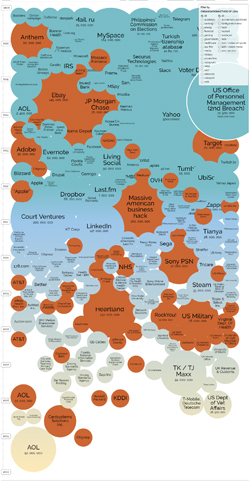
This could explain why attackers have recently targeted U.S. health insurance providers. Last Tuesday, Premera Blue Cross disclosed that the personal details of 11 million customers had been exposed in a hack that was discovered in January. Last month, Anthem, another health insurance provider, said that 78.8 million customer and employee records were accessed in an attack.
Both attacks exposed similar data, including names, Social Security numbers, birth dates, telephone numbers, member identification numbers, email addresses and mailing addresses. In the Premera breach, medical claims information was also accessed.
If the attackers try to monetize this information, the payout could prove lucrative.
Credentials that include Social Security numbers can sell for a couple of hundred dollars since the data’s lifetime is much longer compared to pilfered credit card numbers, said Matt Little, vice president of product development at PKWARE, an encryption software company with clients that include health care providers. Credit card numbers, which go for a few dollars, tend to work only for a handful of days after being reported stolen.
Target Settles Security Breach
Target is reportedly close to paying out $10m to settle a class-action case that was filed after it was hacked and stripped of tens of millions of peoples’ details.
Target was smacked by hackers in 2013 in a massive cyber-thwack on its stores and servers that put some 70 million people’s personal information in harm’s way.
The hack has had massive repercussions. People are losing faith in industry and its ability to store their personal data, and the Target incident is a very good example of why people are right to worry.
As well as tarnishing Target’s reputation, the attack also led to a $162m gap in its financial spreadsheets.
The firm apologized to its punters when it revealed the hack, and chairman, CEO and president Gregg Steinhafel said he was sorry that they have had to “endure” such a thing
Now, according to reports, Target is willing to fork out another $10m to put things right, offering the money as a proposed settlement in one of several class-action lawsuits the company is facing. If accepted, the settlement could see affected parties awarded some $10,000 for their troubles.
We have asked Target to either confirm or comment on this, and are waiting for a response. For now we have an official statement at Reuters to turn to. There we see Target spokeswoman Molly Snyder confirming that something is happening but not mentioning the 10 and six zeroes.
“We are pleased to see the process moving forward and look forward to its resolution,” she said.
Not available to comment, not that we asked, will be the firm’s CIO at the time of the hack. Thirty-year Target veteran Beth Jacob left her role in the aftermath of the attack, and a replacement was immediately sought.
“To ensure that Target is well positioned following the data breach we suffered last year, we are undertaking an overhaul of our information security and compliance structure and practices at Target,” said Steinhafel then.
“As a first step in this effort, Target will be conducting an external search for an interim CIO who can help guide Target through this transformation.”
“Transformational change” pro Bob DeRodes took on the role in May last year and immediately began saying the right things.
“I look forward to helping shape information technology and data security at Target in the days and months ahead,” he said.
“It is clear to me that Target is an organization that is committed to doing whatever it takes to do right by their guests.”
We would ask Steinhafel for his verdict on DeRodes so far and the $10m settlement, but would you believe it, he’s not at Target anymore either having left in the summer last year with a reported $61m golden parachute.
IBM Debuts New Mainframe
IBM has started shipping its all-new first z13 mainframe computer.

IBM has high hopes the upgraded model will generate solid sales based not only on usual customer patterns but its design focus aimed at helping them cope with expanding mobile usage, analysis of data, upgrading security and doing more “cloud” remote computing.
Mainframes are still a major part of the Systems and Technology Group at IBM, which overall contributed 10.8 percent of IBM’s total 2014 revenues of $92.8 billion. But the z Systems and their predecessors also generate revenue from software, leasing and maintenance and thus have a greater financial impact on IBM’s overall picture.
The new mainframe’s claim to fame is to use simultaneous multi-threading (SMT) to execute two instruction streams (or threads) on a processor core which delivers more throughput for Linux on z Systems and IBM z Integrated Information Processor (zIIP) eligible workloads.
There is also a single Instruction Multiple Data (SIMD), a vector processing model providing instruction level parallelism, to speed workloads such as analytics and mathematical modeling. All this means COBOL 5.2 and PL/I 4.5 exploit SIMD and improved floating point enhancements to deliver improved performance over and above that provided by the faster processor.
Its on chip cryptographic and compression coprocessors receive a performance boost improving both general processors and Integrated Facility for Linux (IFL) cryptographic performance and allowing compression of more data, helping tosave disk space and reducing data transfer time.
There is also a redesigned cache architecture, using eDRAM technology to provide twice as much second level cache and substantially more third and fourth level caches compared to the zEC12. Bigger and faster caches help to avoid untimely swaps and memory waits while maximisng the throughput of concurrent workload Tom McPherson, vice president of z System development, said that the new model was not just about microprocessors, though this model has many eight-core chips in it. Since everything has to be cooled by a combination of water and air, semiconductor scaling is slowing down, so “you have to get the value by optimizing.
The first real numbers on how the z13 is selling won’t be public until comments are made in IBM’s first-quarter report, due out in mid-April, when a little more than three weeks’ worth of billings will flow into it.
The company’s fiscal fortunes have sagged, with mixed reviews from both analysts and the blogosphere. Much of that revolves around IBM’s lag in cloud services. IBM is positioning the mainframe as a prime cloud server, one of the systems that is actually what cloud computing goes to and runs on.
Can Linux Succeed On The Desktop?
Every three years I install Linux and see if it is ready for prime time yet, and every three years I am disappointed. What is so disappointing is not so much that the operating system is bad, it has never been, it is just that who ever designs it refuses to think of the user.
To be clear I will lay out the same rider I have for my other three reviews. I am a Windows user, but that is not out of choice. One of the reasons I keep checking out Linux is the hope that it will have fixed the basic problems in the intervening years. Fortunately for Microsoft it never has.
This time my main computer had a serious outage caused by a dodgy Corsair (which is now a c word) power supply and I have been out of action for the last two weeks. In the mean time I had to run everything on a clapped out Fujitsu notebook which took 20 minutes to download a webpage.
One Ubuntu Linux install later it was behaving like a normal computer. This is where Linux has always been far better than Windows – making rubbish computers behave. I could settle down to work right? Well not really.
This is where Linux has consistently disqualified itself from prime-time every time I have used it. Going back through my reviews, I have been saying the same sort of stuff for years.
Coming from Windows 7, where a user with no learning curve can install and start work it is impossible. Ubuntu can’t. There is a ton of stuff you have to upload before you can get anything that passes for an ordinary service. This uploading is far too tricky for anyone who is used to Windows.
It is not helped by the Ubuntu Software Centre which is supposed to make like easier for you. Say that you need to download a flash player. Adobe has a flash player you can download for Ubuntu. Click on it and Ubuntu asks you if you want to open this file with the Ubuntu Software Center to install it. You would think you would want this right? Thing is is that pressing yes opens the software center but does not download Adobe flash player. The center then says it can’t find the software on your machine.
Here is the problem which I wrote about nearly nine years ago – you can’t download Flash or anything proprietary because that would mean contaminating your machine with something that is not Open Sauce.
Sure Ubuntu will download all those proprietary drivers, but you have to know to ask – an issue which has been around now for so long it is silly. The issue of proprietary drives is only a problem for those who are hard core open saucers and there are not enough numbers of them to keep an operating system in the dark ages for a decade. However, they have managed it.
I downloaded LibreOffice and all those other things needed to get a basic “windows experience” and discovered that all those typefaces you know and love are unavailable. They should have been in the proprietary pack but Ubuntu has a problem installing them. This means that I can’t share documents in any meaningful way with Windows users, because all my formatting is screwed.
LibreOffice is not bad, but it really is not Microsoft Word and anyone who tries to tell you otherwise is lying.
I download and configure Thunderbird for mail and for a few good days it actually worked. However yesterday it disappeared from the side bar and I can’t find it anywhere. I am restricted to webmail and I am really hating Microsoft’s outlook experience.
The only thing that is different between this review and the one I wrote three years ago is that there are now games which actually work thanks to Steam. I have not tried this out yet because I am too stressed with the work backlog caused by having to work on Linux without regular software, but there is an element feeling that Linux is at last moving to a point where it can be a little bit useful.
So what are the main problems that Linux refuses to address? Usability, interface and compatibility.
I know Ubuntu is famous for its shit interface, and Gnome is supposed to be better, but both look and feel dated. I also hate Windows 8′s interface which requires you to use all your computing power to navigate through a touch screen tablet screen when you have neither. It should have been an opportunity for Open saucers to trump Windows with a nice interface – it wasn’t.
You would think that all the brains in the Linux community could come up with a simple easy to use interface which lets you have access to all the files you need without much trouble. The problem here is that Linux fans like to tinker they don’t want usability and they don’t have problems with command screens. Ordinary users, particularly more recent generations will not go near a command screen.
Compatibly issues for games has been pretty much resolved, but other key software is missing and Linux operators do not seem keen to get them on board.
I do a lot of layout and graphics work. When you complain about not being able to use Photoshop, Linux fanboys proudly point to GIMP and say that does the same things. You want to grab them down the throat and stuff their heads down the loo and flush. GIMP does less than a tenth of what Photoshop can do and it does it very badly. There is nothing that can do what CS or any real desktop publishers can do available on Linux.
Proprietary software designed for real people using a desktop tends to trump anything open saucy, even if it is producing a technology marvel.
So in all these years, Linux has not attempted to fix any of the problems which have effectively crippled it as a desktop product.
I will look forward to next week when the new PC arrives and I will not need another Ubuntu desktop experience. Who knows maybe they will have sorted it in three years time again.
SUSE Goes OpenStack Cloud 5
SUSE has released OpenStack Cloud 5, the latest version of the its infrastructure-as-a-service private cloud distro.
Version 5 adds the OpenStack brand front and centre, and its credentials are based on the latest Juno build of the OpenStack open source platform.
This version includes enhanced networking flexibility, with additional plug-ins available and the addition of distributed virtual routing. This enables individual computer nodes to handle routing tasks together, or if needs be, clustering together.
Increased operational efficiency comes in the form of a new seamless integration with existing servers running outside the cloud. In addition, log collection is centralized into a single view.
As you would expect, SUSE OpenStack 5 is designed to fit perfectly alongside the company’s other products, including the recently launched Suse Enterprise Storage and Suse Linux Enterprise Server 12 as well as nodes from earlier versions.
Deployment has also been simplified as part of a move to standardise “as-a-service” models.
Also included is the company’s new Sahara data processing project designed to run Hadoop and Spark on top of OpenStack without degradation. MapR has released support for its own service by way of a co-branded plug-in.
“Furthering the growth of OpenStack enterprise deployments, Suse OpenStack Cloud makes it easier for customers to realise the benefits of a private cloud, saving them money and time they can use to better serve their own customers and business,” said Brian Green, managing director, UK and Ireland, at Suse.
“Automation and high availability features translate to simplicity and efficiency in enterprise data centers.”
Suse OpenStack Cloud 5 becomes generally available from today.
IBM Goes Bare Metal
IBM has announced the availability of OpenPower servers as part of the firm’s SoftLayer bare metal cloud offering.
OpenPower, a collaborative foundation run by IBM in conjunction with Google and Nvidia, offers a more open approach to IBM’s Power architecture, and a more liberal licence for the code, in return for shared wisdom from member organisations.
Working in conjunction with Tyan and Mellanox Technologies, both partners in the foundation, the bare metal servers are designed to help organisations easily and quickly extend infrastructure in a customized manner.
“The new OpenPower-based bare metal servers make it easy for users to take advantage of one of the industry’s most powerful and open server architectures,” said Sonny Fulkerson, CIO at SoftLayer.
“The offering allows SoftLayer to deliver a higher level of performance, predictability and dependability not always possible in virtualised cloud environments.”
Initially, servers will run Linux applications and will be based on the IBM Power8 architecture in the same mold as IBM Power system servers.
This will later expand to the Power ecosystem and then to independent software vendors that support Linux on Power application development, and are migrating applications from x86 to the Power architecture.
OpenPower servers are based on open source technology that extends right down to the silicon level, and can allow highly customised servers ranging from physical to cloud, or even hybrid.
Power systems are already installed in SoftLayer’s Dallas data centre, and there are plans to expand to data centres throughout the world. The system was first rolled out in 2014 as part of the Watson portfolio.
Prices will be announced when general availability arrives in the second quarter.
AMD Goes Virtual With Liquid VR
AMD Liquid VR is not a retail product – it is an initiative to develop and deliver the best Virtual Reality (VR) experience in the industry.
AMD Liquid VR was announced at the Game Developers Conference in San Francisco, and the company describes it is a “set of innovative technologies focused on enabling exceptional VR content development” for hardware based on AMD silicon.
Developers will soon get access to the LiquidVR SDK, which will help them address numerous issues associated with VR development.
Platform and software rather than hardware
If you were expecting to see a sexy AMD VR headset with a killer spec, the announcement may be disappointing. However, if you are a “what’s under the bonnet” kind of geek, there are a few interesting highlights.
AMD has put a lot of effort into minimising motion-to-photon latency, which should not only help improve the experience, but also keep you from experiencing motion sickness, or hurling over that new carpet that really ties the room together.
Headline features of LiquidVR SDK 1.0 include:
Async Shaders for smooth head-tracking enabling Hardware-Accelerated Time Warp, a technology that uses updated information on a user’s head position after a frame has been rendered and then warps the image to reflect the new viewpoint just before sending it to a VR headset, effectively minimizing latency between when a user turns their head and what appears on screen.
Affinity Multi-GPU for scalable rendering, a technology that allows multiple GPUs to work together to improve frame rates in VR applications by allowing them to assign work to run on specific GPUs. Each GPU renders the viewpoint from one eye, and then composites the outputs into a single stereo 3D image. With this technology, multi-GPU configurations become ideal for high performance VR rendering, delivering high frame rates for a smoother experience.
Latest data latch for smooth head-tracking, a programming mechanism that helps get head tracking data from the head-mounted display to the GPU as quickly as possible by binding data as close to real-time as possible, practically eliminating any API overhead and removing latency.
Direct-to-display for intuitively attaching VR headsets, to deliver a seamless plug-and-play virtual reality experience from an AMD Radeon™ graphics card to a connected VR headset, while enabling features such as booting directly to the display or using extended display features within Windows.
You can grab the full AMD LiquidVR presentation here. (pdf)
What’s next for LiquidVR?
It all depends on what you were expecting, and what the rest of the industry does. AMD hopes LiquidVR will be compatible with a broad range of VR devices. LiquidVR will allow hardware makers to implement AMD technology in their products with relative ease, enabling 100Hz refresh rates, the use of individual GPUs per each eye and so on.
To a certain extent, you can think of LiquidVR as FreeSync for VR kit.
Oculus CEO Brendan Irbe said achieving presence in a virtual world is one of the most important elements needed to deliver a good user experience.
He explained where AMD comes in:
“We’re excited to have AMD working with us on their part of the latency equation, introducing support for new features like asynchronous timewarp and late latching, and compatibility improvements that ensure that Oculus’ users have a great experience on AMD hardware.”
Raja Koduri, corporate vice president, Visual Computing, AMD, said content, comfort and compatibility are the cornerstones of AMD’s focus on VR.
AMD’s resident graphics guru said:
“With LiquidVR we’re collaborating with the ecosystem to unlock solutions to some of the toughest challenges in VR and giving the keys to developers of VR content so that they can bring exceptional new experiences to life.”
A picture is worth a thousand words, so here’s 3300 frames of AMD’s virtual reality vision.
nVidia Fixes Linux Bug
Nvidia has fixed an ancient problem in Ubuntu systems which turned the screen into 40 shades of black.
The problem has been around for years and is common for anyone using Nvidia gear on Ubuntu systems.
When opening the window of a new application, the screen would go black or become transparent. As it turns out, this is actually an old problem and there are bug reports dating back from Ubuntu 12.10 times.
However to be fair it was not Nvidia’s fault. The problem was caused by Compiz, which had some leftover code from a port. Nvidia found it and proposed a fix.
“Our interpretation of the specification is that creating two GLX pixmaps pointing at the same drawable is not allowed, because it can lead to poorly defined behavior if the properties of both GLX drawables don’t match. Our driver prevents this, but Compiz appears to try to do this,” wrote NVIDIA’s Arthur Huillet.
Soon after that, a patch has been issued for Compiz and it’s been approved. The patch would be pushed in Ubuntu 15.04 and is likely to be backported to Ubuntu 14.04 LTS.
Qualcomm Goes Ultrasonic
Qualcomm has unveiled what it claims is the world’s first ‘ultrasonic’ fingerprint scanner, in a bid to improve mobile security and further boost Android’s chances in the enterprise space.
The Qualcomm Snapdragon Sense ID 3D Fingerprint technology debuted during the chipmaker’s Mobile World Congress (MWC) press conference on Monday.
The firm claimed that the new feature will outperform the fingerprint scanners found on smartphones such as the iPhone 6 and Galaxy S6.
Qualcomm also claimed that, as well as “better protecting user data”, the 3D ultrasonic imaging technology is much more accurate than capacitive solutions currently available, and is not hindered by greasy or sweaty fingers.
Sense ID offers a more “innovative and elegant” design for manufacturers, the firm said, owing to its ability to scan fingerprints through any material, be it glass, metal or sapphire.
This means, in theory, that future fingerprint sensors could be included directly into a smartphone’s display.
Derek Aberle, Qualcomm president, said: “This is another industry first for Qualcomm and has the potential to revolutionise mobile security.
“It’s also another step towards the end of the password, and could mean that you’ll never have to type in a password on your smartphone again.”
No specific details or partners have yet been announced, but Qualcomm said that the Sense ID technology will arrive in devices in the second half of 2015, when the firm’s next-generation Snapdragon 820 processor is also tipped to debut.
The firm didn’t reveal many details about this chip, except that it will feature Kryo 64-bit CPU tech and a new machine learning feature dubbed Zeroth.
Qualcomm also revealed more details about LTE-U during Monday’s press conference, confirming plans to extend LTE to unused spectrum using technology integrated in its latest small-cell solutions and RF transceivers for mobile devices.
“We face many challenges as demand for data constantly grows, and we think the best way to fix this is by taking advantage of unused spectrum,” said Aberle.
Finally, the chipmaker released details about a new a partnership with Cyanogen, the open-source outfit responsible for the CyanogenMod operating system.
Qualcomm said that it will provide support for the best features and UI enhancements of CyanogenMod on Snapdragon processors, which will be available for the release of Qualcomm Reference Design in April.
The MWC announcements follow the launch of the ARM Cortex-based Snapdragon 620 and 618 chips last month, which promise to improve connectivity and user experience on high-end smartphones and tablets.
Aberle said that these chips will begin to show up in devices in mid to late 2015.
Uber Suffers A Data Breach
The names and license plate numbers of about 50,000 Uber drivers were exposed in a security breach last year, the company revealed on Friday.

Uber found out about a possible breach of its systems in September, and a subsequent investigation revealed an unauthorized third party had accessed one of its databases four months earlier, the company said.
The files accessed held the names and license plate numbers of about 50,000 current and former drivers, which Uber described as a “small percentage” of the total. About 21,000 of the affected drivers are in California. The company has several hundred thousand drivers altogether.
It’s in the process of notifying the affected drivers and advised them to monitor their credit reports for fraudulent transactions and accounts. It said it hadn’t received any reports yet of actual misuse of the data.
Uber will provide a year of free identity protection service to the affected drivers, it said, which has become fairly standard for such breaches.
The company said it had filed a “John Doe” lawsuit Friday to help it confirm the identity of the party responsible for the breach.