





 Sign up for our Technology Newsletter

Windows 8 Tablet Being Developed By ASUS
Comments Off on Windows 8 Tablet Being Developed By ASUS
 Chinese newspapers have indentified Asustek as one of five international PC brands that will work with Microsoft on the “Windows on ARM” (WOA) architecture.
Microsoft is to release its first operating system that supports chips from Arm next year. Only five PC brands have been invited by Microsoft to join WOA, a development project that shows its aggressiveness in tapping the burgeoning tablet PC market. Asustek is the latest announcement. So far Samsung, Toshiba, HP and Lenovo have been identified as working with Microsoft to develop notebooks and tablets that run on WOA architecture.
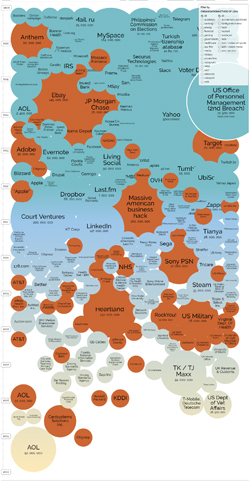
Stratfor Security Hit By Anonymous
January 4, 2012 by admin
Filed under Around The Net
Comments Off on Stratfor Security Hit By Anonymous
 The Stratfor, security firm whose website was compromised over the weekend by members of the anarchic computer-hacking group Anonymous, has reported that victims of the attack have had their credit cards used again.
Victims of the attack, mostly employees of major companies or agencies which use Stratfor’s, learnt at Christmas that their names, addresses and credit card details had been published online. The cards were then used to make large donations to major charities.
Now it seems that Stratfor is warning that the cards were being used again if the victims complained to the press. On another webiste Anonymous used another website to mock victims who spoke to the Associated Press about their experience. Its said “We went ahead and ran up your card a bit.”
Is Samsung Flip Flopping?
January 3, 2012 by admin
Filed under Consumer Electronics, Smartphones
Comments Off on Is Samsung Flip Flopping?
 Samsung is apparently rethinking its decision not to bring Android 4 to the Galaxy S and Galaxy Tab.
Earlier the company stated that neither device could be updated due to the size of Samsung’s TouchWiz interface. The news created a bit of an issue with users sharpening scythes, pitchforks and lighting torches to go on a lynching. Now word on the street is that the company is considering backing down on its decision due to “strong customer demand.”
IBM’s Watson Shows Up For Work
 IBM’s Watson supercomputer is about to start work evaluating evidence-based cancer treatment options that can be delivered to the doctors in a matter of seconds for assessment.
IBM and WellPoint, which is Blue Cross Blue Shield’s largest health plan, are developing applications that will essentially turn the Watson computer into an adviser for oncologists at Cedars-Sinai’s Samuel Oschin Comprehensive Cancer Institute in Los Angeles, according to Steve Gold, director of worldwide marketing for IBM Watson Solutions.
Cedars-Sinai’s historical data on cancer as well as its current clinical records will be ingested into an iteration of IBM’s Watson that will reside at WellPoint’s headquarters. The computer will act as a medical data repository on multiple types of cancer. WellPoint will then work with Cedars-Sinai physicians to design and develop applications as well as validate their capabilities.
Dr. M. William Audeh, medical director of the cancer institute, will work closely with WellPoint’s clinical experts to provide advice on how the Watson may be best used in clinical practice to support increased understanding of the evolving body of knowledge on cancer, including emerging therapies not widely known by physicians.
IBM announced earlier this year that healthcare would be the first commercial application for the computer, which defeated two human champions on the popular television game show Jeopardy! in February.
Is Qualcomm A Threat To Intel?
 Intel tried to do gaming graphics cards and it failed, but when it comes to CPUs for desktop and notebooks, it is currently dominating the market. Even the graphics used in Intel’s latest integrated CPUs these days are quite decent for multimedia and even some basic gaming.
Still, Intel is now shifting its focus and it sees Qualcomm as its main competitor in years to come. We heard this from high ranked sources from within Intel who believe that Qualcomm is the only ARM company that has it all, and Intel wants to take it on.
Intel is carefully watching Nvidia and Texas Instruments, again two strong ARM players, but it still thinks Qualcomm has better time to market, more customers and a much stronger portfolio.
Intel should start shipping Medfield just in time for Windows 8, and in case you’ve missed it, Medfield is a SoC (System on Chip) platform that should find its place to a few tablets and probably even some phones next year. Since Intel is trying to speed development up and put as much pressure on ARM players as possible, its next generation SoC will also come before the end of 2012, and it will use the advanced 22nm process, something we won’t see in ARM chips next year.
.
The FCC Gives AT&T The OK
December 28, 2011 by admin
Filed under Smartphones, Telecom
Comments Off on The FCC Gives AT&T The OK
 The U.S. Federal Communications Commission approved AT&T’s US$1.9 billion buying of spectrum from Qualcomm on Thursday, allowing the carrier to salvage one ambitious deal to acquire more spectrum, after squashing its planned merger with T-Mobile USA.
AT&T announced its plan to buy the Qualcomm spectrum last December, a few months before it revealed the much larger proposal to merge with T-Mobile for $39 billion. It said both were motivated by the need for more radio spectrum to increase the coverage and capacity of its LTE (Long-Term Evolution) network. AT&T withdrew the T-Mobile plan on Monday after the FCC, the Department of Justice and others said it was not in the public interest.
With the Qualcomm purchase, AT&T will get 6MHz of spectrum across the country in the coveted 700MHz band, as well as another 6MHz of spectrum in five major metropolitan areas: New York, Boston, Philadelphia, Los Angeles and San Francisco, according to the FCC’s order released Thursday. Those five markets represent about 70 million potential subscribers. The carrier has said it plans to use it as a supplemental downlink for its LTE network, allowing for faster and more consistent mobile data service.
.
Galaxy Nexus 4G LTE Finally On Sale
December 23, 2011 by admin
Filed under Smartphones
Comments Off on Galaxy Nexus 4G LTE Finally On Sale
 Verizon Wireless finally announced that the Samsung Galaxy Nexus smartphone running Android 4.0 on its 4G LTE network will be available on Thursday in stores and online for $299.99 with a two-year agreement.
The announcement, which came late Wednesday, arrived after days of speculation that the phone was being delayed over a dispute between the carrier and Google over the Google Wallet application, which doesn’t work on Verizon’s version.
During the period many expected Verizon to release the Galaxy Nexus, problems with the carrier’s LTE network arose for nearly two days, pushing LTE users to Verizon’s slower 3G service.
But Verizon never admitted there was any delay in releasing the device and pointed out that it had never given an official release date until Wednesday.
Verizon will carry a 4G LTE version that supports download speeds of up to 12Mbps. Online sales were set to start at 1 a.m. ET Thursday.
The new device has many features putting it at the top of the market for competing smartphones, including one of the highest prices: $299.99. Many rivals are priced at $200 or $250 on other U.S. carriers.
.
Is Intel Ready For The USB 3.0 Standard?
Comments Off on Is Intel Ready For The USB 3.0 Standard?
 The USB Implementers Forum has ruled that the Ivy Bridge 7 Series Chipset and other Intel chipsets have achieved USB 3.0 certification. USB 3.0 delivers up to 10 times the data transfer rate of USB 2.0, as well as improved power efficiency. Intel’s Ivy Bridge will ship in Windows PCs in the April and will be the first to have USB 3.0 as a standard feature for the first time. USB 3.0 has been seen on laptops and desktops from AMD or NEC.
.
Google Buys Clever Sense
December 21, 2011 by admin
Filed under Consumer Electronics
Comments Off on Google Buys Clever Sense
 Google has purchased Clever Sense, the developer of Alfred, a personalized restaurant and bars recommendations app, for an undisclosed amount, both companies stated.
The Internet giant has been strengthening its local offerings. It acquired in September for example a restaurant ratings publisher Zagat to boost its online maps and local business listings with trustworthy reviews and recommendations.
Alfred, which currently provides recommendations on restaurants, bars, and night life in the locality where the person is, could however down the line broaden its scope, potentially making it the Android alternative to the Siri personal assistant on Apple’s iPhone 4S.
Clever Sense’s co-founder and CEO Babak Pahlavan suggested in a notice on the company’s website that Alfred may include other information sources and services.
Discovering local information is extremely important to both users and businesses, and the acquisition of Clever Sense will benefit both, Pahlavan said. “With Google and Clever Sense working together, our entire team looks forward to building more intelligent, serendipitous and magical services!”, he added.
Apple Helps Samsung Sell Tablets
December 20, 2011 by admin
Filed under Consumer Electronics
Comments Off on Apple Helps Samsung Sell Tablets
 Samsung has thanked Apple for the free advertising for its Galaxy Tab created by the legal disputes between the companies.
Tyler McGee, VP of telecommunications at Samsung Australia, said that Apple had made Samsung’s tablet computer “a household name”, which the firm believes is more than it could have managed with its marketing alone, according to the Sydney Morning Herald.
This ironic twist of fate means that instead of slowing Samsung down and keeping its products off the market, Apple has inadvertently created a lot of buzz for those devices, which is now paying off with high demand as the Galaxy Tab returns to shop shelves in Australia.
Samsung has shipped a significant volume of tablets to Australia in time for the 16 December launch, perfect timing for the busy Christmas shopping period. However, McGee warned that demand is higher than supply, suggesting that there will be shortages of the device.
.