





 Sign up for our Technology Newsletter

Insurers To Use Mobile Phones To Track
September 15, 2014 by admin
Filed under Around The Net
Comments Off on Insurers To Use Mobile Phones To Track
A new usage-based insurance (UBI) software platform will enable insurers to track drivers’ behavior through smartphone sensors and geolocation services.

Agero, one of the nation’s largest suppliers of roadside safety software and services to automakers and insurance companies, said its new UBI telematics suite will transmit to insurers the information needed to offer discounts to good drivers, penalize others, and send alerts to emergency assistance service providers.
The UBI suite consists of the PolicyPal app, which tracks driving habits in real time, and Auto Crash Notification (ACN), which automatically notifies emergency services within moments of an accident.
Currently, State Farm’s In-Drive and Progressive’s Snapshot program, offer customers the opportunity to voluntarily participate in programs in which their insurer collects vehicle data and uses the information to determine driving habits, which in turn can be used to offer lower-rate incentives to safer operators.
Unlike Agero’s new platform, however, In-Drive and Snapshot, use a small data collection device that plugs into a vehicle’s standard OBDII onboard diagnostics port under the dashboard and transmits data from a car’s central computer to insurance companies.
Agero’s new mobile suite will greatly expand upon the universe of consumers who can vie for “discount rates” based on their driving profiles. The mobile device also travels with them in or out of the vehicle.
Over the past decade, the insurance industry has been embroiled in a heated price war, with companies vying to be king of the heap for discount pricing.
“It’s becoming a cutthroat market. They’re competing on price,” said Jeff Blecher, senior vice president of strategy at Medford, Mass.-based Agero. “To break that mold, they need a new business model. UBI does that. Now, they can compete based on the risk profile of drivers.”
UBI offers the insurance industry new opportunities for tailored discount programs. Notably, they can switch from relying OBDII dongles plugged into the customer’s car and instead use mobile apps that travel with the driver, whether he’s traveling in his own car or another vehicle.
“We want to align our strategy… with the smartphone as primary data collection point,” Blecher said.
Vendors Testing New Xeon Processors
Comments Off on Vendors Testing New Xeon Processors
Intel is cooking up a hot batch of Xeon processors for servers and workstations, and system vendors have already designed systems that are ready and raring to go as soon as the chips become available.
Boston is one of the companies doing just that, and we know this because it gave us an exclusive peek into its labs to show off what these upgraded systems will look like. While we can’t share any details about the new chips involved yet, we can preview the systems they will appear in, which are awaiting shipment as soon as Intel gives the nod.
Based on chassis designs from Supermicro, with which Boston has a close relationship, the systems comprise custom-built solutions for specific user requirements.
On the workstation side, Boston is readying a mid-range and a high-end system with the new Intel Xeon chips, both based on two-socket Xeon E5-2600v3 rather than the single socket E5-1600v3 versions.
There’s also the mid-range Venom 2301-12T, which comes in a mid-tower chassis and ships with an Nvidia Quadro K4000 card for graphics acceleration. It comes with 64GB of memory and a 240GB SSD as a boot device, plus two 1TB Sata drives configured as a Raid array for data storage.
For extra performance, Boston has also prepared the Venom 2401-12T, which will ship with faster Xeon processors, 128GB of memory and an Nvidia Quadro K6000 graphics card. This also has a 240GB SSD as a boot drive, with two 2TB drives configured as a Raid array for data storage.
Interestingly, Intel’s new Xeon E5-2600v3 processors are designed to work with 2133MHz DDR4 memory instead of the more usual DDR3 RAM, and as you can see in the picture below, DDR4 DIMM modules have slightly longer connectors towards the middle.
For servers, Boston has prepared a 1U rack-mount “pizza box” system, the Boston Value 360p. This is a two-socket server with twin 10Gbps Ethernet ports, support for 64GB of memory and 12Gbps SAS Raid. It can also be configured with NVM Express (NVMe) SSDs connected to the PCI Express bus rather than a standard drive interface.
Boston also previewed a multi-node rack server, the Quattro 12128-6, which is made up of four separate two-socket servers inside a 2U chassis. Each node has up to 64GB of memory, with 12Gbps SAS Raid storage plus a pair of 400GB SSDs.
Toshiba Develops Mobile Sensor
September 10, 2014 by admin
Filed under Smartphones
Comments Off on Toshiba Develops Mobile Sensor
Toshiba has created a new image sensor for mobile phones and tablets that promises better image resolution for run-of-the-mill smartphones when it goes into mass production.

The T4KA7 is a 1/2.4-inch, 20-megapixel backside illuminated sensor with a 1.12 micrometer pixel size, which provides for a smaller sensor size overall.
The sensor allows for a lower module height of under 6 millimeters compared to the current 20-megapixel, 1.2-micrometer sensors, the company said.
“T4KA7 is the first 1.12-micrometer, 20-megapixel sensor on the market with a high frame rate of 22 fps at full resolution,” a Toshiba spokeswoman wrote in an email.
The frame rate is 1.8 times the speed of Toshiba’s previous 20-megapixel sensor, the T4K46.
When zooming digitally, the sensor provides crisper images compared to 13- and 16-megapixel sensors, which are resolutions widely adopted in recent smartphones, she added.
Announced earlier this year, Samsung’s camera-phone hybrid Galaxy K zoomhas a 20.7-megapixel image sensor that is supposed to perform well when taking photos in low-light settings.
Without a specific measurement for comparison, it’s hard to say whether the T4KA7 would do any better in low-light shooting situations than other sensors, the Toshiba spokeswoman said.
“We think we are providing top-class sensors in terms of pixel performance,” she added.
Toshiba is producing samples of its new sensors now, with mass production of up to half a million units per month to begin in November.
Higher-end smartphones already featuring 20-megapixel cameras include the Sony Xperia Z1, the Nokia Lumia 930 and 1520.
Announced last month, the Nokia Lumia 1020 sports a camera designed for photographers — it has a sensor with 41-megapixel resolution.
Is The EU Going After Qualcomm
Qualcomm faces an antitrust investigation in Europe, even as it seeks to end a probe of its alleged monopoly practices in China.
Reuters reported that Qualcomm is looking for an amicable resolution of an investigation conducted by China’s National Development and Reform Commission (NDRC) over suspicions that it holds a monopoly in the Chinese telecoms market.
The investigation involves allegations that Qualcomm’s China subsidiary has been overcharging and exploiting its position in the wireless communications sector.
The antitrust probe of Qualcomm has been ongoing since last November, when the firm revealed that it was under investigation by the NDRC, though at the time it said the NDRC had not revealed the substance of the investigation.
In February, the NDRC declared it had received complaints against Qualcomm from the China Communications Industry Association, regarding its market position and patent fees it charged Chinese mobile phone manufacturers.
While the NDRC has ruled that Qualcomm does hold a monopoly in China, it has yet to decide whether the company has abused its position in the market.
Under China’s 2008 anti-monopoly laws, Qualcomm could face high fines, potentially topping $1bn.
In a statement to Reuters, Qualcomm said that it is seeking an amicable conclusion to the investigation. “Qualcomm executives discussed with NDRC officials several topics in an effort to reach a comprehensive resolution. We are continuing to cooperate with NDRC and cannot comment further,” the firm said.
Given that the NDRC is targeting at least another 30 foreign firms with antitrust investigations, including Microsoft and Volkswagen, critics have suggested that the monopoly law is being used to unfairly target overseas firms so that China can protect its native businesses.
Even if the China case is settled Qualcomm is now facing the prospect of a monopoly probe in Europe. Reuters has also reported the company could face a European Commission antitrust investigation following a complaint made four years ago by British software defined modem company Icera, a subsidiary of Nvidia.
Icera alleged that Qualcomm had engaged in anti-competitive behaviour by discouraging customers from doing businesses with Icera through patent related incentives and exclusionary pricing of chipsets.
While it was thought that the allegations had dropped from the European Commission’s agenda, the issue has resurfaced. It could even be fast-tracked following a similar monopoly case and subsequent fine made against Intel, which cost the company €1.1bn.
As yet, no official investigation has been opened by the European Comission. Qualcomm was contacted for a statement on both antitrust investigations, but the company has not yet responded.
Patents and their subsequent enforcement tend to play a major part in the technology industry as companies vie for market shares or state their supremacy. Qualcomm is no different, with the company having snapped up 2,400 patents from HP, including one for the now-defunct Palm technology, earlier this year.
Bitcoin Use Growing
September 8, 2014 by admin
Filed under Around The Net
Comments Off on Bitcoin Use Growing
Bitcoin is gaing greater acceptance at U.S. online merchants including Overstock.com and Expedia, as customers use a digital currency that just a few years ago was virtually unknown but is now showing some staying power.

Though sales paid for in bitcoin so far at vendors interviewed for this article have been a fraction of one percent, they expect that as acceptance grows, the online currency will one day be as ubiquitous as the internet.
“Bitcoin isn’t going anywhere; it’s here to stay,” said Michael Gulmann, vice president of global products at Expedia Inc. in Seattle, the largest online travel agent. “We want to be there from the beginning.” Expedia started accepting bitcoin payments for hotel bookings on July 11.
Until recently a niche alternative currency touted by a fervent group of followers, bitcoin has evolved into a software-based payment online system. Bitcoins are stored in a wallet with a unique identification number and companies like Coinbase and Blockchain can hold the currency for the user.
When buying an item from a merchant’s website, a customer simply clicks on the bitcoin option and a pop-in window appears where he can type in his wallet ID number.
Still, broad-based adoption of bitcoin is at least five years away because most consumers still prefer to use credit cards, analysts said.
“Bitcoin is a new way of making payments, but it’s not solving a problem that’s broken,” said George Peabody, payments consultant at Glenbrook Partners in Menlo Park, California. “Retail payments aren’t broken.”
There are also worries about bitcoin’s volatility: its price in U.S. dollars changes every day.
That risk is borne by the consumer and the bitcoin payment processor, such as Coinbase or Bitpay, not the retailer. The vendor doesn’t hold the bitcoin and is paid in U.S. dollars. As soon as a customer pays in bitcoin, the digital currency goes to the payment processor and the processor immediately pays the merchant, for a fee of less than 1 percent.
“We don’t have to deal with the actual holding of the bitcoin: it’s the payment processor that takes the currency risk for us,” said Bernie Han, chief operating officer at Dish Network Corp, in Englewood, Colorado. “That’s what makes it appealing for us and I guess for other merchants as well.”
Can A Linux Cert Payoff?
The Linux Foundation has announced an online certification programme for entry-level system admininstration and advanced Linux software engineering professionals to help expand the global pool of Linux sysadmin and developer talent.

The foundation indicated that it established the certification programme because there’s increasing demand for staff in the IT industry, saying, “Demand for experienced Linux professionals continues to grow, with this year’s Linux Jobs Report showing that managers are prioritizing Linux hires and paying more for this talent.
“Because Linux runs today’s global technology infrastructure, companies around the world are looking for more Linux professionals, yet most hiring managers say that finding Linux talent is difficult.”
Linux Foundation executive director Jim Zemlin said, “Our mission is to address the demand for Linux that the industry is currently experiencing. We are making our training [programme] and Linux certification more accessible to users worldwide, since talent isn’t confined to one geography or one distribution.
“Our new Certification [Programme] will enable employers to easily identify Linux talent when hiring and uncover the best of the best. We think Linux professionals worldwide will want to proudly showcase their skills through these certifications and that these certificates will become a hallmark of quality throughout our industry.”
In an innovative departure from other Linux certification testing offered by a number of Linux distribution vendors and training firms, the foundation said, “The new Certification [Programme] exams and designations for Linux Foundation Certified System Administrator (LFCS) and Linux Foundation Certified Engineer (LFCE) will demonstrate that users are technically competent through a groundbreaking, performance-based exam that is available online, from anywhere and at any time.”
The exams are customised somewhat to accommodate technical differences that exist between three major Linux distributions that are characteristic of those usually encountered by Linux professionals working in the IT industry. Exam takers can choose between CentOS, openSUSE or Ubuntu, a derivative of Debian.
“The Linux Foundation’s certification [programme] will open new doors for Linux professionals who need a way to demonstrate their know-how and put them ahead of the rest,” said Ubuntu founder Mark Shuttleworth.
Those who want to look into acquiring the LFCS and LFCE certifications can visit the The Linux Foundation website where it offers the exams, as well as training to prepare for them. The exams are priced at $300, but apparently they are on special introductory offer for $50.
The Linux Foundation is a nonprofit organization dedicated to accelerating the growth of Linux and collaborative development. It is supported by a diverse roster of almost all of the largest IT companies in the world except Microsoft.
Unity Starts Pushing Open Source
Unity Technologies has stepped up its commitment to democratising game development by making key components of its ubiquitous engine open source.

At present, that applies to the Unity Test Tools and the engine’s new graphical user interface system, which was demonstrated in the opening keynote of Unite 2014. The features will be available under the MIT/X11 license, giving users the freedom to “control, customise and extend” their functionality.
The source code for the components will be hosted on BitBucket, and Unity has prepared a guide for any interested open source contributors. The source for the Unity Test Tools is already available, with the GUI to follow.
“Beyond that, we don’t have a concrete plan, but we have a lot of things in the pipeline,” the company said in a statement. “These components will all be isolated from Unity in such a way that you can modify them and use your own modified version with the official public Unity release.
“Although Unity Technologies has been active in the open-source community for quite some time, this is the first time we’ll be opening the source to components of Unity itself.
“We’re excited to see what you do with it.”
UPS Breached
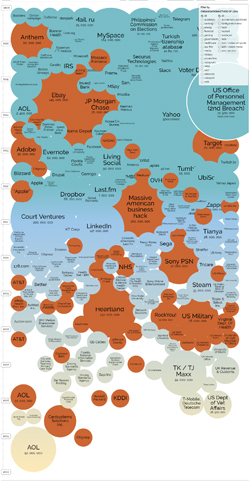
Credit and debit card information belonging to customers made purchases at 51 UPS Store Inc. locations in 24 states this year may have been illegally accessed as the result of an intrusion into the company’s networks.

In a statement on Wednesday, UPS said it was recently notified by law enforcement officials about a “broad-based malware intrusion” of its systems.
A subsequent investigation by an IT security firm showed that attackers had installed previously unknown malware on systems in more than four-dozen stores to gain access to cardholder data. The affected stores represent about 1% of the 4,470 UPS Store locations around the country.
The intrusion may have exposed data on transactions conducted at the stores between Jan. 20 and Aug. 11, 2014. “For most locations, the period of exposure to this malware began after March 26, 2014,” UPS said in a statement.
In addition to payment card information, the hackers also appear to have gained access to customer names, as well as postal and email addresses.
Each of the affected locations is individually owned and runs private networks that are not connected to other stores, UPS added. The company provided alist of affected locations.
The breach is the third significant one to be disclosed in the past week. Last Thursday, grocery store chain Supervalu announced it had suffered a malicious intrusion that exposed account data belonging to customers who had shopped at about 180 of the company’s stores in about a dozen states. The breach also affected customers from several other major grocery store chains for which Supervalu provides IT services.
Opera Mini Goes To Windows Phone
September 2, 2014 by admin
Filed under Around The Net
Comments Off on Opera Mini Goes To Windows Phone
Norwegian software maker Opera inked a deal to take over the browser building unit of Microsoft’s Nokia cellular phone unit and reported second-quarter earnings above expectations on Thursday, sending it shares sharply higher.

“We have signed a strategic licensing deal with Microsoft. We are basically taking over the browser building department in Nokia,” Opera Chief Executive Lars Boilsesen said. “This means that Opera Mini will become the default browser for Microsoft’s feature phone product lines and the Asha phones product lines.”
The deal will be profitable from the start, he added.
“All the current user base will be encouraged to upgrade to Opera Mini and all the new phones will come with Opera Mini pre-installed as a default browser. This is a great deal for us. We have dreamed of this for more than 10 years.”
In a separate statement, Opera said the licensing agreement applies to mobile phones based on the Series 30+, Series 40 and Asha software platforms.
“As part of the agreement, people who use the current browser for these phones, Xpress, will be encouraged to upgrade to the latest Opera Mini browser. Factory-new devices will have Opera Mini pre-installed.”
Is Windows ‘Threshold’ Enroute?
Microsoft will unveil a preview of “Threshold,” the current code name for Windows 8′s successor, as soon as next month, according to an online report on Monday.

ZDNet’s Mary Jo Foley, citing unnamed sources, said that Microsoft will deliver a “technical preview” of Threshold late in September or early in October. Previously, Foley had reported that Microsoft would offer a preview of some kind this fall.
Threshold may be officially named “Windows 9″ by Microsoft — the company has said nothing about either the code name or labeled the next iteration of its desktop and tablet OS — although there are arguments for dumping a numerical title because of the possible association with Windows 8, which has widely been pegged as a failure.
“Technical Preview” is a moniker that Microsoft has used in the past for its Office suite. For both Office 2013 and Office 2010, Microsoft used the term to describe an invitation-only sneak peek. Both application suites were later released as public betas prior to their official launch.
Windows, however, has used a different nomenclature. For 2012′s Windows 8, Microsoft called the early looks ”Developer Preview,””Consumer Preview” and “Release Preview,” all open to everyone. The first was analogous to an alpha, the second to a beta, and the third to a done-but-not-approved release candidate.
Windows 7, however, had used the more traditional “Beta” to describe the first public preview in early 2009. The previous fall, when Microsoft unveiled Windows 7, the firm had seeded an invite-only “pre-alpha” version, also dubbed a Developer Preview, of the OS to programmers and some influential bloggers.
Within hours, the Windows 7 Developer Preview leaked to file-sharing websites. Microsoft may have changed its practices for Windows 8, letting anyone download the first preview, because of the inevitably of leaks.
In an update to her blog of earlier today, Foley added that the “Technical Preview” nameplate notwithstanding, Microsoft would allow anyone to download Threshold/Windows 9 when it becomes available in the next few weeks.
If Microsoft does ship a preview soon and sets its sights on a second-quarter 2015 final release, it will have significantly accelerated the tempo from past practice. With Windows 7 and Windows 8, Microsoft offered its first previews 12 and 13 months, respectively, and the public beta 8 or 9 months, before launching the operating system.
Eight or nine months from September would be May or June 2015; that, however, assumes that the Technical Preview is of beta quality. The name itself hints at something less.
Microsoft appears eager to put Windows 8 behind it. It has stopped beating the drum about the OS and recently announced that it would not issue any additional major updates. Instead, the firm said last week, it will include improvements or new features in small packets using the same Windows Update mechanism that regularly serves security patches.