





 Sign up for our Technology Newsletter

Is RadioShack Going Bankrupt?
September 23, 2014 by admin
Filed under Around The Net
Comments Off on Is RadioShack Going Bankrupt?
Troubled electronics retailer RadioShack Corp says filing for bankruptcy protection is an option if its cash situation worsens, after reporting its tenth straight quarterly loss.

The company said it was also exploring other options, including a sale or an investment, and liquidation as the last resort.
RadioShack, whose sales have been in free-fall since 2010 as it struggles to compete with internet retailers, said in a regulatory filing it was working with its lenders and landlords to restructure its debt and cut costs.
“It would surprise me if we got to Nov. 1 without a bankruptcy,” Wedbush Securities Inc analyst Michael Pachter told Reuters.
RadioShack shares, which are in danger of being delisted from the New York Stock Exchange, were up 2 percent at 95 cents in volatile early trading.
The company said same-store sales declined 20 percent in the latest quarter, while total sales plunged to their lowest in more than 20 years.
The company is being advised by a restructuring attorney at law firm Jones Day as it tries to strike a deal with creditors to close stores, two people close to the matter told Reuters on Wednesday.
RadioShack tried to close 1,100 stores this year, but reduced that number to 200 a year when lenders did not agree to the plans.
RadioShack’s landlords, however, may be open to mass store closures if they believe it will allow them to find new tenants more quickly than in a bankruptcy, a source close to the matter told Reuters.
David Tawil, president of hedge fund Maglan Capital that focuses on companies approaching bankruptcy, said he saw “major execution risks” to RadioShack’s recapitalization and turnaround efforts.
“I don’t think that the chances are great that RadioShack survives,” Tawil said, adding that the company’s credit default swaps were trading higher, pointing to market expectations of a near-term debt default.
The company ended the second quarter with $30.5 million in cash and $658.0 million in debt, which matures between 2018 and 2019.
Intel Shows Wireless
Intel demoed its “no wires future” of wireless gigabit docking at its Intel Developer Forum (IDF) in California.
Intel wireless gigabit docking is a fully cable-free experience that includes wireless docking, wireless display and wireless charging. Intel demonstrated a reference design based on a next generation 14nm Intel processor on stage during its opening keynote on Tuesday.
Intel hopes to implement this technology by the end of 2015.
“Not only your wireless display, but storage, keyboard and mouse – all the other peripherals you have that have been weighing down our backpacks or strewn across our desk, we’re eliminating with one technology, and that’s wireless gigabit,” said an Intel expert on stage.
“It’s not only a secure and also localised connection – so you can use it in high dense areas such as in an office – but also extremely fast performing at over three times the performance of today’s WiFi.
“But while that’s cool we still have one more cord in our bag and let’s get rid of it: ditch that brick. That last thing that’s weighing us down is [resolved by] wireless power; the ease of use and installation it has is really going to be an advantage using the wireless resonance technology.”
The technology works over a simple receiver that goes into client devices, along with a resonance board that acts as a dock, which creates its own wireless hotspot.
Intel demonstrated how the standard will work using a laptop that automatically powered up and charged as soon as it reached the surface of the table due to the magnetic charging field built into the desk surface.
Intel said that this technology could also charge wireless Bluetooth earpieces, wearable devices, tablets and notebooks. However, it doesn’t have to be built into devices to work, as Intel said it can also be retrofitted into the cases of the devices we are carrying around.
Intel’s wireless gigabit technology is another push towards the firm’s vision of a cable-free future, meaning there’ll be no annoying wires or leads connecting computers to monitors, laptops to plug sockets or tablets to projectors.
The semiconductor giant first announced this view in August, saying that it’s looking to change the enterprise IT market with a strategy that will offer “three major experiences” in the office, that is, wireless display connectivity, wireless docking and wireless charging.
Intel Debuts A Slew Of Core M Chips
Comments Off on Intel Debuts A Slew Of Core M Chips
Intel’s new Core M chips — which bring PC-like performance to slim design tablets — will initially be in many Windows 8.1 tablets, but no Android devices are yet on the radar.

The chips will be in five to seven detachable tablets and hybrids by year end, and the number of devices could balloon to 20 next year, said Andy Cummins, mobile platform marketing manager at Intel.
Core M chips, announced at the IFA trade show in Berlin on Friday, are the first based on the new Broadwell architecture. The processors will pave the way for a new class of thin, large-screen tablets with long battery life, and also crank up performance to run full PC applications, Intel executives said in interviews.
“It’s about getting PC-type performance in this small design,” Cummins said. “[Core M] is much more optimized for thin, fanless systems.”
Tablets with Core M could be priced as low as US$699, but the initial batch of detachable tablets introduced at IFA are priced much higher. Lenovo’s 11.6-inch ThinkPad Helix 2 starts at $999, Dell’s 13.3-inch Latitude 13 7000 starts at $1,199, and Hewlett-Packard’s 13.3-inch Envy X2 starts at $1,049.99. The products are expected to ship in September or October.
Core M was also shown in paper-thin prototype tablets running Windows and Android at the Computex trade show in June. PC makers have not expressed interest in building Android tablets with Core M, but the OS can be adapted for the chips, Cummins said.
The dual-core chips draw as little as 4.5 watts, making it the lowest-power Core processor ever made by Intel. The clock speeds start at 800MHz when running in tablet mode, and scales up to 2.6GHz when running PC applications.
The power and performance characteristics make Core M relevant primarily for tablets. The chips are not designed for use in full-fledged PCs, Cummins said.
“If you are interested in the highest-performing parts, Core M probably isn’t the exact right choice. But if you are interested in that mix of tablet form factor, detachable/superthin form factor, this is where the Core M comes into play,” Cummins said.
For full-fledged laptops, users could opt for the upcoming fifth-generation Core processor, also based on Broadwell, Cummins said. Those chips are faster and will draw 15 watts of power or more, and be in laptops and desktops early next year.
New features in Core M curbed power consumption, and Intel is claiming performance gains compared to chips based on the older Haswell architecture. Tablets could offer around two more hours of battery life with Core M.
Acers To Launh Cheap Tablets
September 17, 2014 by admin
Filed under Consumer Electronics
Comments Off on Acers To Launh Cheap Tablets
Acer’s latest low-cost 8-inch tablets will come to market in both Android and Windows flavors.

The Iconia Tab 8 W runs Windows on an Intel Atom Z3735G quad-core processor. It offers 8 hours of battery life, weighs 370 grams and is 9.75 millimeters thick. The 8-inch screen has a resolution of 1280 by 800 pixels.
For the $149 price tag, Acer includes a one-year subscription to the Personal version of Office 365, which includes access to Word, Excel, PowerPoint, OneNote and Outlook.
Android fans will prefer the Iconia One 8, running Android 4.4. It has the same Intel processor and screen dimensions as its Windows cousin, but is slightly lighter at 340 grams and only 8.5 millimeters thick.
Buyers can choose between 10 colors, including red, green, blue, purple and pink.
Acer also took the covers off the Iconia 10, an Android-based 10-inch tablet. The device has a quad-core processor from MediaTek. The screen is protected using Gorilla glass and has Full HD resolution. Using Dolby Digital Plus, surround sound is simulated from two-channel stereo audio headphones.
Available in black or white and with a price of $199, the Iconia Tab 10 includes a micro HDMI port and Wireless Display support for showing photos and videos on a bigger TV.
The first of the new tablets to start shipping will be the Iconia 10, available this month in the Americas and Europe, Middle East and Africa (EMEA).
The Iconia Tab 8 W will go on sale in October in EMEA and in November in the Americas.
Insurers To Use Mobile Phones To Track
September 15, 2014 by admin
Filed under Around The Net
Comments Off on Insurers To Use Mobile Phones To Track
A new usage-based insurance (UBI) software platform will enable insurers to track drivers’ behavior through smartphone sensors and geolocation services.

Agero, one of the nation’s largest suppliers of roadside safety software and services to automakers and insurance companies, said its new UBI telematics suite will transmit to insurers the information needed to offer discounts to good drivers, penalize others, and send alerts to emergency assistance service providers.
The UBI suite consists of the PolicyPal app, which tracks driving habits in real time, and Auto Crash Notification (ACN), which automatically notifies emergency services within moments of an accident.
Currently, State Farm’s In-Drive and Progressive’s Snapshot program, offer customers the opportunity to voluntarily participate in programs in which their insurer collects vehicle data and uses the information to determine driving habits, which in turn can be used to offer lower-rate incentives to safer operators.
Unlike Agero’s new platform, however, In-Drive and Snapshot, use a small data collection device that plugs into a vehicle’s standard OBDII onboard diagnostics port under the dashboard and transmits data from a car’s central computer to insurance companies.
Agero’s new mobile suite will greatly expand upon the universe of consumers who can vie for “discount rates” based on their driving profiles. The mobile device also travels with them in or out of the vehicle.
Over the past decade, the insurance industry has been embroiled in a heated price war, with companies vying to be king of the heap for discount pricing.
“It’s becoming a cutthroat market. They’re competing on price,” said Jeff Blecher, senior vice president of strategy at Medford, Mass.-based Agero. “To break that mold, they need a new business model. UBI does that. Now, they can compete based on the risk profile of drivers.”
UBI offers the insurance industry new opportunities for tailored discount programs. Notably, they can switch from relying OBDII dongles plugged into the customer’s car and instead use mobile apps that travel with the driver, whether he’s traveling in his own car or another vehicle.
“We want to align our strategy… with the smartphone as primary data collection point,” Blecher said.
Bitcoin Use Growing
September 8, 2014 by admin
Filed under Around The Net
Comments Off on Bitcoin Use Growing
Bitcoin is gaing greater acceptance at U.S. online merchants including Overstock.com and Expedia, as customers use a digital currency that just a few years ago was virtually unknown but is now showing some staying power.

Though sales paid for in bitcoin so far at vendors interviewed for this article have been a fraction of one percent, they expect that as acceptance grows, the online currency will one day be as ubiquitous as the internet.
“Bitcoin isn’t going anywhere; it’s here to stay,” said Michael Gulmann, vice president of global products at Expedia Inc. in Seattle, the largest online travel agent. “We want to be there from the beginning.” Expedia started accepting bitcoin payments for hotel bookings on July 11.
Until recently a niche alternative currency touted by a fervent group of followers, bitcoin has evolved into a software-based payment online system. Bitcoins are stored in a wallet with a unique identification number and companies like Coinbase and Blockchain can hold the currency for the user.
When buying an item from a merchant’s website, a customer simply clicks on the bitcoin option and a pop-in window appears where he can type in his wallet ID number.
Still, broad-based adoption of bitcoin is at least five years away because most consumers still prefer to use credit cards, analysts said.
“Bitcoin is a new way of making payments, but it’s not solving a problem that’s broken,” said George Peabody, payments consultant at Glenbrook Partners in Menlo Park, California. “Retail payments aren’t broken.”
There are also worries about bitcoin’s volatility: its price in U.S. dollars changes every day.
That risk is borne by the consumer and the bitcoin payment processor, such as Coinbase or Bitpay, not the retailer. The vendor doesn’t hold the bitcoin and is paid in U.S. dollars. As soon as a customer pays in bitcoin, the digital currency goes to the payment processor and the processor immediately pays the merchant, for a fee of less than 1 percent.
“We don’t have to deal with the actual holding of the bitcoin: it’s the payment processor that takes the currency risk for us,” said Bernie Han, chief operating officer at Dish Network Corp, in Englewood, Colorado. “That’s what makes it appealing for us and I guess for other merchants as well.”
Unity Starts Pushing Open Source
Unity Technologies has stepped up its commitment to democratising game development by making key components of its ubiquitous engine open source.

At present, that applies to the Unity Test Tools and the engine’s new graphical user interface system, which was demonstrated in the opening keynote of Unite 2014. The features will be available under the MIT/X11 license, giving users the freedom to “control, customise and extend” their functionality.
The source code for the components will be hosted on BitBucket, and Unity has prepared a guide for any interested open source contributors. The source for the Unity Test Tools is already available, with the GUI to follow.
“Beyond that, we don’t have a concrete plan, but we have a lot of things in the pipeline,” the company said in a statement. “These components will all be isolated from Unity in such a way that you can modify them and use your own modified version with the official public Unity release.
“Although Unity Technologies has been active in the open-source community for quite some time, this is the first time we’ll be opening the source to components of Unity itself.
“We’re excited to see what you do with it.”
UPS Breached
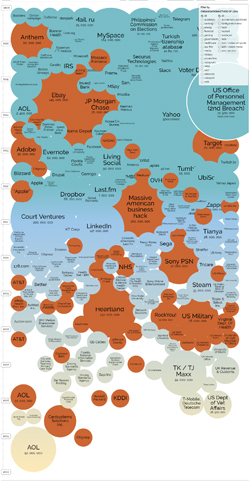
Credit and debit card information belonging to customers made purchases at 51 UPS Store Inc. locations in 24 states this year may have been illegally accessed as the result of an intrusion into the company’s networks.

In a statement on Wednesday, UPS said it was recently notified by law enforcement officials about a “broad-based malware intrusion” of its systems.
A subsequent investigation by an IT security firm showed that attackers had installed previously unknown malware on systems in more than four-dozen stores to gain access to cardholder data. The affected stores represent about 1% of the 4,470 UPS Store locations around the country.
The intrusion may have exposed data on transactions conducted at the stores between Jan. 20 and Aug. 11, 2014. “For most locations, the period of exposure to this malware began after March 26, 2014,” UPS said in a statement.
In addition to payment card information, the hackers also appear to have gained access to customer names, as well as postal and email addresses.
Each of the affected locations is individually owned and runs private networks that are not connected to other stores, UPS added. The company provided alist of affected locations.
The breach is the third significant one to be disclosed in the past week. Last Thursday, grocery store chain Supervalu announced it had suffered a malicious intrusion that exposed account data belonging to customers who had shopped at about 180 of the company’s stores in about a dozen states. The breach also affected customers from several other major grocery store chains for which Supervalu provides IT services.
Opera Mini Goes To Windows Phone
September 2, 2014 by admin
Filed under Around The Net
Comments Off on Opera Mini Goes To Windows Phone
Norwegian software maker Opera inked a deal to take over the browser building unit of Microsoft’s Nokia cellular phone unit and reported second-quarter earnings above expectations on Thursday, sending it shares sharply higher.

“We have signed a strategic licensing deal with Microsoft. We are basically taking over the browser building department in Nokia,” Opera Chief Executive Lars Boilsesen said. “This means that Opera Mini will become the default browser for Microsoft’s feature phone product lines and the Asha phones product lines.”
The deal will be profitable from the start, he added.
“All the current user base will be encouraged to upgrade to Opera Mini and all the new phones will come with Opera Mini pre-installed as a default browser. This is a great deal for us. We have dreamed of this for more than 10 years.”
In a separate statement, Opera said the licensing agreement applies to mobile phones based on the Series 30+, Series 40 and Asha software platforms.
“As part of the agreement, people who use the current browser for these phones, Xpress, will be encouraged to upgrade to the latest Opera Mini browser. Factory-new devices will have Opera Mini pre-installed.”
Is Windows ‘Threshold’ Enroute?
Microsoft will unveil a preview of “Threshold,” the current code name for Windows 8′s successor, as soon as next month, according to an online report on Monday.

ZDNet’s Mary Jo Foley, citing unnamed sources, said that Microsoft will deliver a “technical preview” of Threshold late in September or early in October. Previously, Foley had reported that Microsoft would offer a preview of some kind this fall.
Threshold may be officially named “Windows 9″ by Microsoft — the company has said nothing about either the code name or labeled the next iteration of its desktop and tablet OS — although there are arguments for dumping a numerical title because of the possible association with Windows 8, which has widely been pegged as a failure.
“Technical Preview” is a moniker that Microsoft has used in the past for its Office suite. For both Office 2013 and Office 2010, Microsoft used the term to describe an invitation-only sneak peek. Both application suites were later released as public betas prior to their official launch.
Windows, however, has used a different nomenclature. For 2012′s Windows 8, Microsoft called the early looks ”Developer Preview,””Consumer Preview” and “Release Preview,” all open to everyone. The first was analogous to an alpha, the second to a beta, and the third to a done-but-not-approved release candidate.
Windows 7, however, had used the more traditional “Beta” to describe the first public preview in early 2009. The previous fall, when Microsoft unveiled Windows 7, the firm had seeded an invite-only “pre-alpha” version, also dubbed a Developer Preview, of the OS to programmers and some influential bloggers.
Within hours, the Windows 7 Developer Preview leaked to file-sharing websites. Microsoft may have changed its practices for Windows 8, letting anyone download the first preview, because of the inevitably of leaks.
In an update to her blog of earlier today, Foley added that the “Technical Preview” nameplate notwithstanding, Microsoft would allow anyone to download Threshold/Windows 9 when it becomes available in the next few weeks.
If Microsoft does ship a preview soon and sets its sights on a second-quarter 2015 final release, it will have significantly accelerated the tempo from past practice. With Windows 7 and Windows 8, Microsoft offered its first previews 12 and 13 months, respectively, and the public beta 8 or 9 months, before launching the operating system.
Eight or nine months from September would be May or June 2015; that, however, assumes that the Technical Preview is of beta quality. The name itself hints at something less.
Microsoft appears eager to put Windows 8 behind it. It has stopped beating the drum about the OS and recently announced that it would not issue any additional major updates. Instead, the firm said last week, it will include improvements or new features in small packets using the same Windows Update mechanism that regularly serves security patches.