





 Sign up for our Technology Newsletter

Are Cyber Criminals Hard To Catch?
Despite 100,000 cyber crimes being committed every year UK authorities only caught 12 hackers.
In fact on average just one person was convicted of an offence under the Computer Misuse Act every month for the past 23 years.
We assume that it was not the same bloke, because he would be the most luckless criminal ever.
Campaigners from the Digital Trust, which supports victims of online abuse, said police do not know how to cope with the problem.
Need more laws
Criminal justice expert Harry Fletcher, who is a director of the Digital Trust, said: “The police still concentrate their resources on traditional offences offline, but most people are more likely to be mugged online than in the street.
“The law needs to change. It should, for example, be an offence to use any technological device to locate, listen to or watch a person without legitimate purpose.
“In addition, restrictions should be placed on the sale of spyware without lawful reasons. It should also be against the law to install a webcam or any other form or surveillance device without the target’s knowledge.”
Of course just creating new laws is not going to mean that more hackers will be caught, it will just mean that there are more crimes which they could be arrested for.
The conviction rate against hackers are not bad, if the coppers do arrest someone. Between 1990 to 2006 only 183 defendants were proceeded against and 134 found guilty under the Computer Misuse Act.
Unfortunately the Trust did not see, to realize that a lot of the hacks against companies and individuals come from overseas, particularly Russian or China. Changing laws in the UK would not change anything.
LinkedIn Acquires Startup Refresh
April 16, 2015 by admin
Filed under Around The Net
Comments Off on LinkedIn Acquires Startup Refresh
In a move that could produce even more automated suggestions and tips for LinkedIn users, the professional network has purchased California startup Refresh, the maker of an app that gathers news and insights about participants in meetings.

Launched three years ago, Refresh is designed to be a “digital briefing book” that can call up online information related to people that users are scheduled to meet. The information can be anything from blog posts, news articles or Facebook posts to personal notes or favorite sports teams.
The Refresh mobile and desktop app is aimed at helping people relate to one another more quickly, but it can also be used to refresh one’s memory when running into acquaintances unexpectedly.
The details of the deal were not disclosed. Refresh has stopped taking on new users and its app will shut down April 15.
“Refresh has surfaced insights associated with hundreds of millions of meetings, and has been central to countless connections and closed deals,” co-founder Bhavin Shah wrote on the Refresh blog in announcing the deal.
LinkedIn already has an app called Connected that was somewhat of a rival to Refresh. It can log the people users have met and offer updates and information about interests shared with “connections,” which are acquaintances in the LinkedIn lingo. It’s unclear whether Refresh features will be added to Connected or the LinkedIn website itself.
“Our team will focus its efforts on providing LinkedIn members with more insights to help them better do their jobs,” Shah wrote.
Toshiba And SanDisk Launch 3D Flash Chip
Comments Off on Toshiba And SanDisk Launch 3D Flash Chip
Toshiba has announced the world’s first 48-layer Bit Cost Scalable (BiCS) flash memory chip.
The BiCS is a two-bit-per-cell, 128Gb (16GB) device with a 3D-stacked cell structure flash that improves density and significantly reduces the overall size of the chip.
Toshiba is already using 15nm dies so, despite the layering, the finished product will be competitively thin.
24 hours after the first announcement, SanDisk made one of its own regarding the announcement. The two companies share a fabrication plant and usually make such announcements in close succession.
“We are very pleased to announce our second-generation 3D NAND, which is a 48-layer architecture developed with our partner Toshiba,” said Dr Siva Sivaram, executive vice president of memory technology at SanDisk.
“We used our first generation 3D NAND technology as a learning vehicle, enabling us to develop our commercial second-generation 3D NAND, which we believe will deliver compelling storage solutions for our customers.”
Samsung has been working on its own 3D stacked memory for some time and has released a number of iterations. Production began last May, following a 10-year research cycle.
Moving away from the more traditional design process, the BiCS uses a ‘charge trap’ which stops electrons leaking between layers, improving the reliability of the product.
The chips are aimed primarily at the solid state drive market, as the 48-layer stacking process is said to enhance reliability, write speed and read/write endurance. However, the BiCS is said to be adaptable to a number of other uses.
All storage manufacturers are facing a move to 3D because, unless you want your flash drives very long and flat, real estate on chips is getting more expensive per square inch than a bedsit in Soho.
Micron has been talking in terms of 3D NAND since an interview with The INQUIRER in 2013 and, after signing a deal with Intel, has predicted 10TB in a 2mm chip by the end of this year.
Production of the chips will roll out initially from Fab 5 before moving in early 2016 to Fab 2 at the firm’s Yokkaichi Operations plant.
This is in stark contrast to Intel, which mothballed its Fab 42 chip fabrication plant in Chandler, Arizona before it even opened, as the semiconductors for computers it was due to produce have fallen in demand by such a degree.
The Toshiba and Sandisk BiCS chips are available for sampling from today.
Panasonic Appears To Be On The Hunt
April 8, 2015 by admin
Filed under Around The Net
Comments Off on Panasonic Appears To Be On The Hunt
Japanese electronics giant Panasonic Corp said it is gearing up to spend 1 trillion yen ($8.4 billion) on acquisitions over the next four years, bolstered by a stronger profit outlook for its automotive and housing technology businesses.

Chief Executive Kazuhiro Tsuga said at a briefing on Thursday that Panasonic doesn’t have specific acquisition targets in mind for now. But he said the firm will spend around 200 billion yen on M&A in the fiscal year that kicks off in April alone, and pledged to improve on Panasonic’s patchy track record on big deals.
“With strategic investments, if there’s an opportunity to accelerate growth, you need funds. That’s the idea behind the 1 trillion yen figure,” he said. Tsuga has spearheaded a radical restructuring at the Osaka-based company that has made it one of the strongest turnaround stories in Japan’s embattled technology sector.
Tsuga previously told Reuters that company was interested in M&A deals in the European white goods market, a sector where Panasonic has comparatively low brand recognition.
The firm said on Thursday it’s targeting operating profit of 430 billion yen in the next fiscal year, up nearly 25 percent from the 350 billion yen it expects for the year ending March 31.
Panasonic’s earnings have been bolstered by moving faster than peers like Sony Corp and Sharp Corp to overhaul business models squeezed by competition from cheaper Asian rivals and caught flat-footed in a smartphone race led by Apple Inc and Samsung Electronics. Out has gone reliance on mass consumer goods like TVs and smartphones, and in has come a focus on areas like automotive technology and energy-efficient home appliances.
Tsuga also sought to ease concerns that an expensive acquisition could set back its finances, which took years to recover from the deal agreed in 2008 to buy cross-town rival Sanyo for a sum equal to about $9 billion at the time.
Oracle Launches OpenStack Platform With Intel
Comments Off on Oracle Launches OpenStack Platform With Intel
Oracle and Intel have teamed up for the first demonstration of carrier-grade network function virtualization (NFV), which will allow communication service providers to use a virtualized, software-defined model without degradation of service or reliability.
The Oracle-led project uses the Intel Open Network Platform (ONP) to create a robust service over NFV, using intelligent direction of software to create viable software-defined networking that replaces the clunky equipment still prevalent in even the most modern networks.
Barry Hill, Oracle’s global head of NFV, told The INQUIRER: “It gets us over one of those really big hurdles that the industry is desperately trying to overcome: ‘Why the heck have we been using this very tightly coupled hardware and software in the past if you can run the same thing on standard, generic, everyday hardware?’. The answer is, we’re not sure you can.
“What you’ve got to do is be smart about applying the right type and the right sort of capacity, which is different for each function in the chain that makes up a service.
“That’s about being intelligent with what you do, instead of making some broad statement about generic vanilla infrastructures plugged together. That’s just not going to work.”
Oracle’s answer is to use its Communications Network Service Orchestration Solution to control the OpenStack system and shrink and grow networks according to customer needs.
Use cases could be scaling out a carrier network for a rock festival, or transferring network priority to a disaster recovery site.
“Once you understand the extent of what we’ve actually done here, you start to realize just how big an announcement this is,” said Hill.
“On the fly, you’re suddenly able to make these custom network requirements instantly, just using off-the-shelf technology.”
The demonstration configuration optimizes the performance of an Intel Xeon E5-2600 v3 processor designed specifically for networking, and shows for the first time a software-defined solution which is comparable to the hardware-defined systems currently in use.
In other words, it can orchestrate services from the management and orchestration level right down to a single core of a single processor, and then hyperscale it using resource pools to mimic the specialized characteristics of a network appliance, such as a large memory page.
“It’s kind of like the effect that mobile had on fixed line networks back in the mid-nineties where the whole industry was disrupted by who was providing the technology, and what they were providing,” said Hill.
“Suddenly you went from 15-year business plans to five-year business plans. The impact of virtualization will have the same level of seismic change on the industry.”
Today’s announcement is fundamentally a proof-of-concept, but the technology that powers this kind of next-generation network is already evolving its way into networks.
Hill explained that carrier demand had led to the innovation. “The telecoms industry had a massive infrastructure that works at a very slow pace, at least in the past,” he said.
“However, this whole virtualization push has really been about the carriers, not the vendors, getting together and saying: ‘We need a different model’. So it’s actually quite advanced already.”
NFV appears to be the next gold rush area for enterprises, and other consortium are expected to make announcements about their own solutions within days.
The Oracle/Intel system is based around OpenStack, and the company is confident that it will be highly compatible with other systems.
The ‘Oracle Communications Network Service Orchestration Solution with Enhanced Platform Awareness using the Intel Open Network Platform’ – or OCNSOSWEPAUTIONP as we like to think of it – is currently on display at Oracle’s Industry Connect event in Washington DC.
The INQUIRER wonders whether there is any way the marketing department can come up with something a bit more catchy than OCNSOSWEPAUTIONP before it goes on open sale.
USB 3.1 Coming Later This Year
The emerging USB 3.1 standard is on track to reach desktops as hardware companies release motherboards with ports that can transfer data twice as fast as the previous USB technology.

MSI recently announced a 970A SLI Krait motherboard that will support the AMD processors and the USB 3.1 protocol. Motherboards with USB 3.1 ports have also been released by Gigabyte, ASRock and Asus, but those boards support Intel chips.
USB 3.1 can shuffle data between a host device and peripheral at 10Gbps, which is two times faster than USB 3.0. USB 3.1 is also generating excitement for the reversible Type-C cable, which is the same on both ends so users don’t have to worry about plug orientation.
The motherboards with USB 3.1 technology are targeted at high-end desktops. Some enthusiasts like gamers seek the latest and greatest technologies and build desktops with motherboards sold by MSI, Asus and Gigabyte. Many of the new desktop motherboards announced have the Type-C port interface, which is also in recently announced laptops from Apple and Google.
New technologies like USB 3.1 usually first appear in high-end laptops and desktops, then make their way down to low-priced PCs, said Dean McCarron, principal analyst of Mercury Research.
PC makers are expected to start putting USB 3.1 ports in more laptops and desktops starting later this year.
Juniper Networks Goes OpenStack
Juniper and Mirantis are getting close, with news that they are to form a cloud OpenStack alliance.

The two companies have signed an engineering partnership that the companies believe will lead to a reliable, scalable software-defined networking solution.
Mirantis OpenStack will now inter-operate with Juniper Contrail Networking, as well as OpenContrail, an open source software-defined networking system.
The two companies have published a reference architecture for deploying and managing Juniper Contrail Networking with Mirantis OpenStack to simplify deployment and reduce the need for third-party involvement.
Based on OpenStack Juno, Mirantis OpenStack 6.0 will be enhanced by a Fuel plugin in the second quarter that will make it even easier to deploy large-scale clouds in house.
However, Mirantis has emphasized that the arrival of Juniper to the fold is not a snub to the recently constructed integration with VMware.
Nick Chase of Mirantis explained, “…with this Juniper integration, Mirantis will support BOTH VMware vCenter Server and VMware NSX AND Juniper Networks Contrail Networking. That means that even if they’ve got VMware in their environment, they can choose to use NSX or Contrail for their networking components.
“Of course, all of that begs the question, when should you use Juniper, and when should you use VMware? Like all great engineering questions, the answer is ‘it depends’. How you choose is going to be heavily influenced by your individual situation, and what you’re trying to achieve.”
Juniper outlined its goals for the tie-up as:
– Reduce cost by enabling service providers and IT administrators to easily embrace SDN and OpenStack technologies in their environments
– Remove the complexity of integrating networking technologies in OpenStack virtual data centres and clouds
– Increase the effectiveness of their operations with fully integrated management for the OpenStack and SDN environments through Fuel and Juniper Networks® Contrail SDN Controller
The company is keen to emphasize that this is not meant to be a middle finger at VMware, but rather a demonstration of the freedom of choice offered by open source software. However, it serves as another demonstration of how even the FOSS market is growing increasingly proprietary and competitive.
Medical Data Becoming Valuable To Hackers
Comments Off on Medical Data Becoming Valuable To Hackers
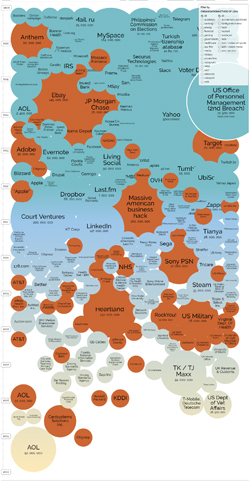
The personal information stored in health care records fetches increasingly impressive sums on underground markets, making any company that stores such data a very attractive target for attackers.

“Hackers will go after anyone with health care information,” said John Pescatore, director of emerging security trends at the SANS Institute, adding that in recent years hackers have increasingly set their sights on EHRs (electronic health records).
With medical data, “there’s a bunch of ways you can turn that into cash,” he said. For example, Social Security numbers and mailing addresses can be used to apply for credit cards or get around corporate antifraud measures.
This could explain why attackers have recently targeted U.S. health insurance providers. Last Tuesday, Premera Blue Cross disclosed that the personal details of 11 million customers had been exposed in a hack that was discovered in January. Last month, Anthem, another health insurance provider, said that 78.8 million customer and employee records were accessed in an attack.
Both attacks exposed similar data, including names, Social Security numbers, birth dates, telephone numbers, member identification numbers, email addresses and mailing addresses. In the Premera breach, medical claims information was also accessed.
If the attackers try to monetize this information, the payout could prove lucrative.
Credentials that include Social Security numbers can sell for a couple of hundred dollars since the data’s lifetime is much longer compared to pilfered credit card numbers, said Matt Little, vice president of product development at PKWARE, an encryption software company with clients that include health care providers. Credit card numbers, which go for a few dollars, tend to work only for a handful of days after being reported stolen.
Target Settles Security Breach
Target is reportedly close to paying out $10m to settle a class-action case that was filed after it was hacked and stripped of tens of millions of peoples’ details.
Target was smacked by hackers in 2013 in a massive cyber-thwack on its stores and servers that put some 70 million people’s personal information in harm’s way.
The hack has had massive repercussions. People are losing faith in industry and its ability to store their personal data, and the Target incident is a very good example of why people are right to worry.
As well as tarnishing Target’s reputation, the attack also led to a $162m gap in its financial spreadsheets.
The firm apologized to its punters when it revealed the hack, and chairman, CEO and president Gregg Steinhafel said he was sorry that they have had to “endure” such a thing
Now, according to reports, Target is willing to fork out another $10m to put things right, offering the money as a proposed settlement in one of several class-action lawsuits the company is facing. If accepted, the settlement could see affected parties awarded some $10,000 for their troubles.
We have asked Target to either confirm or comment on this, and are waiting for a response. For now we have an official statement at Reuters to turn to. There we see Target spokeswoman Molly Snyder confirming that something is happening but not mentioning the 10 and six zeroes.
“We are pleased to see the process moving forward and look forward to its resolution,” she said.
Not available to comment, not that we asked, will be the firm’s CIO at the time of the hack. Thirty-year Target veteran Beth Jacob left her role in the aftermath of the attack, and a replacement was immediately sought.
“To ensure that Target is well positioned following the data breach we suffered last year, we are undertaking an overhaul of our information security and compliance structure and practices at Target,” said Steinhafel then.
“As a first step in this effort, Target will be conducting an external search for an interim CIO who can help guide Target through this transformation.”
“Transformational change” pro Bob DeRodes took on the role in May last year and immediately began saying the right things.
“I look forward to helping shape information technology and data security at Target in the days and months ahead,” he said.
“It is clear to me that Target is an organization that is committed to doing whatever it takes to do right by their guests.”
We would ask Steinhafel for his verdict on DeRodes so far and the $10m settlement, but would you believe it, he’s not at Target anymore either having left in the summer last year with a reported $61m golden parachute.
IBM Debuts New Mainframe
IBM has started shipping its all-new first z13 mainframe computer.

IBM has high hopes the upgraded model will generate solid sales based not only on usual customer patterns but its design focus aimed at helping them cope with expanding mobile usage, analysis of data, upgrading security and doing more “cloud” remote computing.
Mainframes are still a major part of the Systems and Technology Group at IBM, which overall contributed 10.8 percent of IBM’s total 2014 revenues of $92.8 billion. But the z Systems and their predecessors also generate revenue from software, leasing and maintenance and thus have a greater financial impact on IBM’s overall picture.
The new mainframe’s claim to fame is to use simultaneous multi-threading (SMT) to execute two instruction streams (or threads) on a processor core which delivers more throughput for Linux on z Systems and IBM z Integrated Information Processor (zIIP) eligible workloads.
There is also a single Instruction Multiple Data (SIMD), a vector processing model providing instruction level parallelism, to speed workloads such as analytics and mathematical modeling. All this means COBOL 5.2 and PL/I 4.5 exploit SIMD and improved floating point enhancements to deliver improved performance over and above that provided by the faster processor.
Its on chip cryptographic and compression coprocessors receive a performance boost improving both general processors and Integrated Facility for Linux (IFL) cryptographic performance and allowing compression of more data, helping tosave disk space and reducing data transfer time.
There is also a redesigned cache architecture, using eDRAM technology to provide twice as much second level cache and substantially more third and fourth level caches compared to the zEC12. Bigger and faster caches help to avoid untimely swaps and memory waits while maximisng the throughput of concurrent workload Tom McPherson, vice president of z System development, said that the new model was not just about microprocessors, though this model has many eight-core chips in it. Since everything has to be cooled by a combination of water and air, semiconductor scaling is slowing down, so “you have to get the value by optimizing.
The first real numbers on how the z13 is selling won’t be public until comments are made in IBM’s first-quarter report, due out in mid-April, when a little more than three weeks’ worth of billings will flow into it.
The company’s fiscal fortunes have sagged, with mixed reviews from both analysts and the blogosphere. Much of that revolves around IBM’s lag in cloud services. IBM is positioning the mainframe as a prime cloud server, one of the systems that is actually what cloud computing goes to and runs on.