





 Sign up for our Technology Newsletter

Intel Makes Changes To Haswell
 Intel has started dividing its mobile market segments into processors lines, where the Y processor line goes up to 11.5W TDP, U line covers chips in the 15W to 25W range, while the M line covers 37W, 47W as well as 57W TDP space, with two to four cores and graphics up to GT2.
The high performance H processor line is yet another BGA package processor line that also aims for 37W, 47W and 57W TDPs, with quad-core processors and up to GT3 graphics with on-package cache memory.
Intel expects that high performing gaming and workstation PCs will go use these processors and they fit some thick clamshell designs, no Ultrabooks with 57W unless you would want to use one for welding.
Intel currently doesn’t detail the processor number and the number of SKUs but it is obvious that they will end up with quad-core Core i7 branding for QC1+ and QC2+ market segments.
FTC Defends Google Decision
January 25, 2013 by admin
Filed under Around The Net
Comments Off on FTC Defends Google Decision
The FTC defended its decision to let Google carry on with its anti-trust-like antics, while other regulations in civilized nations are planning to put the boot in.
The US Federal Trade Commission reached a settlement with Google which really did little to stop the company using its dominance to push down search results from its competitors. The move attracted considerable criticism because it followed a letter from US senators to go easy on the search engine because it was good for US jobs. We guess they mean the jobs of US senators who Google paid campaign contributions.
Google promised to change the ways it presents some search results and runs search advertising, but was exonerated of the results bias claims. Rivals including Yelp and Microsoft claimed that Google had favored its own product results over those of its competitors and called for the anti-trust case. What makes the case look more suspect is that the EU is less frightened of actually fining Google or forcing it to behave. Indeed indications from Brussels are that it has not only agreed with the rival’s complaints but will do something about it if Google does not pull finger.
But FTC chairman Jon Leibowitz told Talking Points Memo that the agency’s decision was legally sound and would be beneficial to competition and consumers. Under facts we found, all five of us, from liberal Democrat to conservative Republican, agreed that the evidence militated against an anti-trust case,” Leibowitz told TPM.
The fact that we managed to have both Google and Google’s rivals unhappy, in an odd way that’s maybe unique to Washington, that puts us in the right place substantively, he claimed. When asked if Google’s $25 million lobbying budget for the duration FTC’s investigation helped, he said that lobbying makes the companies feel good and lobbyists feel good.
“At the end of the day, whether you want to say lobbying had any influence, or cancelled itself out because there was lobbying on both sides, if you’re going to do what lobbyists want you to do in a regulatory agency, you’re not doing your job.”
Anonymous Attacks MIT
January 23, 2013 by admin
Filed under Around The Net
Comments Off on Anonymous Attacks MIT
Anonymous goes after the Massachusetts Institute of Technology (MIT) website after its president called for an internal investigation into what role it played in the prosecution of web activist Aaron Swartz.
MIT president Rafael Reif revealed the investigation in an email to staff that he sent out after hearing the news about Swartz’s death.
“I want to express very clearly that I and all of us at MIT are extremely saddened by the death of this promising young man who touched the lives of so many. It pains me to think that MIT played any role in a series of events that have ended in tragedy,” he wrote.
“I have asked Professor Hal Abelson to lead a thorough analysis of MIT’s involvement from the time that we first perceived unusual activity on our network in fall 2010 up to the present. I have asked that this analysis describe the options MIT had and the decisions MIT made, in order to understand and to learn from the actions MIT took. I will share the report with the MIT community when I receive it.”
Hacktivists from Anonymous defaced two MIT webpages in the wake of the announcement and turned them into memorials for Swartz.
Bonets Attack U.S. Banks
January 18, 2013 by admin
Filed under Around The Net
Comments Off on Bonets Attack U.S. Banks
Evidence collected from a website that was recently used to flood U.S. banks with junk traffic suggests that the responsible parties behind the ongoing DDoS attack campaign against U.S. financial institutions — thought by some to be the work of Iran — are using botnets for hire.

The compromised website contained a PHP-based backdoor script that was regularly instructed to send numerous HTTP and UDP (User Datagram Protocol) requests to the websites of several U.S. banks, including PNC Bank, HSBC and Fifth Third Bank, Ronen Atias, a security analyst at Web security services provider Incapsula, said Tuesday in a blog post.
Atias described the compromised site as a “small and seemingly harmless general interest UK website” that recently signed up for Incapsula’s services.
An analysis of the site and the server logs revealed that attackers were instructing the rogue script to send junk traffic to U.S. banking sites for limited periods of time varying between seven minutes and one hour. The commands were being renewed as soon as the banking sites showed signs of recovery, Atias said.
During breaks from attacking financial websites the backdoor script was being instructed to attack unrelated commercial and e-commerce sites. “This all led us to believe that we were monitoring the activities of a Botnet for hire,” Atias said.
“The use of a Web Site as a Botnet zombie for hire did not surprise us,” the security analyst wrote. “After all, this is just a part of a growing trend we’re seeing in our DDoS prevention work.”
Will Tegra 4 Launch In Q2?
Tegra 4 was supposed to be production ready in Q4 2012 and the general expectation was that CES 2013 would be marked by the launch of phones and tablets based on the new chipset.
It turns out that the chip needed another re-spin, something that usually creates a delay of roughly a quarter. We don’t know which part of the chip was to blame but our sources claim that Tegra 4 is a complex chip with a lot of components where many things can go wrong.
Nvidia dared to move to 28nm, change the core from A9 to A15 and find a way to make its LTE work. There were a lot of things that could go wrong and obviously some did.
This is why Intel first shrinks the core, for example from 32nm to 22nm, and then in its “tock” cycle goes for a newly designed core. Nvidia doesn’t have that luxury, as making a 28nm version of Tegra 3 would not be enough for the SoC market in 2013.
A few people at Nvidia have been telling us that the chip has been sampled to accounts and Nvidia is planning to have some designs announced at the Mobile World Congress. We managed to confirm this schedule with some Nvidia partners.
Broadcom Goes UltraHD
January 16, 2013 by admin
Filed under Consumer Electronics
Comments Off on Broadcom Goes UltraHD
As TV manufacturers show off UltraHD TVs at CES, communications chip maker Broadcom is introducing the guts of future gateways that will be able to deliver video for those sets into viewers’ homes.

Broadcom’s BCM7445 silicon platform, announced just hours before the show opened on Tuesday morning, will be able to process incoming video from cable, carrier and satellite services that has four times the resolution of typical 1080p video offered today, according to the company.
Like the eye-catching but expensive TVs on the show floor in Las Vegas, the BCM7445 is just one of the first of many steps to consumers watching UltraHD shows at home. New content, displays and delivery technologies will all be required for the new resolution, which is also known as 4K.
Broadcom expects its chip to be in volume production by the middle of next year, in time for mainstream UltraHD TVs that will probably hit the market for the late 2014 holiday season, said Joe Del Rio, associate product line manager at Broadcom. However, service providers, which will probably be the distributors of most of the gateways built with the BCM7445, may take longer to start sending UltraHD video to their subscribers, Del Rio said.
AP Goes With Twitter
January 14, 2013 by admin
Filed under Around The Net
Comments Off on AP Goes With Twitter
The Associated Press began using its official Twitter account as an advertising platform on Monday, as the news organization looks for new ways to generate revenue.

Samsung Electronics Co Ltd was the first sponsor on the @ap account for breaking news, which is followed by 1.5 million Twitter users. The South Korean electronics maker’s initial “SPONSORED TWEET” promoted its events at the 2013 Consumer Electronics Show in Las Vegas this week.
AP did not disclose financial details of the arrangement.
Twitter, which sells ads directly to make money from the social media’s monthly base of 200 million users, will not receive any proceeds from the AP-Samsung deal.
The AP called the initiative part of a new business strategy and stressed that sponsored tweets will clearly be labeled to differentiate them from news tweets.
The ads provide AP a new income source as news organizations from newspapers to television face severe revenue declines in the face of high production costs.
While the AP was founded in 1846 by U.S. newspapers as a breaking news conduit, only 22 percent of its revenue comes from member fees. Photo licensing, advertising on its news application AP Mobile and YouTube channel are other revenue streams.
Passwords Continue As The Weakest Link
Comments Off on Passwords Continue As The Weakest Link
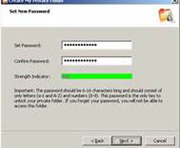 Passwords aren’t the only failure point in many recent widely publicized intrusions by hackers.

But passwords played a part in the perfect storm of users, service providers and technology failures that can result in epic network disasters. Password-based security mechanisms — which can be cracked, reset and socially engineered — no longer suffice in the era of cloud computing.
The problem is this: The more complex a password is, the harder it is to guess and the more secure it is. But the more complex a password is, the more likely it is to be written down or otherwise stored in an easily accessible location, and therefore the less secure it is. And the killer corollary: If a password is stolen, its relative simplicity or complexity becomes irrelevant.
Password security is the common cold of our technological age, a persistent problem that we can’t seem to solve. The technologies that promised to reduce our dependence on passwords — biometrics, smart cards, key fobs, tokens — have all thus far fallen short in terms of cost, reliability or other attributes. And yet, as ongoing news reports about password breaches show, password management is now more important than ever.
All of which makes password management a nightmare for IT shops. “IT faces competing interests,” says Forrester analyst Eve Maler. “They want to be compliant and secure, but they also want to be fast and expedient when it comes to synchronizing user accounts.”
Was The Prize Stock For 2012?
 If you wanted to know the IT company which was a rotten investment this year, you might be thinking Facebook, HP or RIM.
However according to Business Insider is starting to look like the so-called industry leader, Apple might have caused its investors the biggest headaches. More money has been lost in the past three months in Apple stock than has ever been lost in the tech disasters known as Hewlett-Packard and Research In Motion combined.
HP’s stock price peaked above $50 a few years ago, and now it’s trading at $14 and RIM peaked above $140 a few years ago, and it’s trading for $11. However Jobs Mob’s share price peaked above $700 three months ago and is now trading just above $500. This means that on a percentage basis, therefore, Apple’s stock is down much less than either Hewlett-Packard RIM but has cost shareholders a lot more money.
When HP investors have lost about $100 billion since the 2000 peak and RIM has lost $65 billion since the 2000 peak. Apple has cost its shareholders value in three months. What is more amusing is that about four months ago, I was lectured by an Apple fanboy who told me that the company is going to be worth a trillion dollars by the end of the year and he just invested more than $100,000 in the company. Looks like he would have been better off putting it on a horse.
Toshiba To Offer A 20-megapixel Image Chip
Comments Off on Toshiba To Offer A 20-megapixel Image Chip
 Toshiba is gearing up for to offer a 20-megapixel image sensor for digital cameras that it says will be the highest resolution of its kind.

The Tokyo-based firm said the new chips will be able to support capturing 30 frames per second at full resolution. They will also be able to shoot video at 60 frames per second at 1080P or 100 frames at 720P.
Toshiba said it will begin shipping samples of the new CMOS chips in January, with mass production to begin in August of 300,000 units monthly. Toshiba is best known in components for its NAND flash memory, which it develops with partner SanDisk, but is also a major manufacturer of LSI and other semiconductors.
Digital point-and-shoot cameras are steadily falling in price, squeezed between brutal competition among manufacturers and the increasing threat of smartphones and mobile devices. While the number of pixels a camera can capture is not always a direct measure of the overall quality of its images, it is a key selling point to consumers.
The image resolution of top-end smartphones now often meets or exceed that of digital cameras. The Nokia 808 PureView launched earlier this year has a 41-megapixel image sensor.
The Japanese manufacturer said it has increased the amount of information pixels in the new chip can store compared to its previous generation of CMOS, producing better overall images. It has also reduces the size of pixels – the new 20-megapixel version has individual pixels that measure 1.2 micrometers, down from 1.34 micrometers in its 16-megapixel product.