




 Sign up for our Technology Newsletter

IBM Debuts New Mainframe
IBM has started shipping its all-new first z13 mainframe computer.

IBM has high hopes the upgraded model will generate solid sales based not only on usual customer patterns but its design focus aimed at helping them cope with expanding mobile usage, analysis of data, upgrading security and doing more “cloud” remote computing.
Mainframes are still a major part of the Systems and Technology Group at IBM, which overall contributed 10.8 percent of IBM’s total 2014 revenues of $92.8 billion. But the z Systems and their predecessors also generate revenue from software, leasing and maintenance and thus have a greater financial impact on IBM’s overall picture.
The new mainframe’s claim to fame is to use simultaneous multi-threading (SMT) to execute two instruction streams (or threads) on a processor core which delivers more throughput for Linux on z Systems and IBM z Integrated Information Processor (zIIP) eligible workloads.
There is also a single Instruction Multiple Data (SIMD), a vector processing model providing instruction level parallelism, to speed workloads such as analytics and mathematical modeling. All this means COBOL 5.2 and PL/I 4.5 exploit SIMD and improved floating point enhancements to deliver improved performance over and above that provided by the faster processor.
Its on chip cryptographic and compression coprocessors receive a performance boost improving both general processors and Integrated Facility for Linux (IFL) cryptographic performance and allowing compression of more data, helping tosave disk space and reducing data transfer time.
There is also a redesigned cache architecture, using eDRAM technology to provide twice as much second level cache and substantially more third and fourth level caches compared to the zEC12. Bigger and faster caches help to avoid untimely swaps and memory waits while maximisng the throughput of concurrent workload Tom McPherson, vice president of z System development, said that the new model was not just about microprocessors, though this model has many eight-core chips in it. Since everything has to be cooled by a combination of water and air, semiconductor scaling is slowing down, so “you have to get the value by optimizing.
The first real numbers on how the z13 is selling won’t be public until comments are made in IBM’s first-quarter report, due out in mid-April, when a little more than three weeks’ worth of billings will flow into it.
The company’s fiscal fortunes have sagged, with mixed reviews from both analysts and the blogosphere. Much of that revolves around IBM’s lag in cloud services. IBM is positioning the mainframe as a prime cloud server, one of the systems that is actually what cloud computing goes to and runs on.
Intel Shows Off The Xeon SoC
Intel has announced details of its first Xeon system on chip (SoC) which will become the new the Xeon D 1500 processor family.
Although it is being touted as a server, storage and compute applications chip at the “network edge”, word on the street is that it could be under the bonnet of robots during the next apocalypse.
The Xeon D SoCs use the more useful bits of the E3 and Atom SoCs along with 14nm Broadwell core architecture. The Xeon D chip is expected to bring 3.4x better performance per watt than previous Xeon chips.
Lisa Spelman, Intel’s general manager for the Data Centre Products Group, lifted the kimono on the eight-core 2GHz Xeon D 1540 and the four-core 2.2GHz Xeon D 1520, both running at 45W. It also features integrated I/O and networking to slot into microservers and appliances for networking and storage, the firm said.
The chips are also being touted for industrial automation and may see life powering robots on factory floors. Since simple robots can run on basic, low-power processors, there’s no reason why faster chips can’t be plugged into advanced robots for more complex tasks, according to Intel.
SUSE Goes OpenStack Cloud 5
SUSE has released OpenStack Cloud 5, the latest version of the its infrastructure-as-a-service private cloud distro.
Version 5 adds the OpenStack brand front and centre, and its credentials are based on the latest Juno build of the OpenStack open source platform.
This version includes enhanced networking flexibility, with additional plug-ins available and the addition of distributed virtual routing. This enables individual computer nodes to handle routing tasks together, or if needs be, clustering together.
Increased operational efficiency comes in the form of a new seamless integration with existing servers running outside the cloud. In addition, log collection is centralized into a single view.
As you would expect, SUSE OpenStack 5 is designed to fit perfectly alongside the company’s other products, including the recently launched Suse Enterprise Storage and Suse Linux Enterprise Server 12 as well as nodes from earlier versions.
Deployment has also been simplified as part of a move to standardise “as-a-service” models.
Also included is the company’s new Sahara data processing project designed to run Hadoop and Spark on top of OpenStack without degradation. MapR has released support for its own service by way of a co-branded plug-in.
“Furthering the growth of OpenStack enterprise deployments, Suse OpenStack Cloud makes it easier for customers to realise the benefits of a private cloud, saving them money and time they can use to better serve their own customers and business,” said Brian Green, managing director, UK and Ireland, at Suse.
“Automation and high availability features translate to simplicity and efficiency in enterprise data centers.”
Suse OpenStack Cloud 5 becomes generally available from today.
IBM Goes Bare Metal
IBM has announced the availability of OpenPower servers as part of the firm’s SoftLayer bare metal cloud offering.
OpenPower, a collaborative foundation run by IBM in conjunction with Google and Nvidia, offers a more open approach to IBM’s Power architecture, and a more liberal licence for the code, in return for shared wisdom from member organisations.
Working in conjunction with Tyan and Mellanox Technologies, both partners in the foundation, the bare metal servers are designed to help organisations easily and quickly extend infrastructure in a customized manner.
“The new OpenPower-based bare metal servers make it easy for users to take advantage of one of the industry’s most powerful and open server architectures,” said Sonny Fulkerson, CIO at SoftLayer.
“The offering allows SoftLayer to deliver a higher level of performance, predictability and dependability not always possible in virtualised cloud environments.”
Initially, servers will run Linux applications and will be based on the IBM Power8 architecture in the same mold as IBM Power system servers.
This will later expand to the Power ecosystem and then to independent software vendors that support Linux on Power application development, and are migrating applications from x86 to the Power architecture.
OpenPower servers are based on open source technology that extends right down to the silicon level, and can allow highly customised servers ranging from physical to cloud, or even hybrid.
Power systems are already installed in SoftLayer’s Dallas data centre, and there are plans to expand to data centres throughout the world. The system was first rolled out in 2014 as part of the Watson portfolio.
Prices will be announced when general availability arrives in the second quarter.
AMD Goes Virtual With Liquid VR
AMD Liquid VR is not a retail product – it is an initiative to develop and deliver the best Virtual Reality (VR) experience in the industry.
AMD Liquid VR was announced at the Game Developers Conference in San Francisco, and the company describes it is a “set of innovative technologies focused on enabling exceptional VR content development” for hardware based on AMD silicon.
Developers will soon get access to the LiquidVR SDK, which will help them address numerous issues associated with VR development.
Platform and software rather than hardware
If you were expecting to see a sexy AMD VR headset with a killer spec, the announcement may be disappointing. However, if you are a “what’s under the bonnet” kind of geek, there are a few interesting highlights.
AMD has put a lot of effort into minimising motion-to-photon latency, which should not only help improve the experience, but also keep you from experiencing motion sickness, or hurling over that new carpet that really ties the room together.
Headline features of LiquidVR SDK 1.0 include:
Async Shaders for smooth head-tracking enabling Hardware-Accelerated Time Warp, a technology that uses updated information on a user’s head position after a frame has been rendered and then warps the image to reflect the new viewpoint just before sending it to a VR headset, effectively minimizing latency between when a user turns their head and what appears on screen.
Affinity Multi-GPU for scalable rendering, a technology that allows multiple GPUs to work together to improve frame rates in VR applications by allowing them to assign work to run on specific GPUs. Each GPU renders the viewpoint from one eye, and then composites the outputs into a single stereo 3D image. With this technology, multi-GPU configurations become ideal for high performance VR rendering, delivering high frame rates for a smoother experience.
Latest data latch for smooth head-tracking, a programming mechanism that helps get head tracking data from the head-mounted display to the GPU as quickly as possible by binding data as close to real-time as possible, practically eliminating any API overhead and removing latency.
Direct-to-display for intuitively attaching VR headsets, to deliver a seamless plug-and-play virtual reality experience from an AMD Radeon™ graphics card to a connected VR headset, while enabling features such as booting directly to the display or using extended display features within Windows.
You can grab the full AMD LiquidVR presentation here. (pdf)
What’s next for LiquidVR?
It all depends on what you were expecting, and what the rest of the industry does. AMD hopes LiquidVR will be compatible with a broad range of VR devices. LiquidVR will allow hardware makers to implement AMD technology in their products with relative ease, enabling 100Hz refresh rates, the use of individual GPUs per each eye and so on.
To a certain extent, you can think of LiquidVR as FreeSync for VR kit.
Oculus CEO Brendan Irbe said achieving presence in a virtual world is one of the most important elements needed to deliver a good user experience.
He explained where AMD comes in:
“We’re excited to have AMD working with us on their part of the latency equation, introducing support for new features like asynchronous timewarp and late latching, and compatibility improvements that ensure that Oculus’ users have a great experience on AMD hardware.”
Raja Koduri, corporate vice president, Visual Computing, AMD, said content, comfort and compatibility are the cornerstones of AMD’s focus on VR.
AMD’s resident graphics guru said:
“With LiquidVR we’re collaborating with the ecosystem to unlock solutions to some of the toughest challenges in VR and giving the keys to developers of VR content so that they can bring exceptional new experiences to life.”
A picture is worth a thousand words, so here’s 3300 frames of AMD’s virtual reality vision.
nVidia Fixes Linux Bug
Nvidia has fixed an ancient problem in Ubuntu systems which turned the screen into 40 shades of black.
The problem has been around for years and is common for anyone using Nvidia gear on Ubuntu systems.
When opening the window of a new application, the screen would go black or become transparent. As it turns out, this is actually an old problem and there are bug reports dating back from Ubuntu 12.10 times.
However to be fair it was not Nvidia’s fault. The problem was caused by Compiz, which had some leftover code from a port. Nvidia found it and proposed a fix.
“Our interpretation of the specification is that creating two GLX pixmaps pointing at the same drawable is not allowed, because it can lead to poorly defined behavior if the properties of both GLX drawables don’t match. Our driver prevents this, but Compiz appears to try to do this,” wrote NVIDIA’s Arthur Huillet.
Soon after that, a patch has been issued for Compiz and it’s been approved. The patch would be pushed in Ubuntu 15.04 and is likely to be backported to Ubuntu 14.04 LTS.
Uber Suffers A Data Breach
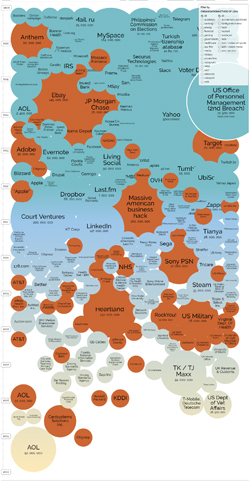
The names and license plate numbers of about 50,000 Uber drivers were exposed in a security breach last year, the company revealed on Friday.

Uber found out about a possible breach of its systems in September, and a subsequent investigation revealed an unauthorized third party had accessed one of its databases four months earlier, the company said.
The files accessed held the names and license plate numbers of about 50,000 current and former drivers, which Uber described as a “small percentage” of the total. About 21,000 of the affected drivers are in California. The company has several hundred thousand drivers altogether.
It’s in the process of notifying the affected drivers and advised them to monitor their credit reports for fraudulent transactions and accounts. It said it hadn’t received any reports yet of actual misuse of the data.
Uber will provide a year of free identity protection service to the affected drivers, it said, which has become fairly standard for such breaches.
The company said it had filed a “John Doe” lawsuit Friday to help it confirm the identity of the party responsible for the breach.
Can MediaTek Take On Qualcomm?
While Qualcomm’s 20nm Snapdragon 810 SoC might be the star of upcoming flagship smartphones, it appears that MediaTek has its own horse for the race, the octa-core MT6795.

Spotted by GforGames site, in a GeekBench test results and running inside an unknown smartphone, MediaTek’s MT6795 managed to score 886 points in the single-core test and 4536 points in the multi-core test. These results were enough to put it neck to neck with the mighty Qualcomm Snapdragon 810 SoC tested in the LG G Flex 2, which scored 1144 points in the single-core and 4345 in the multi-core test. While it did outrun the MT6795 in the single-core test, the multi-core test was clearly not kind on the Snapdragon 810.
The unknown device was running on Android Lollipop OS and packed 3GB of RAM, which might gave the MT6795 an edge over the LG G Flex 2.
MediaTek’s octa-core MT6795 was announced last year and while we are yet to see some of the first design wins, recent rumors suggested that it could be powering Meizu’s MX5, HTC’s Desire A55 and some other high-end smartphones. The MediaTek MT6795 is a 64-bit octa-core SoC clocked at up to 2.2GHz, with four Cortex-A57 cores and four Cortex-A53 cores. It packs PowerVR G6200 graphics, supports LPDDR3 memory and can handle 2K displays at up to 120Hz.
As we are just a few days from Mobile World Congress (MWC) 2015 which will kick off in Barcelona on March 2nd, we are quite sure that we will see more info as well as more benchmarks as a single benchmark running on an unknown smartphone might not be the best representation of performance, it does show that MediaTek certainly has a good chip and can compete with Qualcomm and Samsung.
Can Android AT Work Entice The Enterprise?
March 9, 2015 by admin
Filed under Around The Net
Comments Off on Can Android AT Work Entice The Enterprise?
Google Inc rolled out an initiative to make smartphones running its Android software more appealing to corporations, a move that could help extend the Internet technology giant reach into workplaces.

Google said on its official blog that its Android for Work program will provide improved security and management features for corporations that want to give their employees Android smartphones. Smartphones supported by the new initiative will be able to keep an employee’s work and personal apps separate, and a special Android for Work app will allow businesses to oversee key tools such as email, calendar and contacts.
Google said it is partnering with more than two dozen companies including Blackberry Ltd, Citrix Systems Inc, Box Inc.
Google’s Android software is the world’s most popular mobile operating system, but many corporations, which have significant security and device management requirements, give their employees smartphones made by Blackberry or Apple Inc.
Will Apple Go All-In On Car Batteries?
March 6, 2015 by admin
Filed under Around The Net
Comments Off on Will Apple Go All-In On Car Batteries?
A year and a half ago, Apple Inc applied for eight patents related to car batteries. Recently, it has added a slew of engineers, just one of whom had already filed for 17 in his former career, according to a Thomson Reuters.

The recent spate of hires and patent filings shows that Apple is fast building its industrial lithium-ion battery capabilities, adding to evidence the iPhone maker may be developing a car.
Quiet, clean electric cars are viewed in Silicon Valley and elsewhere as a promising technology for the future, but high costs and “range anxiety”, the concern that batteries will run out of power and cannot be recharged quickly, remain obstacles. Those challenges could also be seen as opportunities to find solutions to take the technology mainstream.
The number of auto-related patents filed by Apple, Google Inc, Korea’s Samsung, electric carmaker Tesla Motors Inc and ride-sharing startup Uber tripled from 2011 to 2014, according to an analysis by Thomson Reuters IP & Science of public patent filings.
Apple has filed far fewer of these patents than rivals, perhaps adding impetus to its recent hiring binge as it seeks to get up to speed in battery technologies and other car-building related expertise.
As of 18 months ago, Apple had filed for 290 such patents. By contrast, Samsung, which has been providing electric vehicle batteries for some years, had close to 900 filings involving auto battery technology alone.
The U.S. government makes patent applications public only after 18 months, so the figures do not reflect any patents filed in 2014.
Earlier this month, battery maker A123 Systems sued Apple for poaching five top engineers. A search of LinkedIn profiles indicates Apple has hired at least another seven A123 employees and at least 18 employees from Tesla since 2012.
The former A123 employees have expertise primarily in battery cell design, materials development and manufacturing engineering, according to the LinkedIn profiles and an analysis of patent applications.
A123, which filed for bankruptcy in 2012 but has since reorganized, supplied batteries for Fisker Automotive’s now-discontinued hybrid electric car.
“Looking at the people Apple is hiring from A123 and their backgrounds, it is hard not to assume they’re working on an electric car,” said Tom Gage, Chief Executive of EV Grid and a longtime expert in batteries and battery technology.
Apple is building its own battery division, according to the A123 lawsuit. Apple did not immediately respond to a request for comment.