





 Sign up for our Technology Newsletter

Sharp Says No To Intel
January 15, 2013 by admin
Filed under Consumer Electronics
Comments Off on Sharp Says No To Intel
While Sharp is desperately looking for more cash, it appears that it will try busking outside CES with a dog on a string before it takes money from Intel.
A senior senior executive from the Japanese company told the Mercury News denied that the company was looking for money from Intel. Industry analysts had speculated that Intel and Sharp, which supplies screens to Apple (AAPL) for its latest iPhonem, were in investment discussions.
Sharp is fighting for survival after years of losses. In November, it said it may not be able to survive on its own after full-year net losses to doubled to $5.6 billion. Sharp Vice President Kozo Takahashi told reporters at a roundtable briefing on the sidelines of the Consumer Electronics Show in Las Vegas that the company’s finances have been weakened considerably and we are considering ways to deal with that.
AP Goes With Twitter
January 14, 2013 by admin
Filed under Around The Net
Comments Off on AP Goes With Twitter
The Associated Press began using its official Twitter account as an advertising platform on Monday, as the news organization looks for new ways to generate revenue.

Samsung Electronics Co Ltd was the first sponsor on the @ap account for breaking news, which is followed by 1.5 million Twitter users. The South Korean electronics maker’s initial “SPONSORED TWEET” promoted its events at the 2013 Consumer Electronics Show in Las Vegas this week.
AP did not disclose financial details of the arrangement.
Twitter, which sells ads directly to make money from the social media’s monthly base of 200 million users, will not receive any proceeds from the AP-Samsung deal.
The AP called the initiative part of a new business strategy and stressed that sponsored tweets will clearly be labeled to differentiate them from news tweets.
The ads provide AP a new income source as news organizations from newspapers to television face severe revenue declines in the face of high production costs.
While the AP was founded in 1846 by U.S. newspapers as a breaking news conduit, only 22 percent of its revenue comes from member fees. Photo licensing, advertising on its news application AP Mobile and YouTube channel are other revenue streams.
Was The Prize Stock For 2012?
 If you wanted to know the IT company which was a rotten investment this year, you might be thinking Facebook, HP or RIM.
However according to Business Insider is starting to look like the so-called industry leader, Apple might have caused its investors the biggest headaches. More money has been lost in the past three months in Apple stock than has ever been lost in the tech disasters known as Hewlett-Packard and Research In Motion combined.
HP’s stock price peaked above $50 a few years ago, and now it’s trading at $14 and RIM peaked above $140 a few years ago, and it’s trading for $11. However Jobs Mob’s share price peaked above $700 three months ago and is now trading just above $500. This means that on a percentage basis, therefore, Apple’s stock is down much less than either Hewlett-Packard RIM but has cost shareholders a lot more money.
When HP investors have lost about $100 billion since the 2000 peak and RIM has lost $65 billion since the 2000 peak. Apple has cost its shareholders value in three months. What is more amusing is that about four months ago, I was lectured by an Apple fanboy who told me that the company is going to be worth a trillion dollars by the end of the year and he just invested more than $100,000 in the company. Looks like he would have been better off putting it on a horse.
Toshiba To Offer A 20-megapixel Image Chip
Comments Off on Toshiba To Offer A 20-megapixel Image Chip
 Toshiba is gearing up for to offer a 20-megapixel image sensor for digital cameras that it says will be the highest resolution of its kind.

The Tokyo-based firm said the new chips will be able to support capturing 30 frames per second at full resolution. They will also be able to shoot video at 60 frames per second at 1080P or 100 frames at 720P.
Toshiba said it will begin shipping samples of the new CMOS chips in January, with mass production to begin in August of 300,000 units monthly. Toshiba is best known in components for its NAND flash memory, which it develops with partner SanDisk, but is also a major manufacturer of LSI and other semiconductors.
Digital point-and-shoot cameras are steadily falling in price, squeezed between brutal competition among manufacturers and the increasing threat of smartphones and mobile devices. While the number of pixels a camera can capture is not always a direct measure of the overall quality of its images, it is a key selling point to consumers.
The image resolution of top-end smartphones now often meets or exceed that of digital cameras. The Nokia 808 PureView launched earlier this year has a 41-megapixel image sensor.
The Japanese manufacturer said it has increased the amount of information pixels in the new chip can store compared to its previous generation of CMOS, producing better overall images. It has also reduces the size of pixels – the new 20-megapixel version has individual pixels that measure 1.2 micrometers, down from 1.34 micrometers in its 16-megapixel product.
Will Tegra 4 Support USB 3.0?
 Wayne, also known as Tegra 4 is coming out at CES 2013, or in some 10 days from now. Nvidia has an event planned days ahead of CES 2013 and the company will likely show some tablets and hybrids based on the new Tegra SoC. Let’s call Wayne Tegra 4 before it gets official.
Nvidia had Wayne ready to launch in Q4 2012 but it had to wait for partners to release the designs based on it, and most of them wanted to do it at CES 2013. European phones based on Wayne are going to show up in February, at the Mobile World Congress.
This is the first quad-core A15 design that will bring a significant performance increase over Tegra 3 and we are hearing that the four-plus-one core will deliver a bigger performance boost than Tegra 3 did over Tegra 2. Also, the fact that the new chip is 28nm and supports DDR3L also promises more efficiency.
USB 3.0 support is something that is getting us excited as usually it is quite slow to transfer anything onto tablets, phones and hybrids. USB 3.0 on tablets will significantly increase the data transfer speed and Tegra 4 will be among the first chips to feature USB 3.0 support, and many consumers will appreciate faster data transfer rates.
The other thing that got our attention is dual display support and you will be able to have two independent screens. On Tegra 3 based devices, you can only mirror the output, not display two independent screens. It could be a very interesting feature for dockable devices.
Toyota Goes Wireless Charging
January 2, 2013 by admin
Filed under Around The Net
Comments Off on Toyota Goes Wireless Charging
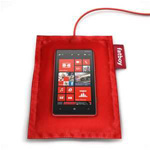 Toyota is taking the smartphone boom quite seriously and the car-maker hopes to offer the first wireless charging systems in select models as early as next year.

Toyota’s wireless system will be compatible with the Qi standard and it will be introduced in the new Avalon sedan next year. Of course, it will be optional and it will be part of Toyota’s $1,950 “technology package” which includes other geeky goodies as well.
According to the BBC, Chrysler is also planning to offer a similar system in the Dodge Dart. Other car-makers will no doubt offer wireless charging functionality sooner rather than later.
The number of Qi compatible phones is limited for the time being. Just 34 phones support it, including the Lumia 920, Nexus 4 and HTC Windows Phone 8X. However, some very popular devices like Apple’s iPhone and Sammy’s Galaxy S series phones don’t support wireless charging just yet.
nVidia’s Tegra 4 Specs Spotted
Here is an interesting leak, just what the doctor ordered to spice up a rather slow news cycle. Chiphell has posted a slide containing a few Tegra 4 specs, but we still don’t know the clocks or a few other interesting details. Of course, the leak should be taken with a grain of salt, but the specs are more or less in line with what we were expecting all along.
Tegra 4, codenamed Wayne, is a 28nm part with revamped graphics and new ARM cores. Although the slide does not directly point to the type of ARM cores used in the design, the new chip is based on ARM’s latest A15 core. Like the Tegra 3, the new chip will also feature an additional companion core to improve energy efficiency. No surprises here really.
In terms of GPU performance, Nvidia promises to deliver a six-fold improvement over the Tegra 3 and a 20x improvement over Tegra 2 chips. Oddly enough, in spite of Nvidia’s graphics prowess, Tegra chips never featured world-beating graphics. This time around they could, thanks to the new 72-core GPU. The GPU will be able to cope with 2560×1600 screens at 120Hz, but it could also take on 4K resolutions, although details are still sketchy. At this point 4K support could only be relevant for next-generation smart TVs, with a huge price tag.
As far as other features go, Tegra 4 brings support for USB 3.0 and DDR3L dual-channel memory. The leak does not mention LTE support.
Tegra 4 will have to take on the likes of Samsung’s upcoming Exynos 5440, which should also debut in early 2013. Nvidia was first to market with a quad-core A9 chip, but this time around it will have to face off against the new Exynos and A15 quad-cores from other vendors.
Nvidia is expected to showcase the new chip at CES and we’ll be there to check it out.
Raspberry Pi Gets A Store
 Raspberry Pi Foundation has opened a store to enable users to easily download applications that run on the credit-card sized computer.
The Raspberry Pi Foundation said it partnered with Indiecity and Velocix to create a store for applications that run on the Raspberry Pi computer. The Foundation said that the store itself is an application that runs under its Raspbian Linux distribution and at launch has 23 applications available for download.
The Raspberry Pi Store contains games such as Freeciv alongside applications such as Libreoffice and Asterisk. The Raspberry Pi Foundation said its store accepts compiled binaries, Python code, images, audio and video.
The Raspberry Pi Store will allow developers to charge for applications, with the Foundation saying that it hopes to see a mix of hobbyist and commercial software. The Foundation also asked users that download applications to review them in order to improve the results put out by its recommendations system.
While the Raspberry Pi was initially intended to help teach people how to program, the device has gained wider popularity due to the fact that its hardware can run many typical PC desktop applications. The Foundation’s Raspberry Pi Store will make it easier for users to find and install applications on the device, which can only be a good thing for the Raspberry Pi Foundation and Linux adoption.
Will Cisco Boot Linksys?
 Cisco reportedly has hired Barclays to find a buyer for its Linksys business.
Cisco bought Linksys back in 2003 to get into the consumer networking business and the firm has put out some good products, most notably the WRT54G wireless router that was a favourite with technology savvy punters. Now Cisco is looking to offload Linksys as it continues to pull back from the consumer networking market.
Cisco has been cutting jobs and products such as the Flip video camera, as it wants to get back to the high margin enterprise networking business. Back in 2003, Cisco paid $500m for Linksys and got access to an established business that focused on producing consumer network equipment.
A decade later, it is being reported that Cisco will be lucky to get its $500m back. Cisco has been pulling out of its failed attempt to get into the consumer market and is now focusing on flogging both network infrastructure hardware and servers, though it is widely expected to be hit hard as software defined networks become more popular.
Unlike Cisco’s core enterprise business, Linksys products typically have low margins, and with its parent firm’s slowing sales growth, it is not surprising Cisco wants to offload it. Bloomberg’s sources said Cisco might find interest in buying Linksys from television makers, though they wouldn’t provide any more details.
Intel Details 22nm SoC
 Thanks to a long spate of bad luck over at AMD, Intel now finds itself in a rather safe market lead, at least in high-end and server markets. However, in the low-end and mobile, Intel has a lot of catching up to do.
ARM still dominates the mobile market and Intel is looking to take on the British chip designer with new 22nm SoCs of its own. Intel outlined its SoC strategy at the 2012 International Electron Devices Meeting in San Francisco the other day.
The cunning plan involves 3D tri gate transistors and Intel’s 22nm fabrication process, or in other words it is a brute force approach. Intel can afford to integrate the latest tech in cheep and cheerful 22nm Atoms, thus making them more competitive in terms of power efficiency.
Since Intel leads the way with new manufacturing processes it already has roughly a year of experience with 22nm chips, while ARM partners rely on 28nm, 32nm and more often than not, 40nm processes. Intel’s next generation SoCs will also benefit from other off-the-shelf Intel tech, such as 3D tri-gate transistors.