





 Sign up for our Technology Newsletter

Kodak Enters The Smartphone Space
January 12, 2015 by admin
Filed under Smartphones
Comments Off on Kodak Enters The Smartphone Space
Many people use their smartphone as their primary camera because it is always with them and sharing those photos is easy from your phone. Kodak announced they will be offering an Android-powered smartphone at CES in a couple weeks with a tablet and connected camera coming later in 2015.

The Kodak brand has been synonymous with cameras so it is encouraging to see them placing their brand on a new smartphone.
Apple’s iPhone is one of the most popular camera phones, primarily due to its simplicity and solid quality. The press release states that Kodak will not compromise on design and user experience while improving the printing and sharing experience.
The release also states that Kodak will include advanced remote management software to allow family members and friends to provide help and support. This sounds like Amazon’s Mayday service for the Fire Phone. With statements like this, it sounds like the new Kodak Android smartphone will be targeted to the masses and not the smartphone enthusiast.
Are We Moving Too Fast Into Cloud Computing?
January 7, 2015 by admin
Filed under Around The Net
Comments Off on Are We Moving Too Fast Into Cloud Computing?
Businesses need to take a hybrid approach when it comes to the cloud, Dell has said.
The firm’s cloud strategy leader, Gordon Davey, told V3.co.uk in an interview that cloud computing is “overhyped” and moving an entire IT infrastructure into the cloud would be an unrealistic goal.
Davey also believes that cloud vendors have enticed companies to make major shifts to the cloud without considering a model that works for their business.
“I think it’s definitely a case of cloud as a buzzword is overhyped. The idea of cloud for the sake of cloud doesn’t really stand out,” he said.
“The problem comes from customers that have seen the buzzword and want to get the benefits and are just jumping on the bandwagon because it is an industry hype thing, rather than actually evaluating the benefits that a true cloud can bring, and applying that to their business requirements.”
Davey outlined the need to take a more considered approach, adopting an IT strategy that mixes on-premise infrastructure with cloud components to harness the technology without escalating IT costs and complexity.
“The future is going to be hybrid. It’s horses for courses – putting the right workload on the right platform,” he said.
“It’s that balanced approach that I think we’re going to see much more often, rather than trying to put everything into the cloud and potentially failing.”
Davey’s position is unsurprising given Dell’s approach of acting as a ‘middleman’ between cloud service providers and end users, providing hardware, software, services and consultancy to enable businesses to use cloud computing in a way that works for them.
“We see our role as enabling the cloud industry, being that underlying technology,” he said, going on to detail Dell’s five pillar approach to acting as a cloud middleman rather than developing its own end-to-end cloud offering.
The strategy involves consulting on a customer’s cloud needs, helping provide cloud infrastructure, brokering deals between vendors and users, providing security, and managing how multiple cloud services are deployed in a single business.
Davey claimed that Dell’s strategy will help companies take a more tailored approach to cloud adoption, adding: “A properly deployed cloud for the correct workloads in hugely beneficial.”
Dell is not alone in promoting a hybrid approach to cloud adoption. Microsoft is adding hybrid cloud capability to the next version of Windows Server.
Oracle Acquires Datalogix
On Monday, Oracle agreed to purchase Datalogix for an undisclosed sum, saying that together the companies will provide marketers with a richer understanding of what consumers do, say and buy, allowing them to measure the effectiveness of their different campaigns and advertising channels.

Oracle plans to link the Datalogix service, which provides the spending data to customers through a cloud-based tool, to its other cloud-based services via Oracle Identity Graph. This, it said, will allow it to connect consumer identities to build better profiles that can be used to personalize online and mobile services — and even to target them offline and via the TV.
It made no commitment to maintain the existing Datalogix product roadmap, saying that it was still reviewing its plans. The companies set no timeline for completing the deal, which they said must meet customary closing conditions including obtaining regulatory approval.
Will Marriott Block Wi-Fi
January 5, 2015 by admin
Filed under Around The Net
Comments Off on Will Marriott Block Wi-Fi
The U.S. Federal Communications Commission will render a decision on whether to establish rules regarding hotels’ ability to block personal Wi-Fi hotspots inside their buildings, a practice that recently earned Marriott International a $600,000 fine.

In August, Marriott, business partner Ryman Hospitality Properties and trade group the American Hotel and Lodging Association asked the FCC to clarify when hotels can block outside Wi-Fi hotspots in order to protect their internal Wi-Fi services.
In that petition, the hotel group asked the agency to “declare that the operator of a Wi-Fi network does not violate [U.S. law] by using FCC-authorized equipment to monitor and mitigate threats to the security and reliability of its network,” even when taking action causes interference to mobile devices.
The comment period for the petition ended Friday, so now it’s up to the FCC to either agree to Marriott’s petition or disregard it.
However, the FCC did act in October, slapping Marriott with the fine after customers complained about the practice. In their complaint, customers alleged that employees of Marriott’s Gaylord Opryland Hotel and Convention Center in Nashville used signal-blocking features of a Wi-Fi monitoring system to prevent customers from connecting to the Internet through their personal Wi-Fi hotspots. The hotel charged customers and exhibitors $250 to $1,000 per device to access Marriott’s Wi-Fi network.
During the comment period, several groups called for the agency to deny the hotel group’s petition.
The FCC made clear in October that blocking outside Wi-Fi hotspots is illegal, Google’s lawyers wrote in a comment. “While Google recognizes the importance of leaving operators flexibility to manage their own networks, this does not include intentionally blocking access to other commission-authorized networks, particularly where the purpose or effect of that interference is to drive traffic to the interfering operator’s own network,” they wrote.
Intel Shows New IoT Platform
Intel showed off a new platform which it claims makes it easier for companies to create Internet-connected smart products using its chips, security and software.
Intel’s platform is like Lego and based on the chipmaker’s components and software for companies to create smart, connected devices. The only difference is that you can’t enact your own Doctor Who scene from it.
Doug Davis, head of Intel’s Internet of Things business, said at a launch event in San Francisco it will make it a doddle to connect to data centres in order analyse data collected from devices’ sensors.
Intel’s chips should compute capability in end-point devices that scale from its highest performance Xeon processor to the Quark family of products.
Intel’s Internet of Things Group had $530 million in revenue in the September quarter. That accounted for just 4 percent of Intel’s total revenue in the quarter, but it grew 14 percent over the previous year, which was faster than the company’s PC business.
Dell, SAP, Tata Consultancy, Accenture and other companies are working with the new reference model, Davis said.
Ericsson Goes After Xiaomi
December 22, 2014 by admin
Filed under Smartphones
Comments Off on Ericsson Goes After Xiaomi
Ericsson has thrown a spanner into Chinese firm Xiaomi’s expansion plans, and has reportedly stopped it from selling handsets in India.
According to reports, this is already happening. We have asked Ericsson to confirm its role and what it wants to say about it. It told us that the reports are true and that it is ready to defend itself.
“It is unfair for Xiaomi to benefit from our substantial R&D investment without paying a reasonable licensee fee for our technology. After more than 3 years of attempts to engage in a licensing conversation in good faith for products compliant with the GSM, EDGE, and UMTS/WCDMA standards, Xiaomi continues to refuse to respond in any way regarding a fair license to Ericsson’s intellectual property on fair, reasonable and non-discriminatory (FRAND) terms,” it said in a statement.
“Ericsson, as a last resort, had to take legal action. To continue investing in research and enabling the development of new ideas, new standards and new platforms to the industry, we must obtain a fair return on our R&D investments. We look forward to working with Xiaomi to reach a mutually fair and reasonable conclusion, just as we do with all of our licensees.”
Xiaomi has responded to Bloomberg but it declined to say too much until it has access too all of the information.
“Our legal team is currently evaluating the situation based on the information we have,” said the spokesperson. “India is a very important market for Xiaomi and we will respond promptly as needed and in full compliance with India laws.”
The banning on the sale of devices was approved by a court in Delhi India, according to reports, and is based on an Ericsson claim on eight patents that it owns.
Xiaomi has bold plans for its own future and sees itself competing against rivals like Samsung and Apple. It has given itself between five and 10 years to do this, and will presumably want to include the Indian market in those plans.
Yet Another Retailer System Hacked
Women’s clothing retailer Bebe Stores has become the latest in a growing list of national retailers to be hit by an attack on its credit card payment system.

The company said Friday that the cardholder name, account number, expiration date, and verification code could have been stolen by hackers who apparently had access to the company’s payment processing system between Nov. 8 and 26.
The incident came to light in late November when Bebe said it noticed suspicious activity on computers that operate the payment processing system. Stores affected were the roughly 200 it operates in the U.S., Puerto Rico and the U.S. Virgin Islands.
“If you used a payment card at a U.S., Puerto Rico or U.S. Virgin Islands store during this time frame, you should review your account statements for any unauthorized activity,” it said in a message to customers.
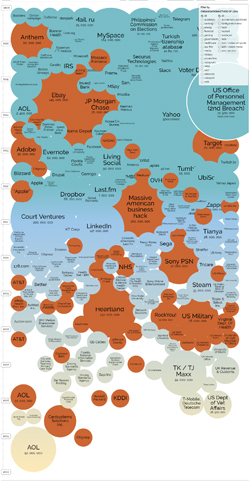
The last couple of years have been bad ones for the safety of credit card data at major U.S. retailers. Millions of credit and debit card numbers have been compromised in breaches at retailers, including Target, Home Depot, PF Chang’s restaurants, Super Valu grocery stores, Neiman Marcus, UPS Store and others.
In many cases, the attacks were targeted at payment processing terminals and used sophisticated malware that stole card details as consumers swiped their cards. Many of the thefts were only discovered after the card numbers appeared for sale on Internet hacking forums.
Such was the case with Bebe Stores. First news of the hack came earlier this week through the closely followed Krebs on Security blog.
Cisco Files Suit Against Rivals
Network equipment maker Cisco Systems Inc filed several lawsuits on Friday against Arista Networks Inc, alleging the smaller rival of copying its networking technologies.

The lawsuits, filed in a federal court in California, accuse Arista of infringing on 14 patents on networks and also on related copyrights, Cisco General Counsel Mark Chandler said in a blog post.
Arista was formed by former Cisco employees, including Chief Development Officer Andreas Bechtolsheim, Chief Technology Officer Kenneth Duda, and Chief Executive Officer Jayshree Ullal.
“Rather than building its products and services based on new technologies developed by Arista, however, and providing legitimate competition to Cisco, Arista took a shortcut by blatantly and extensively copying the innovative networking technologies designed and developed by Cisco,” one of the complaints said.
Cisco is a leader in the networking world, with revenue of $12.2 billion in the third quarter. Arista, in contrast, reported sales of $155.5 million for the period, although it is growing fast.
Arista said it had not yet been able to evaluate the lawsuits.
“While we have respect for Cisco as a fierce competitor and the dominant player in the market, we are disappointed that they have to resort to litigation rather than simply compete with us in products,” Arista said in an emailed statement.
Cisco filed the lawsuits on the same day the U.S. Supreme Court agreed to review a $64 million patent infringement verdict that Commil USA LLC won against the company.
Can Imagination Push IoT?
Imagination Technologies will take on the Raspberry Pi with the release of a single-board minicomputer for both Android and Linux developers.
In a bid to power a range of devices in the ever-growing world of the Internet of Things (IoT) space, the MIPS-based Creator CI20 can run both Linux and Android operating systems (OS) and is said to deliver both high performance and low energy consumption.
When it hits the market in January, the development board will target the likes of open source developers, the maker community and system integrators to provide them with tools and encourage them to create a wide range of applications and projects.
The Creator CI20 is based around a system on a chip (SoC) combining CPU, graphics and I/O circuitry, featuring an I/O connector block compatible with that of the Raspberry Pi, meaning it could be plugged into many of the same projects.
The board comes with a 1.2GHz MIPS32-based dual-core processor and 1GB of RAM with PowerVR SGX540 graphics for OpenGL 2.1 and ES 2.0 compatibility, meaning its capable of 1080p gaming at 30fps. It also features Ethernet connectivity alongside 802.11b/g/n Wi-Fi and Bluetooth 4.0 plus 4GB storage onboard.
While it’s easy to compare the Creator CI20 to the Raspberry Pi, Imagination’s executive vice president of marketing, Tony King-Smith, told V3.co.uk that the develop board is not intended as a direct rival.
“We’re not trying to compete with devices like Raspberry Pi and Arduino, which many developers will already have, we’re giving them more options, and we believe this is a pretty rich offering,” he said.
King-Smith said that the Creator CI20 is ideal for the IoT revolution because of its embedded wireless capabilities, but also because it is capable of running mature OS such as Linux and Android that support graphical user interfaces.
“This will make IoT interesting, whether you’re looking at a thermostat or a sensor or whatever, it’s a compelling user interface that gets people excited,” he added.
Imagination has also launched a Creator Programme alongside the developer board to stimulate an IoT ecosystem around the device.
McAfee’s Biometric Software Coming Soon
Comments Off on McAfee’s Biometric Software Coming Soon
A McAfee security product that will use biometric technology to authenticate users will be available for download by the end of the year, said Kirk Skaugen, senior vice president and general manager of the PC Client Group at Intel, last week.
“Your biometrics basically eliminate the need for you to enter passwords for Windows log in and eventually all your websites ever again,” Skaugen said.
Further product details were not immediately available. But one of the major inconveniences in using PCs and tablets is remembering passwords, which biometrics can tame.
An average user has about 18 passwords and biometric authentication will make PCs easier to use, Skaugen said.
Biometric authentication isn’t new. It’s being used in Apple Pay, where fingerprint authentication helps authorize credit card payments through the iPhone or iPad. Intel has been working on multiple forms of biometric authentication through fingerprint, gesture, face and voice recognition.
McAfee is owned by Intel, and the chip maker is building smartphone, tablet and PC technology that takes advantage of the security software. Intel has also worked on biometric technology for wearable devices like SMS Audio’s BioSport In-Ear Headphones, which can measure a person’s heart rate.
Intel also wants to make PCs and tablets easier to use through wireless charging, display, docking and data transfers. Such capabilities would eliminate the need to carry power brick and cables for displays and data transfers. Such capabilities will start appearing in laptops next year with sixth-generation Core chips code-named Skylake, which will be released in the second half.