





 Sign up for our Technology Newsletter

USB 3.1 Coming Later This Year
The emerging USB 3.1 standard is on track to reach desktops as hardware companies release motherboards with ports that can transfer data twice as fast as the previous USB technology.

MSI recently announced a 970A SLI Krait motherboard that will support the AMD processors and the USB 3.1 protocol. Motherboards with USB 3.1 ports have also been released by Gigabyte, ASRock and Asus, but those boards support Intel chips.
USB 3.1 can shuffle data between a host device and peripheral at 10Gbps, which is two times faster than USB 3.0. USB 3.1 is also generating excitement for the reversible Type-C cable, which is the same on both ends so users don’t have to worry about plug orientation.
The motherboards with USB 3.1 technology are targeted at high-end desktops. Some enthusiasts like gamers seek the latest and greatest technologies and build desktops with motherboards sold by MSI, Asus and Gigabyte. Many of the new desktop motherboards announced have the Type-C port interface, which is also in recently announced laptops from Apple and Google.
New technologies like USB 3.1 usually first appear in high-end laptops and desktops, then make their way down to low-priced PCs, said Dean McCarron, principal analyst of Mercury Research.
PC makers are expected to start putting USB 3.1 ports in more laptops and desktops starting later this year.
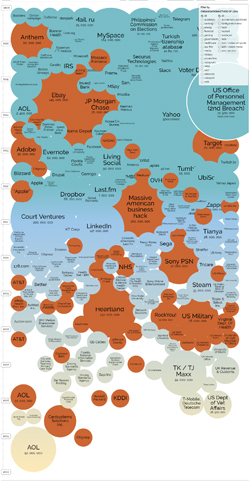
Target Settles Security Breach
Target is reportedly close to paying out $10m to settle a class-action case that was filed after it was hacked and stripped of tens of millions of peoples’ details.
Target was smacked by hackers in 2013 in a massive cyber-thwack on its stores and servers that put some 70 million people’s personal information in harm’s way.
The hack has had massive repercussions. People are losing faith in industry and its ability to store their personal data, and the Target incident is a very good example of why people are right to worry.
As well as tarnishing Target’s reputation, the attack also led to a $162m gap in its financial spreadsheets.
The firm apologized to its punters when it revealed the hack, and chairman, CEO and president Gregg Steinhafel said he was sorry that they have had to “endure” such a thing
Now, according to reports, Target is willing to fork out another $10m to put things right, offering the money as a proposed settlement in one of several class-action lawsuits the company is facing. If accepted, the settlement could see affected parties awarded some $10,000 for their troubles.
We have asked Target to either confirm or comment on this, and are waiting for a response. For now we have an official statement at Reuters to turn to. There we see Target spokeswoman Molly Snyder confirming that something is happening but not mentioning the 10 and six zeroes.
“We are pleased to see the process moving forward and look forward to its resolution,” she said.
Not available to comment, not that we asked, will be the firm’s CIO at the time of the hack. Thirty-year Target veteran Beth Jacob left her role in the aftermath of the attack, and a replacement was immediately sought.
“To ensure that Target is well positioned following the data breach we suffered last year, we are undertaking an overhaul of our information security and compliance structure and practices at Target,” said Steinhafel then.
“As a first step in this effort, Target will be conducting an external search for an interim CIO who can help guide Target through this transformation.”
“Transformational change” pro Bob DeRodes took on the role in May last year and immediately began saying the right things.
“I look forward to helping shape information technology and data security at Target in the days and months ahead,” he said.
“It is clear to me that Target is an organization that is committed to doing whatever it takes to do right by their guests.”
We would ask Steinhafel for his verdict on DeRodes so far and the $10m settlement, but would you believe it, he’s not at Target anymore either having left in the summer last year with a reported $61m golden parachute.
Can Linux Succeed On The Desktop?
Every three years I install Linux and see if it is ready for prime time yet, and every three years I am disappointed. What is so disappointing is not so much that the operating system is bad, it has never been, it is just that who ever designs it refuses to think of the user.
To be clear I will lay out the same rider I have for my other three reviews. I am a Windows user, but that is not out of choice. One of the reasons I keep checking out Linux is the hope that it will have fixed the basic problems in the intervening years. Fortunately for Microsoft it never has.
This time my main computer had a serious outage caused by a dodgy Corsair (which is now a c word) power supply and I have been out of action for the last two weeks. In the mean time I had to run everything on a clapped out Fujitsu notebook which took 20 minutes to download a webpage.
One Ubuntu Linux install later it was behaving like a normal computer. This is where Linux has always been far better than Windows – making rubbish computers behave. I could settle down to work right? Well not really.
This is where Linux has consistently disqualified itself from prime-time every time I have used it. Going back through my reviews, I have been saying the same sort of stuff for years.
Coming from Windows 7, where a user with no learning curve can install and start work it is impossible. Ubuntu can’t. There is a ton of stuff you have to upload before you can get anything that passes for an ordinary service. This uploading is far too tricky for anyone who is used to Windows.
It is not helped by the Ubuntu Software Centre which is supposed to make like easier for you. Say that you need to download a flash player. Adobe has a flash player you can download for Ubuntu. Click on it and Ubuntu asks you if you want to open this file with the Ubuntu Software Center to install it. You would think you would want this right? Thing is is that pressing yes opens the software center but does not download Adobe flash player. The center then says it can’t find the software on your machine.
Here is the problem which I wrote about nearly nine years ago – you can’t download Flash or anything proprietary because that would mean contaminating your machine with something that is not Open Sauce.
Sure Ubuntu will download all those proprietary drivers, but you have to know to ask – an issue which has been around now for so long it is silly. The issue of proprietary drives is only a problem for those who are hard core open saucers and there are not enough numbers of them to keep an operating system in the dark ages for a decade. However, they have managed it.
I downloaded LibreOffice and all those other things needed to get a basic “windows experience” and discovered that all those typefaces you know and love are unavailable. They should have been in the proprietary pack but Ubuntu has a problem installing them. This means that I can’t share documents in any meaningful way with Windows users, because all my formatting is screwed.
LibreOffice is not bad, but it really is not Microsoft Word and anyone who tries to tell you otherwise is lying.
I download and configure Thunderbird for mail and for a few good days it actually worked. However yesterday it disappeared from the side bar and I can’t find it anywhere. I am restricted to webmail and I am really hating Microsoft’s outlook experience.
The only thing that is different between this review and the one I wrote three years ago is that there are now games which actually work thanks to Steam. I have not tried this out yet because I am too stressed with the work backlog caused by having to work on Linux without regular software, but there is an element feeling that Linux is at last moving to a point where it can be a little bit useful.
So what are the main problems that Linux refuses to address? Usability, interface and compatibility.
I know Ubuntu is famous for its shit interface, and Gnome is supposed to be better, but both look and feel dated. I also hate Windows 8′s interface which requires you to use all your computing power to navigate through a touch screen tablet screen when you have neither. It should have been an opportunity for Open saucers to trump Windows with a nice interface – it wasn’t.
You would think that all the brains in the Linux community could come up with a simple easy to use interface which lets you have access to all the files you need without much trouble. The problem here is that Linux fans like to tinker they don’t want usability and they don’t have problems with command screens. Ordinary users, particularly more recent generations will not go near a command screen.
Compatibly issues for games has been pretty much resolved, but other key software is missing and Linux operators do not seem keen to get them on board.
I do a lot of layout and graphics work. When you complain about not being able to use Photoshop, Linux fanboys proudly point to GIMP and say that does the same things. You want to grab them down the throat and stuff their heads down the loo and flush. GIMP does less than a tenth of what Photoshop can do and it does it very badly. There is nothing that can do what CS or any real desktop publishers can do available on Linux.
Proprietary software designed for real people using a desktop tends to trump anything open saucy, even if it is producing a technology marvel.
So in all these years, Linux has not attempted to fix any of the problems which have effectively crippled it as a desktop product.
I will look forward to next week when the new PC arrives and I will not need another Ubuntu desktop experience. Who knows maybe they will have sorted it in three years time again.
IBM Goes Bare Metal
IBM has announced the availability of OpenPower servers as part of the firm’s SoftLayer bare metal cloud offering.
OpenPower, a collaborative foundation run by IBM in conjunction with Google and Nvidia, offers a more open approach to IBM’s Power architecture, and a more liberal licence for the code, in return for shared wisdom from member organisations.
Working in conjunction with Tyan and Mellanox Technologies, both partners in the foundation, the bare metal servers are designed to help organisations easily and quickly extend infrastructure in a customized manner.
“The new OpenPower-based bare metal servers make it easy for users to take advantage of one of the industry’s most powerful and open server architectures,” said Sonny Fulkerson, CIO at SoftLayer.
“The offering allows SoftLayer to deliver a higher level of performance, predictability and dependability not always possible in virtualised cloud environments.”
Initially, servers will run Linux applications and will be based on the IBM Power8 architecture in the same mold as IBM Power system servers.
This will later expand to the Power ecosystem and then to independent software vendors that support Linux on Power application development, and are migrating applications from x86 to the Power architecture.
OpenPower servers are based on open source technology that extends right down to the silicon level, and can allow highly customised servers ranging from physical to cloud, or even hybrid.
Power systems are already installed in SoftLayer’s Dallas data centre, and there are plans to expand to data centres throughout the world. The system was first rolled out in 2014 as part of the Watson portfolio.
Prices will be announced when general availability arrives in the second quarter.
Uber Suffers A Data Breach
The names and license plate numbers of about 50,000 Uber drivers were exposed in a security breach last year, the company revealed on Friday.

Uber found out about a possible breach of its systems in September, and a subsequent investigation revealed an unauthorized third party had accessed one of its databases four months earlier, the company said.
The files accessed held the names and license plate numbers of about 50,000 current and former drivers, which Uber described as a “small percentage” of the total. About 21,000 of the affected drivers are in California. The company has several hundred thousand drivers altogether.
It’s in the process of notifying the affected drivers and advised them to monitor their credit reports for fraudulent transactions and accounts. It said it hadn’t received any reports yet of actual misuse of the data.
Uber will provide a year of free identity protection service to the affected drivers, it said, which has become fairly standard for such breaches.
The company said it had filed a “John Doe” lawsuit Friday to help it confirm the identity of the party responsible for the breach.
Can Android AT Work Entice The Enterprise?
March 9, 2015 by admin
Filed under Around The Net
Comments Off on Can Android AT Work Entice The Enterprise?
Google Inc rolled out an initiative to make smartphones running its Android software more appealing to corporations, a move that could help extend the Internet technology giant reach into workplaces.

Google said on its official blog that its Android for Work program will provide improved security and management features for corporations that want to give their employees Android smartphones. Smartphones supported by the new initiative will be able to keep an employee’s work and personal apps separate, and a special Android for Work app will allow businesses to oversee key tools such as email, calendar and contacts.
Google said it is partnering with more than two dozen companies including Blackberry Ltd, Citrix Systems Inc, Box Inc.
Google’s Android software is the world’s most popular mobile operating system, but many corporations, which have significant security and device management requirements, give their employees smartphones made by Blackberry or Apple Inc.
Will Apple Go All-In On Car Batteries?
March 6, 2015 by admin
Filed under Around The Net
Comments Off on Will Apple Go All-In On Car Batteries?
A year and a half ago, Apple Inc applied for eight patents related to car batteries. Recently, it has added a slew of engineers, just one of whom had already filed for 17 in his former career, according to a Thomson Reuters.

The recent spate of hires and patent filings shows that Apple is fast building its industrial lithium-ion battery capabilities, adding to evidence the iPhone maker may be developing a car.
Quiet, clean electric cars are viewed in Silicon Valley and elsewhere as a promising technology for the future, but high costs and “range anxiety”, the concern that batteries will run out of power and cannot be recharged quickly, remain obstacles. Those challenges could also be seen as opportunities to find solutions to take the technology mainstream.
The number of auto-related patents filed by Apple, Google Inc, Korea’s Samsung, electric carmaker Tesla Motors Inc and ride-sharing startup Uber tripled from 2011 to 2014, according to an analysis by Thomson Reuters IP & Science of public patent filings.
Apple has filed far fewer of these patents than rivals, perhaps adding impetus to its recent hiring binge as it seeks to get up to speed in battery technologies and other car-building related expertise.
As of 18 months ago, Apple had filed for 290 such patents. By contrast, Samsung, which has been providing electric vehicle batteries for some years, had close to 900 filings involving auto battery technology alone.
The U.S. government makes patent applications public only after 18 months, so the figures do not reflect any patents filed in 2014.
Earlier this month, battery maker A123 Systems sued Apple for poaching five top engineers. A search of LinkedIn profiles indicates Apple has hired at least another seven A123 employees and at least 18 employees from Tesla since 2012.
The former A123 employees have expertise primarily in battery cell design, materials development and manufacturing engineering, according to the LinkedIn profiles and an analysis of patent applications.
A123, which filed for bankruptcy in 2012 but has since reorganized, supplied batteries for Fisker Automotive’s now-discontinued hybrid electric car.
“Looking at the people Apple is hiring from A123 and their backgrounds, it is hard not to assume they’re working on an electric car,” said Tom Gage, Chief Executive of EV Grid and a longtime expert in batteries and battery technology.
Apple is building its own battery division, according to the A123 lawsuit. Apple did not immediately respond to a request for comment.
Samsung Buys LoopPay
March 5, 2015 by admin
Filed under Around The Net
Comments Off on Samsung Buys LoopPay
Samsung Electronics Co Ltd has acquired U.S. mobile wallet startup LoopPay, signaling its intention to launch a smartphone payments service to compete with rival Apple Inc.

Mobile payments have been slow to catch on in the United States and elsewhere, despite strong backing. Apple, Google, and eBay Inc’s PayPal have all launched services to allow users to pay in stores via smartphones.
The weak uptake is partly because many retailers have been reluctant to adopt the hardware and software infrastructure required for these new mobile payment options to work. These services also fail to offer much more convenience than simply swiping a credit card, Samsung executives said on Wednesday.
LoopPay’s technology differs because it works off existing magnetic-stripe card readers at checkout, changing them into contactless receivers, they said. About 90 percent of checkout counters already support magnetic swiping.
“If you can’t solve the problem of merchant acceptance…, of being able to use the vast majority of your cards, then it can’t really be your wallet,” said David Eun, head of Samsung’s Global Innovation Center.
Injong Rhee, who is leading Samsung’s as-yet-unannounced payments project, said the Asian giant will soon reveal more details of its envisioned service. He would not be drawn on speculation the company may do so during the Mobile World Congress in Barcelona.
He said new phones such as the upcoming, latest Galaxy would support the service.
Apple Pay, launched in September, allows iPhone users to pay at the tap of a button. Executives have lauded its rapid rollout so far, including the fact that more than 2,000 banks now support it and the U.S. government will accept Apple Pay later this year.
But Apple Pay requires retailers to install near-field communication and some have been reluctant. In addition, many retailers such as Wal-Mart Stores Inc and CVS Health Corp, back their own system, CurrentC.
Samsung had invested in LoopPay, along with Visa Inc and Synchrony Financial, before its acquisition. Terms of the deal, which Samsung negotiated over several months, were not disclosed.
It’s unclear how else Samsung could differentiate its service versus Apple’s or other rivals.
Raspberry Pi Making Moves
The Raspberry Pi Foundation has announced that its pint-sized computer has now sold a whopping five million units.
The announcement came via Twitter, where the official Raspberry Pi account boasted that the five million milestone makes it the big-selling computer manufacturer in the UK of all time.
Just confirmed the big news we’ve all been waiting for: we’ve now sold more than 5 million Raspberry Pis.
— Raspberry Pi (@Raspberry_Pi) February 17, 2015
We think that this means that in just under 3 years, we’ve gone from zero to being the biggest selling UK computer manufacturer ever. Yowza.
— Raspberry Pi (@Raspberry_Pi) February 17, 2015
This comes just two weeks after the firm announced sales of 4.5 million Raspberry Pi computers, suggesting that its latest model, the Raspberry Pi 2 Model B, has proved popular since it went on sale on 2 February.
Raspberry Pi said previously that it aims to ship three million units of the new model within 12 months, and Tuesday’s announcement suggests that it’s on track to smash that target.
The firm has yet to announce exactly how many Raspberry Pi 2 models have shipped, but we are likely to hear official figures in the next few weeks.
The second-generation device was unveiled at the beginning of this month, improving on the original Raspberry Pi with 1GB RAM and support for Microsoft’s Windows 10 operating system.
It also boasts expanded GPIO pins and advanced power management and connectivity, making it possible to connect up to four USB devices, including powered devices such as hard drives.
Qualcomm Finally Fixed The Snapdragon 810
Comments Off on Qualcomm Finally Fixed The Snapdragon 810
Qualcomm and TSMC have reportedly worked out overheating issues on the Snapdragon 810.
Qualcomm never publicly admitted that the chip experienced the problems to begin with, but the rumour mill has been in overdrive for a while. Leaked LG Flex 2 benchmarks also suggested that something could be wrong, since the chip failed to impress.
The problem apparently caused the Snapdragon 810 to overheat at peak clocks and throttle, compromising performance. Such problems surfaced in some mobile devices in the past, namely the Nexus 4, but were the result of poor design decisions, not chip faults.
The latest rumors from China suggest that Qualcomm and TSMC managed to resolve the throttling issue. The info was apparently leaked to a Chinese analyst by a TSMC insider, but the reports are rather vague. The source said the revised Snapdragon 810 is expected to go into volume production by mid-March.
If true, this means the “fixed” chip is still not available for integration and may have an effect on product launches over the next few weeks, namely on devices which are expected to launch at the Mobile World Congress next month.